
In this episode, Mike sits down with Judi Health’s senior vice president of national business development, Nick Van Hook, to discuss StarkRx. Together, they cover Judi Rx’s role in StarkRx and how this new model solves many employers’ greatest pharmacy benefit challenges.
Learn more about StarkRx here.
Watch or listen to Benefits Bites and Healthcare Headlines.
Register for upcoming Employers Health webinars or watch on demand at https://www.employershealthco.com/resource-center/events/
Sign up for our monthly newsletter here.
Find additional helpful benefits strategies and resources at https://www.employershealthco.com/resource-center/articles/
Read the Full Transcript
Mike Stull (0:10)
Hi everyone, and thanks for joining us on this episode of HR Benecast. This is your host, Mike Stull. As always, you can find more Employers Health resources by checking out the links in the episode description.
Today we’re recording a very exciting episode. Recently, our team announced the launch of StarkRx, a cost-plus transparent PBM model anchored by Judi Health. Developed to give plan sponsors more control over their pharmacy benefit plan, it allows plan sponsors to choose from multiple service providers and plan designs to achieve their unique goals.
StarkRx is here to challenge the status quo. And joining me today is Nick Van Hook, senior vice president of national business development at Judi Health, to share how we, along with our partners at Judi Rx, will be able to do just that. So welcome, Nick.
We’re happy to have you on HR Benecast. There’s been a lot of questions surrounding this new innovative offering, and so we’re excited to provide some answers. I’m actually, as we’re recording this, coming right from a consultant call, talking just about the new announcement.
So maybe start off by sharing a little bit about yourself and your role at Judi Health.
Nick Van Hook (1:30)
Well, thanks, Mike, and excited about the partnership as well, and excited to be here on the podcast today. So, Nick Van Hook, I lead our PBM sales team here at Judi Health. I’ve been with the organization for actually a little over seven years now, so really excited to have been here from a very early stage and seen the growth of the organization, and excited to talk about kind of where we’ve come from, where we’re going, and the partnership today.
By background, I’ve been in the pharmacy benefits space for over 15 years. Started my career at Medco, actually. Medco, through the Express Scripts merger, did a number of different roles, from retail networks to performance guarantees and rebate analysis.
From there, really went more into the consulting world. Spent some time at Truveris, where I did procurement and audit work, and then most recently in Mercer’s pharmacy practice for three years prior to joining Capital Rx at the time, and now Judi Health. So a little bit of my background.
You know, I often joke, everyone always asks me how I got into this, and I always say, well, my failed golf career, and I just found the first job that was willing to hire me. And here I am 15 years later still doing it.
Mike Stull (2:42)
Excellent. Well, I’m going to start off with an impromptu question, because as we’ve been out talking to our clients and even some consultants about the new relationship, certainly you may not have gotten this question as much when you were referring to yourself as Capital Rx, but now that everything is Judi, everybody wants to know, who’s Judi?
Nick Van Hook (3:11)
She is the brains of the organization. So, you know, one of the things early on as an organization that we recognized was that the technology in this space was antiquated. It was really a lot of the systems and technologies that everybody in the industry has been operating on were built in the late 90s, early 2000s.
And we recognize just as a new organization, when you start to think about the scale and growth and the future of where we saw pharmacy benefits going, we weren’t going to be able to, you know, we weren’t going to be able to grow to the strength that we wanted to, and we weren’t going to be able to service our customers the way we wanted to. And so we developed a new enterprise health platform. I think it’s one of the biggest differentiators is that a lot of when you think of technology in this space, it’s core claims adjudication.
But we really wanted to build, as I mentioned, the brains behind the organization where all of our operational workflows now sit in one system. Some of the frustrations, if anyone’s ever heard our CEO and co-founder AJ Loiacono speak, you know, some of the frustrations once data moves from one system to another. So if you take it out of a claim system and it has to go into, you know, Oracle for billing and invoicing or another data warehouse, right?
It’s already wrong, especially in the pharmacy benefits space where you have claims processing in real time. And so we wanted to make sure that everybody in the organization is operating on one system, one workflow. And so at the time, Judi, short for adjudication, so has those core elements, but truly is a lot more than that.
And I think one of the really exciting things that we’ve done as we’ve built the technology platform is so many folks that have had roles in other organizations coming to us with the things that worked and didn’t work in order to create the best in class system to give them tools to deliver a lot of the high service metrics you see us talk about in the market space today. Yeah.
Mike Stull (5:08)
And I don’t think a lot of employers and plan sponsors understand how many different systems are actually running behind the scenes at most legacy PBMs, whether it’s the clinical management system or the billing system or the claims processing system or the rebate system. And you wonder, well, why can’t we have rebate information integrated with our claims information? And I mean, in that case, you’re talking about claims reporting and rebate, three different systems trying to talk to one another.
And it’s not until you start trying to customize things or start trying to do things a little bit different that you learn about all the limitations that happen behind the scenes because of those disparate systems. So certainly as we were looking for who the right partner was for launching this new solution, this was a big part of the decision.
Nick Van Hook (6:10)
Well, even you think of something like customer care, right. And our, our customer care center, you know, you talk to folks that have done the same, have been in the same role at other organizations and it’s, I have to log into three, four or five different systems or screens in order to try and solve a very simple member inquiry. And you can’t solve it or the information is mismatching because, you know, again, data is going from one system to another.
And so I think it’s, for us, it solved a lot of the inefficiencies that we saw. And again, you know, as an organization, we developed this early on. We got a firsthand experience those first couple of years of not having Judi.
And I think being able to see where pharmacy benefits is going and the ever-changing dynamics of this industry, we wanted to be much more flexible and be able to service really any type of customer as, as the industry becomes more of a not one size fits all type of approach.
Mike Stull (7:08)
One of the, one of the things that we also considered as, as we were looking for how to, how to build this new solution was how do we, how do we ensure that participants have an exceptional experience and don’t get lost? We’ve heard a lot about other organizations building modular approaches. And one of the things that we learned real quickly was that if, if you try to drink the ocean, you’re going to choke.
And we didn’t want patients to get lost in what otherwise looked and felt like a loose collaboration of point solutions. So one of the things that was really important and you just touched on it was how do we make sure that patients have that exceptional experience? So maybe talk a little bit about how you all at Judi view the patient and what, what do you have in place to make sure that that experience is top notch?
Nick Van Hook (8:17)
Well, I think that’s a, a great question and something that sometimes goes overlooked in the industry is just the patient experience. At the end of the day, all of the things we get to talk about on a day-to-day basis, really at the end of all of that is the patient, right? They are, they need the medication.
They have a particular, you know, indication that they’re trying to treat with these medications. And I know myself in the industry sometimes struggle historically to deal with right questions throughout healthcare and understanding things. So I can only imagine what somebody not in this industry.
And I think that’s where we come from, right? We want to ultimately make sure that we recognize at the end of the day, there is a patient at the end of this. And so, you know, between the system and our customer care agents and the ability to resolve calls on the first time a member calls in that first call resolution to us is very key and understanding of they’re calling in with an inquiry, right?
If it takes us five minutes or 20 minutes to get to the resolution, we want to make sure that they leave happy and understanding whatever they’ve come, whether it’s a complex question that they had, whether it’s a very simple question. We want them to walk away happy and understanding of their total understanding of what they’re taking as a medication, their benefit. Some of the investments we made on the customer care side was really in board certified pharmacy technicians.
The members calling in likely going to be calling in about more complex things, right? Not so much, is this covered? Is it not covered?
And we wanted folks that have deep knowledge and understanding of the pharmacy space to be able to help navigate that member drug to drug interactions if they have to call a pharmacy, right? Many of them have been on that side of the table as well in order to help interact and navigate the person who’s also behind the counter trying to assist a member. And so, you know, we’ve made some of those investments into our customer care center.
I think the system also really provides the tools and very simple things like every letter that gets, that gets mailed to a member is saved on their profile. And so whether it’s the account team trying to help with someone, whether it’s the customer care team, they have access to that letter. And so they, in real time, if a member calls in about it, they’re looking at the same thing the member has in front of them.
It’s not a, can you explain that to me again? If they’re having trouble navigating the member tools, right, we can emulate the screen that they’re looking at and actually help them navigate. These are very simple things that members will call in about.
But right at the end of the day, some of the frustration is when you’re trying to read a letter to a customer care rep to try and help guide you. I think, you know, it becomes a service experience that is frustrating. Some of the other things that I think we’ve with the system, as I talk about Judi, is that it’s written in a natural human language.
And so if a member is calling in about a particular claim that rejected for, you know, whatever reason, say it’s prior authorization, the customer care agent can actually see in, you know, again, natural human language of the, this is the medication that was going to be filled. Here’s where it was going to be filled here. Here’s what the copay was, the total cost, what was going to be applied to the deductible.
It hit for PA. Are there any other rejections that it might be in, you know, that might be in there? And then at the end of the day, the customer care rep doesn’t have to try and check what the issue is.
They can see everything there, clear any of the issues. If it is PA, they can help start the PA. So we really try to take more of a high touch approach to the customer care and not just on, you know, that initial engagement.
But if, if members are having a harder time navigating their health care journey and we can recognize that and or they ask for additional help, we can actually assign agents to help navigate them and stay in contact with them, not just on that first initial outreach, but over time.
Mike Stull (12:06)
Excellent. So we wanted to dig into some of the differentiators that the model is really trying to solve for. And I’m, I’m curious, you know, as we, we go down through these, just talking about what, what we’re hearing from clients, consultants, and how we, how we think about this model as it relates to these. But the first one is as a result of a number of lawsuits that were filed, I guess it’s been over a year, probably close to two, two years now.
But certainly there’s a higher level of awareness across the employer community around fiduciary responsibility. So is, as you think about the concerns that some employers have around fiduciary, how does, how does the Judi model account for that?
Nick Van Hook (12:59)
Yeah. And I think I’ll take a quick step back because as we go through some of these, you know, some of these questions, I think it’s helpful to recognize that as an organization, we wanted to get back to what the core roots of PBM was when they started. And that was be the best administrator, a fee for service organization that had arm’s length relationships throughout the supply chain.
What we did there, the intent with that was to remove the misaligned incentives that we see in this industry or that we saw in this industry over time. Right. It is obviously changed very drastically from, from being an administrator to what we have today, where the PBM sits at the center of a lot of the supply chain.
And so to start removing ourselves from taking any rebates, spread pricing was a very big key for us. Again, our sole source of revenue being a flat administrative fee is one of the other areas. But then fundamentally changing the way drugs are priced and looking at an acquisition cost plus model that removes the PBM from setting the price and really allowing the supply chain to set costs.
It’s how every other industry in the U.S. operates. Right. The supply chain sets the cost.
And so we leverage national average drug acquisition costs. So some of the lawsuits that you, you, you’ve been alluding to there, they mentioned NADAC and some of the examples of NADAC and where it’s better, a more appropriate price, more, it correlates more to the actual price of the medication. And so prior to those going out, we had already set our business model up that way.
We operate much differently and much more aligned than, you know, some of the lawsuits are tackling the business models that are out there today because of that drug, you know, drug cost framework that we’re using in the acquisition cost model.
Mike Stull (14:52)
Yeah, we know that, you know, there are probably, I think, 12 or 13. We need Madison on the call to check us. But 12 or 13 states that have minimum reimbursement requirements, most of them are based on a NADAC plus a dispensing fee.
So having the retail network contracted that way to begin with certainly makes sure that as these continue to happen, if we get to 30, 40, 50 states with those types of reimbursement requirements, we’re already there. So, yeah, go ahead.
Nick Van Hook (15:26)
And it’s not even in the reimbursement, right? It’s also these any willing provider states having already operating in an agnostic approach of not owning dispensing assets and really having the ability to customize the network to each individual employer if that’s what they want, right? At the end of the day, we have a broad network.
We have partnerships that we have for the delivery of mail and specialty as do you. And so, you know, at the end of the day, I think that also plays into it that we’re not trying to steer medications to one pharmacy or another, right? We want to make sure that we provide the member with the right drug at the right time at the lowest cost through the best channel.
And that’s really, I think, that also plays into it. So it’s a mix of cost, but also still the lack of steerage to particular pharmacies, I think, also plays into the fiduciary.
Mike Stull (16:17)
And I think it also plays into, on our last episode, I was talking with a colleague from one of our other partners and one of the big three PBMs, obviously a very different strategy, particularly as it relates to biosimilars. So we talked about the strategy that they have around white labeling biosimilars. I’m guessing that’s not something that Judi Rx is doing.
If you’re not steering to certain pharmacies, I’m guessing from a formulary perspective, it is a different strategy in terms of looking for the right biosimilars to put on formulary.
Nick Van Hook (16:57)
Yeah, we leverage LOAC biosimilars. So I’ll say in general, right, it is a biosimilar first approach across our formulary offerings. We do have a broad option that still does cover reference products.
You have a number of unions and other types of organizations that want access. They don’t want to necessarily limit some of the access. But when you start to look at some formulas that we remove the reference product on, our biosimilar approach is the LOAC version.
I know, obviously, the two that we talk about a lot today are Humira and Stelara. So for those being the newer ones to market, we have a number of different options, again, LOAC for those products. And again, back to being a fee-for-service organization, we want to make sure that we don’t sacrifice the clinical outcome of this.
We’re not necessarily looking to push a low-cost product if it’s not going to necessarily deliver the same outcome. However, as long as something is delivering the same or a better outcome, we’re going to try to steer to the lowest cost medication we can get access to. And so that’s the same approach we’ve taken here on the biosimilars.
It’s the same approach we’ll take as biosimilars for other products continue to come out here in the future. And so, yeah, I think when you remove yourself from making money on the product, I think it clears the incentives to be able to steer to these types of medications.
Mike Stull (18:21)
Right. And I think the term LOAC in terms of biosimilars can cover a pretty wide range of products. And one of the things that we wanted to make sure of in this model is that if patients can find an approved biosimilar at a lower price through a disruptor out in the market, well, let’s let them take advantage of it. And when you don’t have a conflict from a dispensing pharmacy, you don’t have a conflict from a formulary perspective, you’re free to open that up.
The next one was specialty drugs in general. So we know that, you know, for a lot of our clients, specialty spend is over half of their total spend. We know that there’s a lot in the pipeline.
We covered the dispensing piece of it, but maybe talk a little bit about from a clinical management perspective, how does Judi think about it the same, but how does it think about it different from others out in the marketplace?
Nick Van Hook (19:31)
Yeah, I think the pricing piece, obviously, you want to get access to the best prices in the market, but without controls, right, the price may not matter. And so we feel that a lot of our value, especially as it relates to high-cost brands or specialty medications does come in our clinical management and the appropriate use of these medications. When you start to look at how we set our formulary and what we do through prior authorization, and you marry that with the customer service approach that we have, making sure members that, you know, recognize the side effects of these high-cost medications, if there’s the ability to take a lower cost alternative, we want to drive them to that lower cost alternative to start.
And really, it does two things. One, again, we’re not trying to sacrifice outcomes. If someone needs a $10,000 specialty medication to treat their indication, they’re absolutely going to get it.
But if you can take a lower cost branded or specialty generic that has a significant savings, but it’s going to drive the same outcome, we want to make sure that that’s where we prioritize and steer members to and make sure we do it in a way that the member feels like they’re educated and they understand why the switch is being made, right? I mean, we’re one of two countries in the US that have commercials, pharmaceutical commercials for these medications. And so people see the brand name labels all over the place, but don’t realize that there are plenty of other medications that will treat it, treat your condition just as well, but also at a much lower cost.
And I think where we see this biggest impact for the member on this is, you know, with members in high-deductible plans who are paying first dollar coverage, I mean, at the end of the day, they’re footing that bill. And so we want to make sure that from their experience, they’re also finding lower cost alternatives if, you know, they’re the ones who kind of have that first dollar coverage and really their, you know, co-insurance doesn’t kick in until the deductible is met. But on the clinical management side of things, you know, it is one of, we feel one of our strongest pieces of value that we can drive from an outcomes and ultimately a cost perspective.
Mike Stull (21:41)
Yeah. Okay. So last one as it relates to Judi and the model that we’re setting up here with you all.
How do we get employers to get out of the mindset of, I’m going to negotiate the best discounts, the best rebate guarantees, and get back to thinking about how do we lower our actual spend? We’ve seen newspaper article after article over the past couple of weeks about employer-sponsored healthcare growing by double digits over the next couple of years. And pharmacy is obviously a big piece of that.
So what changes are you all hoping to see in the marketplace as it relates to how do we get people to focus on managing trend, managing their actual spend versus trying to get the biggest discount and the biggest rebate guarantee?
Nick Van Hook (22:43)
It’s a great question. And I think a lot of education and kind of goes back to a comment I made a little bit earlier, right? Having been in the consulting world, having done RFPs for a number of different clients, large jumbo clients, small groups, right?
And everywhere in between, always focusing on getting the best discount and the best rebate. But even when you do that, if you’re not managing the units out the door, it’s never going to manage trend, right? And so you really do have to marry those two because anybody can get the best discount.
But if there’s more products going and being approved out the door, or there’s steerage to higher cost products to hit a rebate number, at the end of the day, you might have the best discounts and rebates on paper, but your trend is still going to be the 10, 15. We’re seeing in groups, we’ve taken over almost up to 20%, depending on if they cover weight loss or not, and what their experience has been. And so it really is marrying the drug costs, right, the discounts and rebates with the actual management piece of this, because that is 50%, if not more of the puzzle in order to manage the spend, because we want to get really great prices.
And then we want to make sure that we manage a population. And it’s not even just things like I talked about formula and prior authorization, but even things like auto refill protocols and the technology that we’ve developed and being able to dynamically adjust the balance on hand to say, to avoid stockpiling, right, members will have a certain amount on hand, and then we’re going to push the refill date out. And so you’re never going to get the instance of 90, 120, 150.
I was in a finalist presentation the other day, someone had 262 excess days supply of Rinvoq. And I was like, you know, you have almost two years of Rinvoq that was filled in one calendar year. And it’s those types of things that again, they might have a great discount on paper about what the contract says.
But if you’re pushing that many units out the door, your costs inherently are going to go up. And so it really is marrying the two. It’s how we as an organization have been able to deliver the positive results from a savings and managing trends standpoint, is really marrying the two of those things together.
And again, it’s not just about the clinical management per se, it’s the thousands of tiny little decisions that PBM makes on an employer’s behalf. But if you’re doing the right thing by them, you can help control costs. And yes, these medications are medications that are maintenance medications, especially they’re going to be filled over time.
A lot of them have shelf life, they get thrown out, right? It’s hitting a budget in a calendar year. And a lot of times it’s just waste.
And so we’re trying to eliminate a lot of the waste in the system as well as get the best unit price. And I think when you marry those two together, you get the results that we’ve seen and our customers have seen over our existence.
Mike Stull (25:25)
So last question for today. A lot of new organizations run into challenges in scaling for future growth. You all have had some pretty incredible growth over the last couple years.
And we hope to help add to that as we move forward. So talk about how Judi Health is ready to take on significant new business.
Nick Van Hook (25:55)
Yeah, another question I feel like we get, we definitely get a lot of, but we’re proud of it. I think what I will say to start is that from our inception to now, our customer and member satisfaction scores have stayed very consistent. For us, that tells us that we have a pretty good playbook and how to scale on a year-to-year basis.
And I think the one great thing about pharmacy benefits in general is that in many cases, a lot of these, you know, if you’re taking on a new organization, you don’t just put a proposal in and all of a sudden someone accepts your proposal tomorrow. And now we’re, you know, you’ve got them implemented the next day, right? We recognize that the sales cycle is a little bit longer.
We’ve done this now for nine years. And so we recognize that the stability of what are the number of lives we can bring on, the number of customers we can bring on, what the, I’ll call it the rate of opportunities we would bid on in any given year versus how many customers will come on. And so we can plan ahead for that, starting the planning now, right?
For the growth in 28. You know, as the year goes on, we can push that up. We can always scale that back if necessary, but I think getting a good base.
The other piece of that is the technology really helps it as well. One of the things that Judi was meant to do was really make it easy for our, really all the teams in the organization, but specifically those who service customers and who helped develop some of these programs. We spend 10% of the time building and 90% of the time coding and testing.
And so it makes it easy for the new folks who do come on to get up to speed pretty quickly. I think we have a really good plan of matching the number of lives with the number of folks we need to help support those as well as leveraging the technology to be more efficient and still operate on that lower fee for service that we have been doing since, again, since our existence. I feel like not a day goes by that I don’t get that type of question from the organization, but I think going back to how I started it, the service metrics that we have and the fact that they’ve been very consistent since the inception of Capital Rx and now Judi Health tells us that we have a really good game plan and how we’re doing this and deploying it.
And so obviously we’ll continue to do that as things change. Again, we will obviously change with those if we need to scale up or back, but I think between adding new folks and adding the right folks along with giving them the tools to deliver provides that level of satisfaction that we continue to give our customers today.
Mike Stull (28:32)
Well, Nick, we covered a lot of area there. We could probably go on for another hour. We’ll save the rest of that for another day.
Appreciate you coming on. We’re certainly excited about what is a new model for us here at Employers Health. We remind people we’ve always had multiple models.
We added a second option back in 2013. So it’s been 14 years that we’ve realized that there is no one size fits all. And we’re really excited about this opportunity to work together and look forward to what we can do for shared clients going forward.
Nick Van Hook (29:15)
Yeah. Well, thank you for having me. We are extremely excited about the partnership as well.
Had a lot of folks reach out to us as well. It’s definitely caught news in the market. And so we’re really excited to see where this goes and we look forward to working with you.
Mike Stull (29:32)
Excellent. If you’ve enjoyed today’s episode, want to learn more about StarkRx and Employers Health or access more of our educational resources and webinars, you can do so by heading to the episode description. Thank you for taking the time to listen and for your continued support, participation and interest in Employers Health. Be well, and we’ll see you soon.
In this podcast
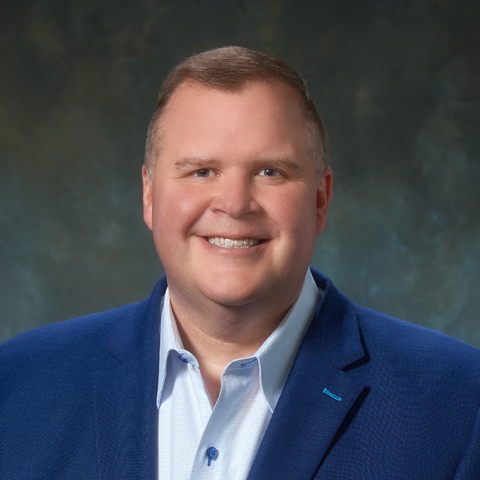
Michael Stull, MBA
Employers Health | Chief Sales Officer
Since 2004, Mike Stull has been a contributor to Employers Health’s steady growth. As chief sales officer, Mike works to expand Employers Health’s client base of self-insured plan sponsors across the United States.
Read More