
Mike sits down with CVS Health’s Josh Fredell, senior vice president, PBM payor and life science solutions, to discuss how one of the most well-known names in the pharmacy industry approaches biosimilars, formulary strategy and clinical management.
Watch or listen to Benefits Bites and Healthcare Headlines.
Register for upcoming Employers Health webinars or watch on demand at https://www.employershealthco.com/resource-center/events/
Sign up for our monthly newsletter here.
Find additional helpful benefits strategies and resources at https://www.employershealthco.com/resource-center/articles/
Read the Full Transcript
Mike Stull (0:10)
Hi, everyone, and thanks for joining us on this episode of HR Benecast. This is your host, Mike Stull. As always, you can find more Employers Health resources by checking out the links in the episode description, including a link to on-demand recorded webinar sessions from our Annual Benefits Forum.
Today, I’m joined by Josh Fredell, senior vice president, PBM, payor and life science solutions at CVS Health, to discuss how one of the most well-known names in the pharmacy benefit industry approaches biosimilars, formulary strategy, and clinical management. Welcome Josh. We’re happy to have you here on HR Benecast. I have a feeling this is going to be a big episode, so we’re excited to get this out there. Why don’t you start by sharing a little bit about yourself and your role at CVS and your responsibilities around the topic today?
Josh Fredell (1:07)
Yeah, happy to, Mike, and thanks again for having me on. So as you mentioned, I lead our PBM payor and life science solutions, which really just means myself and my team get the opportunity to both build and manage and evolve the solutions that are oriented towards, one, how do we help better manage pharmacy costs in this space, but then also how do we help deliver better outcomes for patients. And so that ranges from things like what we’re talking about today, formulary, clinical management, biosimilars, but also extends into spaces like how we’re helping deliver better clinical outcomes in the management of diabetes or heart failure or weight management, as an example.
I’m a pharmacist by background, been with this organization for 23 years, and just glad to get to spend the time with you and your audience on this topic today.
Mike Stull (1:57)
Excellent. Well, you mentioned a lot of areas that we have questions on, so we’ll get started on the specialty formulary side and with biosimilars. And we know through our experience working with CVS on the majority of our clients that CVS was the first large PBM to exclude Humira in favor of its biosimilars a little bit later on the Stelara side of things.
But talk a little bit about CVS’s approach to biosimilars and how that approach has evolved over time.
Josh Fredell (2:34)
Yeah. I mean, one really consistent part of the approach, Mike, is how can this thing called biosimilars, which maybe for today’s conversation, we don’t have to go into all the nuance of how a biosimilar gets approved through the FDA in comparison to what we think of as a generic medication, but for the conversation’s sake, let’s say we want these biosimilars to be highly effective, very safe, and lower cost options for care, much like a generic drug is thought of today. And so our approach has been, if that’s what they’re going to be, how can we best see the use of those? And formulary is one tool to be able to do that, how our own pharmacy helps support patients use that.
But the approach has been, if our goal is to figure out how to make the best use of healthcare dollars, see that cost managed appropriately, biosimilars hold a lot of opportunity and potential for us collectively to see costs better managed. But we also know biosimilars aren’t as easily, if you will, used like we think of a traditional generic drug today. So our approach has also been one, how do we have to bring together multiple different things, if you will, to help see the best use of that from the point of prescribing of a doctor and ultimately, you know, use by a patient.
But key theme, how do we help use these to lower cost? And I think the part that’s changed is just seeing how the market itself has changed in terms of how the biosimilars now are coming to the market with their price points and different things that are really important to see them be best leveraged both by an employer benefit and then ultimately best leveraged by a patient to get the savings and the outcomes I think we all want.
Mike Stull (4:15)
And I think it’s important to note that not all biosimilars come out at the same time. So it’s not like Humira loses brand patent and then we’ve got eight different biosimilars available. And that certainly wasn’t the case with that specific example, where if we would have jumped on the first one, we would have been at, what, 55 percent or 35 percent.
I forget what the what the what the price point on that original. What was it? Was it Amjevita that was the original?
Josh Fredell (4:41)
Correct. Yeah. And it even had two different price points based on different kind of, if you will, versions of the drug. So you’re right.
That was such an astute point, Mike. They don’t all come out at the same time. They may not all be priced the same way and even their price can change over time.
So it is a dynamic space for sure.
Mike Stull (5:00)
So picking the preferred, the point is picking the preferred product unless you’re willing to change over and over and over again. You may have different time frames in terms of when do you pick a preferred product.
Josh Fredell (5:12)
Correct. That’s right.
Mike Stull (5:14)
One of the other pieces that we wanted to talk about today was all of the large PBMs have a white label biosimilar company. CVS is Cordavis.
What’s the what’s the big point that plan sponsors should know about the purpose behind setting up these organizations?
Josh Fredell (5:35)
You know, Mike, it actually ties to a bit of the point you were just making. I think we certainly had the question, what will this biosimilar market look like? Will these products come to the market at competitively lower list price to benefit clients, members, et cetera, especially given that what we did know is these products were to come to the market essentially as brand drugs.
And so where they get was this market going to operate more like a brand drug market or are we going to see it get more towards maybe an optimal state of more like a generic drug market? So one key element of Cordavis was let’s make sure there’s a competitive market around getting to lower list price. And that’s what Cordavis has done with its products.
It’s well down in the lower list price range of the products. And also, let’s make sure we have certainty around the products. That’s really important when we’re managing a formulary for a really big population, because there have certainly been biosimilars that have come to the market with fairly small supply.
And so they may play a smaller role in the market. But how do you help a population in terms of like our template formula is a 30 plus million total people be able to see a consistent, durable solution? We want to make sure there’s consistent and durable products in the market.
So Cordavis has chartered spend to do those types of things and see if that can help influence the market to be more kind of go more towards those high value, high clinical quality, great supply and durability and lower priced products in the market. So that’s been its charter and its mission. And it’s done that with the biosimilars that it’s brought to market.
Mike Stull (7:13)
Yeah, I think, you know, the one thing that we certainly don’t want to do is select a preferred biosimilar, move everybody to it. It has a shortage. You’ve given up your rebate on the originator product and now all of a sudden, you got to go back.
And we had that this past year, not on the specialty side necessarily, but certainly I think Vyvanse was one of the drugs that the generic was in a shortage this past year, ended up having to move everybody back. You don’t have rebates on it.
Josh Fredell (7:40)
Correct. We’ve seen similar things, Mike, in like the growth hormone space. There’s been shortages on products there.
What do you do? And one other thing I’d say, not only just the effort to change in this space, there’s other elements that are important. Members get accustomed to their out-of-pocket costs.
Some products offer copay assistance, others don’t. So there’s a lot of ingredients I’ll say that go into if you have to make a change, you’ve got to get all that right. So durability in a supply chain and thus durability in a formulary position around these products, I think is pretty important to see durability in the use of these products and savings to plan.
So those are all important elements for Cordavis. And now the question is, do we see that approach by more and more manufacturers to determine what’s the long-term kind of plan both for Cordavis and in this space in general? And I would say, at least from my seat, we’ve already seen a bit of a change in the market in terms of if you look at the average list price point of the Humira biosimilars you mentioned earlier, some were only 5 or 10 percent lower cost.
Others came in around 30, 40, maybe 50 percent lower cost. And then we started to see players that were in that 70, 80 percent lower cost. But with Stelara, more of them started to come to the market at a lower list price.
I think that’s a good thing overall for this market.
Mike Stull (8:58)
Any big misconceptions? I’m sure you’ve heard them all. But as you think about, you know, the one or two big misconceptions that you think are out there about why Cordavis was set up.
Josh Fredell (9:12)
Yeah, I think the common misconception I’ll get asked is it’s usually not even asked in a question. It’s usually people making a reference to that. We at CVS Caremark are only biosimilar options for members or made by Cordavis.
And that’s just not the case. It’s not the case in any of the instances where we have a Cordavis biosimilar on our formulary. So and it’s also to be pointed out in Cordavis also doesn’t make biosimilars for a whole bunch of drugs that have biosimilar versions.
And in fact, today, I may be a little off in the number, but we’re probably at around 11 or 12 specialty medications that have biosimilar competition today. And Cordavis only makes biosimilars for three of them. And each of those instances, if you look at our formulary today, you’ll see one or two other biosimilar products also in that preferred position with those products.
I think that’s the maybe the common misconception that biosimilar for us equals Cordavis. It really doesn’t in both directions. We don’t even have them for a certain set of products.
And where we do, there’s competition and they have to compete with other products that are also biosimilars in that space.
Mike Stull (10:18)
Along the same lines, let’s talk a little bit about factors that influence formulary and clinical management within a specific class. So whether it’s adding on the biosimilar side or maybe it’s just clinical management to step patients through lower cost therapies before getting to a more expensive one. Talk to us a little bit about what factors go into that analysis.
I know that there were specific sessions at the client forum that I thought were fantastic this year. It was the first time that I think we’ve seen this where we walked clients through the clinical considerations and then the math problem that exists. And again, I thought those were very well done.
Josh Fredell (11:03)
Well, first, thanks for that positive feedback. We’re glad that those sessions were of value. And yeah, I would say maybe I’ll frame my response in three groups of things.
We really those factors that are important. The first, I think, are the ones that most people think of first. Certainly, if we’re thinking about a formulary strategy or a clinical management strategy, what’s the clinical picture of the space?
I guess we’re going to pick a set of drugs as preferred drugs. Are they highly effective? Do they have good safety profiles?
Do we have certainty in the supply chain that we can have a durable strategy around those? That clinical part is really the first point in a very important one. Second would be, of course, their price.
If we’re doing this as a means to control costs, are they offering that competitive price point to be able to anchor a cost management strategy around? So you’ve got to get the clinical parts right. And there’s a lot of other kind of sub ingredients or factors to that, as well as the price point.
But I think what you saw at our client forum, and the second part is, then there’s this broader math equation, if you will, when you’re trying to do this for a full population. And so a simple example I often use is you could, if we simplify this scenario and say it’s a formulary consideration, and we’re really discussing two drugs, and we want everyone to use the $100 drug and no one to use the $200 drug, you have to believe that the $100 drug is something that the vast majority of the people who need that medication can use, use effectively and safely to help manage the cost of the whole population.
Since if you get a mix of both, your costs are going up. And so when we make a change in a formulary or clinical management strategy, we are doing that math equation to say, can this really meet the needs of a broad population? And certainly the cost of drugs in relation to their list price and rebates makes that math problem even a bit more complex.
And so we want to get that right since we know anyone who’s managing a benefit for a population, whether that’s an employer group of 400 employees or 4,000 employees, has to think about, can this strategy work for my population? So we’re doing that same thing in terms of the math. And then the third item that goes into this equation, Mike, is where I’m just going to call for now, the other things that are important in a strategy, when people use the term formulary as an example, they usually are thinking about, are there certain drugs preferred over others?
And that formulary does that. And that’s an important aspect. But as you know, and your team knows as well as we do, the cost of the drug is certainly an important factor.
But what about the utilization? What are we doing to manage the appropriate use? And so where we’re looking at, how do you get to lower cost drugs that could also allow plans to really make sure the utilization is done right, whether that’s through a classic means of prior authorization or maybe it’s done through the smart involvement of a care management program or something else?
We want to be able to deploy those things as effectively as we can while getting all of those other elements right as well.
Mike Stull (14:14)
I thought one of the more enlightening pieces when and again, going back to the Humira biosimilar switch was coming to the understanding that we needed to move roughly 85% of the utilization to the biosimilar in order for it to be a break even. And I think the number was probably similar. It may have been a little bit lower with Stelara.
But regardless, just knowing that you have to be able to move people to the biosimilar product, it requires in a lot of cases, and maybe this will change going forward, but it certainly requires cooperation from both the patient and his or her prescriber. So it was a big lift. And I think CVS should be applauded to be able to move that kind of volume at scale was a pretty big thing.
Speaking of big moves, so we have to talk about GLP-1s and one of the big moves coming up is adding Zepbound back 10/1 after excluding it for, I think, just a little bit over a year. Can you talk about the thinking that went into that decision originally to exclude it and then bringing it back and what some of the results have been?
Josh Fredell (15:43)
Yeah, I mean, great question in such a dynamic and important space. I mean, one, you guys know, if you look at client spend, especially maybe has 50 percent of it in this wonderful class of GLP-1s probably has another 20 or so or more percent of it. So I think one of the very consistent things we were hearing broadly over a year ago was what more can be done to get to better cost and prices in this GLP-1 space?
And we know, again, our formula is one vehicle or tool we can use to do that. And so you go back to those factors we talked about before. We did that evaluation to say clinically, are we comfortable and confident in changing our formula?
Because we know when we do, we can really get the market to respond to improve the prices or improve the ways we can manage the space. So that was the objective of making that change back in July of 2025. And we saw the benefit of that.
We did see that one, the unit cost of the drugs, the net cost per claim come down, which was very good. And it’s allowed us to start to bring in additional management strategies to the category as well, whether it be around differentiated copay designs, UM designs and other things. And so that was a success for us.
Now, with any formulary change we’re making, we’re always reevaluating that category, either because factors are changing in the class, like there’s new maybe there’s new drug competitors coming to the market. Clinical guidelines change those types of factors. But we’re also revisiting, can we get an even improved position on price and management for our clients?
And if one of those outcomes, is we can get there with an ad back of a product, we will strongly consider that. I will say we’re highly sensitive to not getting in a position of kind of changing, changing again, changing back. That kind of movement is disruptive to members, to populations, to plans that field calls and inquiries from their employees and members to say what’s going on.
So we’re very sensitive to that. But if we can now make a change, especially an ad back that expands access, that’s a good thing to help further reduce the cost and do so in a way where there’s broader access for clients and members. And I’ll say the other factor that’s really important in this category is making sure that we have a strategy that will be durable as we see this market change.
I mean, if we look at 27 and 28, I think if all of the manufacturers and their pipelines come true, we’re probably going to see four or so new entrants into this GLP-1 market, whether it be on the diabetes side or the weight loss side or both with some of those other indications all coming. So we also want to make sure we’re really well positioned to help our clients and their patients when those moments come in the future as well.
Mike Stull (18:30)
One of the other big changes in the marketplace that particularly is impacting the GLP-1 space for weight loss are the direct-to-consumer programs. Can you talk a little bit about how manufacturer direct-to-consumer programs influence your all thinking around formulary and clinical management strategy?
Josh Fredell (18:55)
Yeah, I mean, this space is fascinating, Mike, for me. I’m from the pharmacy side. I mean, for the longest time, if I heard direct-to-consumer, I was really translating that to over the counter, right?
Like that’s where I’m going to go. And now the robustness, if you will, of a direct-to-consumer market is an interesting one. And one, I’ll say we’ve seen it for a number of years, but mostly in the play of what we’ve all thought of as the cash discount cards for usually used for generic drugs.
So we’ve probably all seen ads for whether it be SingleCare or GoodRx or things like that. Now we’re seeing it certainly be a bit more broad and certainly playing a different role on brand medications, albeit heavily in the GLP-1 space. You can certainly go on to the TrumpRx website and see a lot of other medications at different price points from a direct-to-consumer perspective.
So for us, when we think about formulary or overall management strategy, I’d say two really important things have come into play. One is it further puts pressure on what an individual consumer may think about their benefit. And what I mean by that is, let’s just use a simple example.
If a plan covered weight loss and did so with a $500 copay, their members are going to say, why do I pay $500 to use my benefit when I can get the same thing in the direct-to-consumer market for $350? Is there a benefit to my benefit? So I think it elevates both our push as Caremark to say, we want to see how we can get the net price of these drugs for plans covering the medications under a consistent commercial healthcare benefit be at or better than that direct-to-consumer price.
How can we get there? But I think it also means plans have to think about their benefit design. And if members are exposed to a price that’s higher than DTC, they’re going to start asking the question, should I be using my benefit or not?
And I want to acknowledge some plans may use that to their advantage, right? They may be fine with someone leaving their benefit and going into the direct-to-consumer market. We understand that.
Others don’t want that to happen. So they have to really think about their plan design. So it’s kind of two parts.
How can we make sure that the price of the drug for our plans that cover under their benefit get to be at or better than that? That’s important. But then also, how do plans make decisions around their benefit design so it shows up for members?
And I think all of that comes together because we’ve got to decide, do we want the benefit to seem kind of, I don’t want to say broken, but separated between where the member goes or more integrated? So I’d say, what has this prompted us for the future? Is there a way to better integrate when someone wants to use the direct-to-consumer market into their prescription drug benefit plan?
We think there are ways to do that. We’ve done some of that with the generic cash card space over time. And so now we’re looking to see, will this branded direct-to-consumer market also give us the way to do that and offer you and plans and others more options to how it could be part of a prescription or benefit?
More to come on that, because we’re not sure if it’ll open itself up to that in the way we hope it will. But that’s what gives us kind of a direction to pursue. Because I think for us, at the end, we really do want to make sure plans and members have a consistent benefit and a really affordable one.
And if the direct-to-consumer market allows us to do that, we want to help enable that.
Mike Stull (22:23)
So one of the other recent stories is that CVS, along with Express Scripts and Optum Rx, all came to a settlement with FTC. And the CVS settlement was recently published and has a number of different provisions in it around things that CVS has agreed to do, and in particular mentions a standard offering and what all the components of that standard offering will look like as we head into mostly 28 and 29 and beyond. Anything in there that you see as having a significant impact on the areas that you’re working in, whether it’s formulary, clinical management, or the payer solution side?
Josh Fredell (23:16)
I’ll say it’s a yes and no answer. Yes, there’s definitely impacts. The no is more coming from the fact that as I’ve gone through it, we’ve already been pushing really hard into those spaces to begin with.
So the things that come top of mind for me are, one, you mentioned the standard offering, and the standard offering being one that’s not anchored on traditional rebate guarantees. Our true cost and some other pricing models we’ve had for the last few years already do that. So I think that positions us well to say we’ve got that.
At the same time, it allows for continued optionality for plans and decide what they ultimately want to do, which we’ve also supported. So in that regard, I think it increases the attention and focus on that but really lands and anchors well in a place we’ve already been. The second part of what I see from the FTC settlements gets really to, interestingly enough, a couple of things we’ve already started to talk about a little bit, which is what is the end consumer, that patient, that number, whatever term we want to put to it?
What are they paying? And there seems to be very clear direction. They want the market to make sure those individuals are not paying more than what the real final net cost is of these drugs.
And so in a world where I think for at least for a long while, we’ll still probably have this world where there’s a difference between the list price of a drug and its final net price due to rebates. They want to make sure members are not paying more or having their price based on that final net. And so I think where that will increase attention is around, again, strategies and solutions we’ve had, such as point-of-sale rebates.
And I should call out; it’s not needed by every plan. Many clients have benefit designs in place that wouldn’t necessitate that, but others don’t. And so they may need to do that, or they may need to think about other elements of their plan design, because there’s certainly a number of provisions that really get to ensuring the member is getting the benefit of what the market and what we collectively all do together is try to do to get the price of drugs down, make sure they experience that.
And then one final piece, it kind of connects to my comments to you about the direct-to-consumer market. There are some parts in there about integration from the Trump Rx direct-to-consumer market. It’s a little unknown of what that specifically means right now.
So I think there’s a little bit of understanding, like, what does that mean in kind of day-to-day reality? But I think what it’s also saying is if someone’s going into the cash market, how does that start to play a bit of a role inside of the benefit that the member has within their broader health care benefits? So those are things that I think we’re well-positioned on, but I think this, the settlement actually increases the attention and focus on all three of those areas.
Mike Stull (26:04)
Yeah, certainly, as we’ve put out communications around the settlement itself and what was published, the big question we get back from employers has to do with point-of-sale rebates. And most of those are those with high detectable plans or they have some sort of coinsurance in place. Okay, time for the crystal ball moment.
So as you think about, you know, we’ve talked about the next couple years, what we see coming. But if you go out maybe four or five years, anything that you have your eye on, that you’re watching and thinking about in terms of where formulary management is headed next?
Josh Fredell (26:48)
Oh, you’re right, Troy. It’s a crystal ball. And so, you know, we’ll save this recording, Mike, and we can come back to it in a few years and see how well, how close to the pin did we get.
But I think maybe a few areas that to me feel like they’re definitely going to be key parts of the evolution of formulary clinical management of this pharmacy benefit. One, for those who’ve been around in this space for a while, if you look at the GLP-1 category, it feels so much like where we’ve seen the autoimmune drug category on the specialty side go in terms of expansion of drugs, indications, and things of that nature. So I think whether it be indication-based formulary designs, different indication-based coverage choices of clients, it feels like we will see more of those types of options and decisions over time, just given what we see is going to be the expansion of indications in that space for clients.
And listen, if it helps get to better pricing and better management of the space for clients, I think that’s a good thing. So I think a little bit more sophistication, if you will, in terms of the level of which some of the core work is done, not just at the category level, but indication level is certainly one. And I see it there.
We could see that play out with some other drug categories and conditions. We kind of alluded to one already, which is if this direct-to-consumer space really remains durable, and we see meaningful price points in there that are also durable, it’s hard to imagine a future pharmacy benefit not having more connection and integration of those points into it in some way, shape, or form. Whether that’s simply plans don’t cover it in a traditional benefit, but there’s some pathway into that that eases the experience and connects it for a member, that might be one.
Or maybe we actually see a future formulary where you have your kind of non-DTC and DTC products all there. It’s hard to know, but I think when you see a new emerging access point of medications there, if it’s going to stick around, it will play a part in that strategy. And then maybe the final piece that comes to mind for me, Mike, is, and I’ll kind of step out of formula a little bit, but when we think about now trying to support appropriate use or utilization management, today I think when most people hear utilization management, they think prior authorization, and I think the future we will see more strategies of utilization management that are not anchoring on kind of the traditional prior authorization pathway that we see today. I think, by the way, I think a traditional prior auth probably will have a long life.
There’s a real value in doing those kind of assessments. But to give you kind of a little indicator to where I what I mean by that is certainly we’re seeing players in the market today use whether it be kind of value-based arrangements with provider groups, narrow physician groups, those types of models could play a role in how to ensure appropriate use and do that through kind of a better connected physician environment or for us, the way we’re trying to further connect into the workflow and connectivity of physicians through the EMR, the electronic medical record. I think that’s going to give us different ways to achieve outcomes that are still important, which is control for appropriate utilization, see the best use of lower cost drugs, make sure patients get support to get the best clinical outcomes from those things. I think we’re going to see different ways to do that than maybe what we traditionally see today in terms of how we define formulary in UM.
Mike Stull (30:35)
Yeah, I couldn’t agree more. I was in a finalist meeting this past week and was asked, well, if we have our high-cost drugs moving to biosimilars and we have, you know, these MCAP reductions, you know, what’s the value of the PBM moving forward? And I said, well, it’s always about what’s next.
And, you know, when Humira, the world’s best-selling drug, had a biosimilar launch, you would have expected that all of your specialty pharmacy costs would have come down tremendously. And did that naturally happen? Yeah, maybe for a year.
And then we started seeing utilization move to all of the drugs that we see during the commercial breaks of our favorite shows. So I think pharma is very good at getting out and convincing doctors to prescribe their new products. And as long as that continues to be the case, there’ll continue to be a need for plans to use clinical management and formulary management.
And I just, I think there’s an idea, and sometimes I have to remind myself that our clients probably aren’t sitting on LinkedIn, you know, reading everybody’s posts. And it’s a lot of people in the industry. But, you know, this idea that if you just eliminate rebates, then prices will just magically come down.
We didn’t see that to be the case. If you look back into the, I guess, early 90s, late 90s, early 2000s. I mean, that wasn’t the case.
You can find articles that would read like they were written in 2026 about how brand drug prices continue to rise and continue to eat up both plain sponsors from a commercial side and from a government side’s budget. So, I mean, it’s a problem that continues to be out there. It’s an economic problem that we’ll continue to have as we move forward in the style of healthcare system that we have.
And you always have to have checks and balances.
Josh Fredell (32:51)
And so I would, you know, Mike, just maybe a closing comment on your point. If we believe in the future, there’s still going to be different types of medications that have different price points or benefits, pros, cons for members. We have to decide, like, how will we, again, at a population level, help to see the best use of the most cost-effective things.
To your point, rebates or not, you can even go to the generic drug space and look at some of these hyperinflated generics. It’s not about rebates, just about how a pricing strategy is playing out. I think we’re going to still need those tools and capabilities to help protect plans from unnecessary costs and waste from those moments.
And I think that’s certainly just one part of the role that we’re playing today. And I think we still play into the future, honestly.
Mike Stull (33:35)
Yeah. Well, Josh, thank you for taking the time to join us on HR Benecast today. I know for me personally, I always enjoy our conversations and hearing what you’re thinking about.
And if you enjoyed today’s episode, want to learn more about Employers Health or access more of our educational resources and webinars, you can do so by heading to the episode description. Thank you for taking the time to listen and for your continued support, participation, and interest in Employers Health. Be well, and we’ll see you soon.
In this podcast
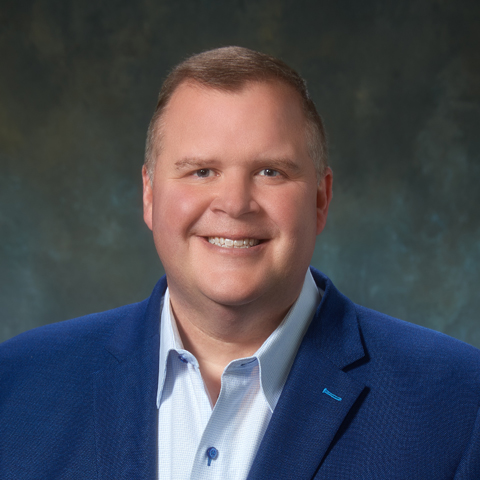
Michael Stull, MBA
Employers Health | Chief Sales Officer
Since 2004, Mike Stull has been a contributor to Employers Health’s steady growth. As chief sales officer, Mike works to expand Employers Health’s client base of self-insured plan sponsors across the United States.
Read More