
Pharmacy benefits are evolving rapidly, and employers need solutions that align with their unique goals and priorities. In the latest episode of Benefits Bites, Mike and Madison discuss how Employers Health is working to meet those needs and expanding its solutions and vendor options, giving plan sponsors more choice and flexibility.
Have an idea for an upcoming podcast episode? Submit your topic here.
Watch the latest episode of Healthcare Headlines here.
Register for upcoming Employers Health webinars or watch on demand at https://www.employershealthco.com/resource-center/events/
Sign up for our monthly newsletter here.
Find additional helpful benefits strategies and resources at https://www.employershealthco.com/resource-center/articles/
Read the Full Transcript
Madison Connor (0:10)
Welcome back to Benefits Bites, where we cover pharmacy benefits topics in bite-sized videos. Today’s topic is StarkRx, our new modular offering powered by JudiRx. We announced this a few weeks ago.
We’ve received a number of questions, so I thought our audience would benefit from hearing straight from one of the minds behind StarkRx. So, Mike, to get us started, why don’t you give us some context to this decision? Why offer this solution now?
Mike Stull (0:37)
Well, we’ve always believed that one size doesn’t fit all in the pharmacy space, and so we’ve actually had alternative PBM offerings going back all the way to 2013.
Madison Connor (0:49)
And how has this alternative offering evolved over time?
Mike Stull (0:52)
Yeah, it started with SXC, which became Catamaran, which ultimately became part of Optum Rx. We went back to the market. We signed a relationship with EnvisionRx, which rebranded itself as Elixir.
It was part of the Rite Aid Corporation, which filed for bankruptcy. And those assets were purchased by MedImpact, and we ultimately relaunched the MedImpact relationship in 2025.
Madison Connor (1:22)
So where does JudiRx fit into this complicated history?
Mike Stull (1:28)
Yeah, so, you know, over 13 years we found that our alternative offering was either acquired or went out of business. And so this time we decided that we wanted to have multiple options for clients that were looking for something different. The other piece I would say is that Judi fits in because it was built at a different time and in a different way than the other PBMs that we have relationships with.
And so I think that there’s some additional value and uniqueness that we can work off of with the folks at Judi.
Madison Connor (2:10)
Others have launched modular solutions. Why is this different?
Mike Stull (2:16)
Yeah, the market’s full of innovation and disruptors. And I think that if you tried to do something with all of them, it would be like drinking from the end of a fire hose. You’d probably choke.
And so what we wanted to do is make sure that we found the right relationships and the right solutions that could truly add value to our clients. And we wanted to keep it relatively simple. We didn’t want it to feel like a cobbling together of different solutions or point solutions, where we’ve seen that the patient typically gets lost in the middle.
So ultimately where we landed was relationships with several different solutions providers, where we’ve worked out the operational pieces to help integrate them within all of our PBM solutions, and then also working on the contractual relationship as well.
Madison Connor (3:19)
So walk us through the StarkRx solution and its relationship with JudiRx. What does JudiRx handle?
Mike Stull (3:25)
Yeah, so JudiRx is the underlying PBM, and it’s going to handle the things that you would expect a PBM to handle. So claims administration, eligibility, billing, the retail network, clinical management, formularies in there as well. And since we’re utilizing the template formularies through Judi, we’re also utilizing its rebate contracts.
Madison Connor (3:51)
And then what’s been separated out?
Mike Stull (3:53)
Home delivery is the big piece that’s been separated out.
Madison Connor (3:57)
And for home delivery, Amazon?
Mike Stull (3:58)
Amazon.
Madison Connor (3:59)
Why Amazon?
Mike Stull (4:01)
Amazon, that’s correct. When we met with Amazon and looked at what Amazon’s offering, we were excited about the infrastructure that it’s built and some of the things that it’s doing differently around home delivery.
And then also from a size and a brand perspective, it has the leverage to get the pricing and the financials that we need. I’d also say that as we talked to the team at Amazon about future state and future ideas, that there was a lot of alignment around what could be. And so as we think down the road, they seem like a good partner to have a relationship with.
Madison Connor (4:46)
You didn’t mention specialty. How about specialty?
Mike Stull (4:49)
Yeah, so specialty is going to have one of two options. It can be handled with JudiRx doing the clinical prior authorization and management and then dispensing through Amazon. Or it can be through a comprehensive solution with Archimedes.
Madison Connor (5:09)
Tell me more about the Archimedes solution.
Mike Stull (5:11)
Yeah, so Archimedes takes full responsibility for helping clients manage the entirety of their specialty spend. And so that includes the clinical management piece, the having a network of specialty pharmacies to dispense the medication, working with patients on adherence and co-pay assistance and those types of programs, but also interacting with the prescribers to make sure that we are managing and working with the prescribers to get the best clinical outcome for patients at the right price.
Madison Connor (5:53)
And does Archimedes work with other PBMs or is it just through the StarkRx solution?
Mike Stull (5:58)
No, we have clients today that utilize Archimedes that are in our CVS deal and certainly MedImpact will work with Archimedes as well.
Madison Connor (6:09)
And from clients that currently work with Archimedes, what have we seen so far?
Mike Stull (6:13)
Yeah, pretty decent decrease in the net per member per month for specialty versus what it looks like across our book of business.
Madison Connor (6:23)
Are we doing anything else unique around specialty?
Mike Stull (6:26)
So we’ll also be announcing a formal relationship with RxResults for specialty carve out.
Madison Connor (6:35)
And what types of clients would that be a fit for?
Mike Stull (6:39)
Typically it’s the clients that want to separate out the specialty management piece from the specialty dispensing.
Madison Connor (6:47)
And you’ve known the RxResults team for a while now, is that right?
Mike Stull (6:50)
I have. So I made my first trip to Arkansas probably 10 years ago to meet with the RxResults team. And so it’s nice to be at this point where we’re actually offering this as a formal solution to our clients.
And if you look at our current clients, which we do have some that are using Rx Results today, again, you’re seeing a consistently lower per member per month net of rebates for those groups that use RxResults.
Madison Connor (7:24)
And beyond these relationships with these new vendors, how about the employer’s health team? Are they working on any building any programs of their own?
Mike Stull (7:32)
Yeah, Matt Harmon and the clinical pharmacy team are always looking at the data and identifying opportunities to customize things. And so they’re always working on those types of programs.
Madison Connor (7:45)
And what will that look like with CVS, for instance?
Mike Stull (7:48)
Yeah, since most of our business is with CVS today, that’s where most of the opportunity lies. And so they are working through some operational things with CVS that will position us for a future in which we’re able to customize things a little easier. And we’re not necessarily ready to reveal what exactly those things are, but certainly exciting for what’s to come.
Madison Connor (8:17)
Anything else in the works that we should share with our loyal Benefits Bites listeners?
Mike Stull (8:22)
Well, again, I think that the team has some custom offerings. And for clients that have upcoming mid-year reviews or meetings with our teams, the clinical team will be there to talk about what those specific opportunities look like.
Madison Connor (8:39)
What a tease, Mike.
Mike Stull (8:41)
Yeah, you know, the clinical team is very stealth.
Madison Connor (8:45)
They are very, very stealthy. So let’s shift to some of the industry changes that are coming in 2029 through some of the CAA changes, the FTC settlements coming. So JudiRx reimburses its retail network based on NADAC, the National Average Drug Acquisition Cost, rather than your standard discounts off of AWP or average wholesale price.
What is that solving for?
Mike Stull (9:08)
Well, when you negotiate based or reimburse based on NADAC, you’re getting closer to the actual cost of a drug. And we do have 12 states that require some type of minimum reimbursement legislation.
Madison Connor (9:26)
Twelve states and counting by the day. So can you talk a little bit more about what we’re seeing in those states?
Mike Stull (9:32)
Yeah, typically its requiring reimbursement based on cost to the pharmacy, and typically they’ll benchmark that to NADAC. And so it’s NADAC plus a dispensing fee. The dispensing fee is typically defined in those laws as being consistent with whatever the Medicaid dispensing fee looks like in those particular states.
So typically $10 to $15. And when you think about what happens to those claims in a model that’s working off of a discount off average wholesale price is that those claims typically get kicked out of the calculation. With Judi already reimbursing based on NADAC, it’s a much more simple process where you’re really just adjusting the dispensing fee if it needs adjusted, depending on whatever the state requirement is.
Madison Connor (10:24)
On the same topic as state legislation, you also don’t run into the anti-steering issues because you’re not steering towards PBM affiliated pharmacies or NERO affiliated networks. Any other issues that this solves for in the market?
Mike Stull (10:41)
As we head closer to 2029, there’s going to be a number of PBM disclosure requirements, particularly around PBM compensation. And I think that this model was set up so that clients are paying a per member per month admin fee, and that is the entirety of the compensation for Judi. So when those disclosures come, there’s not going to be a lot of shock and awe because you’ve been paying it on a monthly basis.
Madison Connor (11:14)
So what type of plan sponsor is this offering best suited for?
Mike Stull (11:17)
Yeah, I think it’s the plan sponsor that wants to be more aggressive, that is looking for a different pricing model. So getting away from these average aggregate guarantees that end up limiting what you’re able to do without affecting them and looking more towards unit prices for drugs that are much more closely tied to the pharmacy’s actual costs. There’s not a lot of subsidization going on behind the scenes.
I think the key takeaway from today’s episode is that regardless of which model you’re looking for or what you’re trying to do from a pharmacy perspective, Employers Health is going to have a solution that can accommodate those priorities and we can work right alongside you to help you achieve those.
Madison Connor (12:16)
And, you know, these are the early days of StarkRx, but how do you expect this offering to evolve?
Mike Stull (12:22)
Yeah, I mean, this is just the starting point.
Madison Connor (12:26)
And is that why, I mean, you know, Judi is doing a lot in the first year. Is that intentional?
Mike Stull (12:33)
Yeah, I mean, it’s intentional that we wanted to keep it simple. But the second piece is that we also realize that Judi does a lot of things really well. And so why try to do something different if they’re already doing it at a very high level?
Madison Connor (12:53)
And as you think about different vendors in the future, is that a possibility?
Mike Stull (12:58)
It is. And if we decide to take on different pieces of the equation, whether it’s rebates or whether it’s formulary, it’s going to be because we have additional value that we think that those can create. We don’t want to do different for the sake of just being different.
Madison Connor (13:20)
And on that note, Mike, because it went over so well last time, do you have any parables for us to end with?
Mike Stull (13:26)
It did go over very well. I was surprised how many people had not heard of the scorpion and the frog. So, yeah, there is a Zen parable that is related to that last point I made about different for the sake of being different.
And it’s a parable about a clockmaker. And the clockmaker did everything in reverse. He would walk around town backwards.
He had to run into everybody and everything. But he wanted to be his own guy. He wanted to do his own thing.
And he even made his clocks where the hands of the clocks went in reverse order. Now, there’s obviously an inherent issue with that. Can you take a guess?
Madison Connor (14:13)
It was the wrong time.
Mike Stull (14:15)
It was always the wrong time. So what’s the purpose of a clock? A clock allows you to tell the time.
And in his case, the clock was different. It was sure innovative, but it wasn’t functional and it wasn’t useful. So back to the we’re not going to do different just for the sake of being different.
If we’re going to do something, it’s going to be because there’s value to be had there.
Madison Connor (14:41)
Well, thank you for that, for that.
Mike Stull (14:43)
You’re welcome, Mike. You’re welcome.
Madison Connor (14:44)
And on that note, we’ll end it. We’ll see you next time on Benefits Bites.
In this podcast
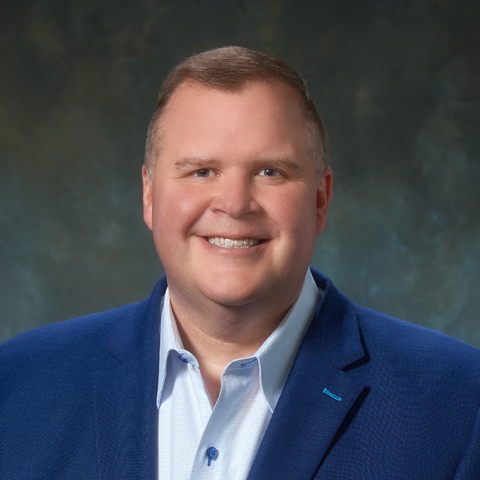
Michael Stull, MBA
Employers Health | Chief Sales Officer
Since 2004, Mike Stull has been a contributor to Employers Health’s steady growth. As chief sales officer, Mike works to expand Employers Health’s client base of self-insured plan sponsors across the United States.
Read More
Madison Connor, J.D., CEBS
Employers Health | Senior Vice President, Regulatory Compliance and External Affairs
Madison is responsible for monitoring state and federal legislative and regulatory developments that may impact employer sponsored health plans.
Read More