
Mike sits down with Zerigo Health’s chief platform officer, Tim Raducha-Grace, to discuss how Zerigo is helping patients achieve clearer skin, improve adherence and reduce reliance on high-cost therapies. Tim shares how one year of Zerigo’s treatment can cost less than a single month of many advanced dermatology medications and what that could mean for employers looking to improve outcomes while managing specialty drug spend.
Learn more about Zerigo Health here.
Watch or listen to Benefits Bites and Healthcare Headlines.
Register for upcoming Employers Health webinars or watch on demand at https://www.employershealthco.com/resource-center/events/
Sign up for our monthly newsletter here.
Find additional helpful benefits strategies and resources at https://www.employershealthco.com/resource-center/articles/
Read the Full Transcript
Mike Stull (0:10)
Hi, everyone, and thanks for joining us on this episode of HR Benecast. This is your host, Mike Stull. As always, you can find more Employers Health resources by checking out the links in the episode description, including a link to upcoming and on-demand recorded webinar sessions from our Annual Benefits Forum.
Today’s conversation highlights an effective clinical solution to chronic skin conditions like psoriasis, eczema and vitiligo. As these conditions become more prevalent and more expensive than ever, plan sponsors and members are looking for options to reduce costs while improving patient outcomes. Today’s guest, Tim Raducha-Grace, chief platform officer at Zerigo Health, is joining me to discuss how Zerigo is helping patients achieve clear skin while reducing spend.
Welcome, Tim. If you wouldn’t mind, as we get started, tell the audience a little bit about yourself.
Tim Raducha-Grace (1:12)
Thanks, Mike. So Tim Raducha-Grace, the chief platform officer over here at Zerigo, you know, I’ve been working in the chronic disease space for a number of years and serving folks with chronic illnesses. Zerigo is a purpose-built platform to do just that for chronic skin disease, which, as we’ll talk about, has the added complexity of being unpredictable and episodic.
So that’s a little bit about me and the company and look forward to the discussion today. Thanks, Mike.
Mike Stull (1:44)
Absolutely. Well, dermatologicals and these conditions that I mentioned in the intro are now the number two therapeutic class in our book of business, so getting a lot of attention from employers. We’re seeing across our clients about $32 per member per month in spend.
So talk to us a little bit around how Zerigo works as a first-line therapy option or in conjunction with some of the biologics we see in our top drug lists.
Tim Raducha-Grace (2:17)
Yeah, no, thanks, Mike. I think, you know, first, I really appreciate Employers Health, both their partnership and being here today. You know, we’ve had a very good partnership with employers, in part, you know, you all have been very focused on delivering that value and that spend, which has just been terrific.
You know, our approach to it essentially takes the American Academy of Dermatology (AAD) guidelines and makes it accessible to everyone. So essentially what the American Academy of Dermatology recommends is three steps. So first, a visit to get diagnosed, and then typically a topical, which, you know, they’re relatively cheap, you know, easy to put on and can be a great first-line therapy.
Then what AAD recommends is something called narrowband UVB, which is an FDA regulated spectrum of light therapy, which is what we provide. And then after that, then these pretty high-cost biologics. The challenge is that about 90% of counties, so 9-0, don’t actually have any narrowband UVB.
So if you live there, it’s just not an option. And then secondly, even if you do, historically you had to access narrowband UVB by driving to a physician’s office a couple times a day, which I don’t know about you, Mike, but isn’t very practical given that I have three teenagers in the household. So what Zerigo has done is first we’ve miniaturized that narrowband UVB device, made it very safe and very therapeutically powerful in the comfort of individuals’ homes.
And then we pair that with a modern app that’s actually connected via Bluetooth to guide people through that therapy. So we have a series of partnerships where we deploy access to that platform. And as a result, we’re seeing people clear skin, we’re actually seeing 90% effectiveness, which is well above most benchmarks.
So that’s a little bit about how we do it. And we can talk a little bit more about the platform, but that’s how we serve people.
Mike Stull (4:42)
Yeah, I think the platform is really interesting, and that was one of the key takeaways. The first time I ever heard about Zerigo, and we were all focused on the light wand, but certainly this solution is a whole lot more than just the light wand. Talk to us a little bit more about the whole platform.
You mentioned, you know, people are going to go to their dermatologist. I’m guessing that they’re the ones that are prescribing this solution. And I’m guessing that there’s different levels of intensity of the light therapy based on the dose that’s or based on the condition of the patient. So.
Tim Raducha-Grace (5:31)
Yeah, no, thanks, Mike. So I think to go to the first part of your question in terms of the platform. So narrowband UVB as a therapy has been recommended by AAD for over 20 years.
The challenge has been, to your point, there hasn’t been a wraparound platform that’s patient centered. So what that means is that historically people would be given a wand, for example, and you’d have to treat in your home. But there was a lot of guesswork to it.
So, for example, how long do you treat? Are you making progress? So we built a customized platform that does three main things.
So first, it ensures that that prescription is 100 percent custom to you. So, for example, what type of skin tone do you have? How many body locations do you have?
All of that is customized. Then it’s paired with the app. So it takes the guesswork out of treatment to help it help you guide treatment on your forearm, on your shoulder for the right amount of time.
And as a result of those two things, we have adherence rates that are north of 70 percent. So if you contrast that to adherence rates of non-supported phototherapy, which is generally in the 50s, it really gives people a leg up on getting that clear skin. In terms of the physician partnership, one of the things we’ve taken great care is to first of all, we don’t go around people’s medical home.
There are all sorts of companies out there that I think disturb the physician individual relationship. We’re not one of them. So in our care pathway, what we allow people to choose is two options.
So first, when somebody comes in, if they’re interested, we allow them to see a virtual prescriber. In part, they can do it quickly and really within 15 minutes get assessed. Because this is prescription grade and a clinical therapy, we also give people the option to just give us the contact information of their dermatologist, their physician of record.
In that case, we do the work of reaching out to them and then we get the prescription from them. We also ask if a member would like to share it, could they still give us that information even if they choose the virtual option? So that way we get that information back to the physician of record.
So that way the medical home really has that information. So that’s how we reach people. That’s how we serve people.
And that’s how we make sure we’re integrated with their medical system.
Mike Stull (8:17)
That’s awesome. Anything that makes it easier for the patient to get started. So good to good to hear that.
And certainly I know as someone who sees a primary care doc and sees a specialist making sure that there’s communication back and forth about different treatments is certainly important. I started I started the conversation with the cost statistics, and I think the logical next question that most people would have is OK, so sounds safe, sounds effective, sounds easy for the participant to utilize. What’s the cost of Zerigo compared to some of the traditional pharmaceutical treatments?
Tim Raducha-Grace (9:07)
So there’s two pieces of it. You know, just directly from an employer’s perspective, you know, one year of Zerigo is less than one month of those advanced therapies. So from a cost perspective, it is an absolute no brainer.
We offer our Y guarantees both at an individual level for small businesses and, you know, at an aggregate two to one level for larger employers. But from a cost perspective, it truly is a fraction of the cost. One thing to note, though, is that really the barrier for most members in it is that is two things.
One is just simply access, because the reality is, is a lot of those members, especially with high-deductible health plans, are bearing such a high portion of those pharmaceutical costs. This not only saves money for the employer, it gets people healthier. And you know what, Mike, this is actually one of the top five reasons why people miss work.
So not only do you save money, hopefully get people healthier with fewer adverse events, but you also get people back to where they want to be, whether that’s, you know, work, caring for their loved ones, things like that. So I just wanted to call that out, because in addition to having the financial burden on the employer, you know, having members and employees who are more well-functioning is a good thing for everyone.
Mike Stull (10:35)
That’s good to know in terms of the, you know, it’s one of the top five reasons individuals miss work, because I know for me, I I’ve questioned our clinical pharmacists about the ROI for employers on the drug spend that that we see showing up. And dermatologicals are a little different for employers in terms of thinking about them. You know, blood pressure medicine, it’s really cheap now, but we know what it’s meant to prevent.
Cancer drugs, we know what they’re they’re trying to ultimately prevent. So when we think about dermatologicals, what are both from a direct cost perspective and then some of these indirect costs that you touched on, what type of future events or future scenarios are we are we trying to avoid by inventing today?
Tim Raducha-Grace (11:38)
I’m going to break that down into two different pieces. So the first scenario is that, you know, the rate of increase for both psoriasis and eczema on those pharmaceutical costs has been double digits the last, you know, five years or so. And that’s not going to stop.
There’s north of 100 new eczema indications coming online. And one of the opportunities and actually, frankly, one of the areas of focus that I know Employers Health as is how can we truly bend the curve? So we save money through two ways.
So first is we offer this in a voluntary basis to individuals who are actually on those advanced therapies. And what we’re seeing is that the majority of them, once they engage with us, are successful stepping down. And that’s done in a physician directed basis.
The second cohort, to your point on preventing the progression, is that what we’re seeing in the data. And so this isn’t hope this is in the data, is that we’re reducing the progression rate by about 80 percent. So combining those two factors.
So one is, you know, making sure you have the hard dollar savings from today by folks choosing a more kind of logical, low cost, easy therapy. And then to bending that cost curve, you know, that’s how you can really save quite a bit of money. So, yeah, I would say that those are the two those are the two main ROI benefits.
Something that you mentioned, Mike, that I think, you know, sometimes gets under noticed are those secondary costs. So in general, when we do ROI analysis, I only look at the primary costs because it’s almost always north of two or three to one. But actually what we see in the data, so we have the largest available data set that I’m aware of and is that you also get about a five to a 10 percent additional savings.
And that’s through fewer medical visits. So it’s actually a benefit to the medical line item. And that’s because it’s hard to figure out, is this eczema?
Is this psoriasis? And by having a trained expert, you know, support that individual, you know, it just helps there as well. So I just wanted to call out some of those secondary costs because they are very, very real.
Mike Stull (14:13)
All right. You talked you talked a little bit about adherence. And we know that with any type of chronic condition, management adherence is always a big factor in the success of those treatments.
And I’m sure as we’re thinking about an at home solution, a lot of plan sponsors would fear that patients wouldn’t stick to it. So let’s bring that that piece back into focus for the audience. And emphasize why you think patients or why you know that patients based on the results that you’ve had are more likely to stick with these this type of at home phototherapy compared to potentially some of the other treatment models that are out there.
Tim Raducha-Grace (15:06)
This disease burden has a double whammy, right? So first, it’s chronic and it’s episodic. So, you know, I’ve been in the chronic disease space for a while and that’s a hard mix to support why we’re successful.
So, as I mentioned before, we have a north of 70 percent adherence and it’s not guesswork. So because we have Bluetooth connection between the device and the app, I know if somebody is treating or not and I’ll get back to that in a minute. But if you compare that to benchmarks, you know, unsupported home phototherapy is in the sort of 40 to 50 percent range and in office is even lower.
Actually, those expensive drugs are also in the around the 50 percent adherence range. And that’s in part because of the side effects they have. But in terms of why we’re successful, it’s really threefold.
So one is we have that Bluetooth connection. So if a plan sponsor wants to know, did somebody treat, I can tell them with certainty that they did. And that really is part of the power of the Bluetooth connection on the app.
Secondly, if somebody doesn’t treat, they might miss something. We reach out to them to say, how can we best support you? And so as a result, even if they miss a day, we make sure that we do everything we can to support them.
And the practical impact of that is that not only do people adhere, they get clear quicker, right, because if you’re only taking half of the doses of the biologic or you’re skipping phototherapy, you’re just not going to get clear skin. And there’s good literature around that. And so that’s why we take a lot of pride in that adherence.
The other thing, just practically from a plan sponsor perspective, is we only charge for real engagement. So if you’re using the device, you’re engaged on the platform, which is a substantial benefit, we then charge because that’s use of our platform. That’s real value we’re giving.
But if somebody doesn’t, then I just don’t charge for any given month. And so I just want to highlight that adherence not only helps the member, but to your point, I think there are a lot of solutions out there that that don’t charge for meaningful engagement. And we try to take that to heart.
Mike Stull (17:41)
So, you talked about patients getting clear skin, and I think clear is a little bit of a nebulous term. So just from an educational perspective, how do we measure whether therapy is working in this space and how long does it normally take for patients to see results with Zerigo?
Tim Raducha-Grace (18:08)
So to normalize sort of clear skin, because you’re right, that could be different in different people’s eyes. There there’s something called the POSI 75 score that that looks at, you know, the clear rates of skin within 16 weeks. And what that really helps is I think both clinicians and plan sponsors evaluate different solutions.
So when you stack up Zerigo versus other therapies within that, what we’re seeing is that almost up to 90 percent of people are actually getting clear skin, which puts us on par or better than most other therapies. What I would say is equally exciting in terms of the folks that we serve is that we’re actually seeing that a lot of individuals get relief within a matter of weeks. So they start to see progress within two weeks or so.
And then some individuals, particularly with eczema, are even clearing, you know, in about half that 16 weeks. So more like the six-to-eight-week time frame. But that’s how it’s normalized.
We did do a podcast, a different podcast. I’d be happy to have her come here with our chief medical officer, Dr. Christine Gilroy. And her specialty is actually real-world evidence.
And she’s curated that data. And for those interested, you can go to our website, and we have a whole clinical bibliography on some of the statistics that I’m yapping about here.
Mike Stull (19:50)
So in terms of the results or feedback, we’ve talked a lot about what you’ve seen so far. Any other trends or outcomes that are standing out, whether it’s from the book of business or from Employers Health clients?
Tim Raducha-Grace (20:06)
From Employers Health specifically, I think one of the things that I’ve really been excited about is, you know, we’re lucky to serve some of your small employers and large because the reality is if just one- or two-members progress to these biologics, you know, that can have a huge impact on smaller businesses. And, you know, this really helps act as a bit of an insurance policy among that progression. I think for your more midsize and, you know, your larger employers, I think one of the trends I’m seeing is a real demand and rightfully so that we’re able to more seamlessly integrate into other solutions that Employers Health brings to the table.
So, I would just say for the plan sponsors listening to this, I would continue to demand that because I think that’s going to serve your employees better. And then for the smaller businesses out there, the reason I think this is a good fit and I think you all have brought us to the table in a number of cases is that, you know, through relationships you have with CVS and others, we’re just very easy to turn on because I think especially for small to midsize businesses, you know, I think one of the most valuable resources they have is their own time and they really have to be very careful in terms of how they spend that time on solutions like ours. So I think those are the those are the main trends.
One is, you know, focus. Two is in terms of this can really serve businesses, large or large or small. And then the three is, you know, I would continue to hold solutions like ours to account to make sure they’re easy to implement, you know, and really fit within the overall benefit strategy.
Mike Stull (21:59)
Well, I think ease of use and seamless integration are certainly things that employers and plan sponsors look for when it comes to point solutions or any other type of disease management solution that’s out there. Any anything else that you think differentiates Zerigo from others? And, you know, how do you how do you make it more than just, you know, traditional disease management or just another digital health app?
Tim Raducha-Grace (22:35)
I would say I would call out kind of three things as I as I think about it. The first what makes Zerigo different is that we’re a therapy, right? We are an alternative therapy that’s recommended by AAD.
So I think our application is quite powerful, but the use of that is that it makes the therapy work. And so I think that is something that helps us stand out. There are others who help people with skin conditions, but they’re not getting down to the therapy level.
So I think I think that’s one. I think the second that I know employers, clients have really appreciated is we look at hard dollar run rate data. So when we develop different business cases, you know, we look at hard dollar pharmacy spend and look at how can we bring that down.
We don’t look at soft costs. We aren’t modeling cost avoidance. And I think when I’ve done those reviews with employers, clients, they appreciate that because I think for far too long, people talk about cost avoidance.
And I don’t know about you, but my CFO has never give me credit for that. And I think the third thing that I would just call out is that we’re willing to put 100 percent of our fees at risk. So part of how we’ve scaled the company is that we wanted to make sure we had that real world evidence that Dr. Gilroy and others have helped us cultivate. Now we’re at the point is we can put that evidence to good use so we can put all of our fees at risk because the reality is some members will progress to biologics. But now I can guarantee to those employer that that we will in fact just refund them if somebody does progress to a biologic. Secondly, if we don’t hit those ROI thresholds for your larger clients, again, we’ll pay them back for it.
And I’m happy to say that we haven’t had to do that before. But I do think that those are three things, both the ROI, the hard dollar focus.
Mike Stull (24:48)
Excellent. Well, I know we’ve been out there talking a lot about Zerigo. I think we’ve covered a lot of the different pieces of it today.
Anything we missed? Anything that that you’d add?
Tim Raducha-Grace (25:03)
No, I think I think you’ve about covered it. You know, actually, the one other the last question, I guess I would just say that that a lot of folks do ask about customers if this is right for them is in terms of who we focus on serving. I don’t like to use the word target, but I’ll use that is I think a mistake.
I think a lot of companies of our ilk make is that they over target, which causes them to under deliver. So we have a very good claims database that allows us to identify the right people. So I was just talking actually with a client earlier that said, well, gosh, you know, you’re only going to end up putting on your platform 50 some odd people.
But if those 50 some odd people are forty thousand dollars per year each, that’s a pretty big number. So I guess that would be the last topic that I oftentimes get questioned about, about how we identify people. And by using those claims in an intelligent way, it allows us to get the right folks on the platform and then they stay there.
Mike Stull (26:18)
Excellent. Well, Tim, we’re appreciative of you coming on to the podcast and having this discussion with us today. And, you know, certainly appreciative of everything that the team at Zerigo Health is doing to work with us and our clients on this solution.
Tim Raducha-Grace (26:39)
Yeah, and I just want to equally say, you know, I really appreciate how Employers Health has leaned into the substance of the partnership, you know, really bringing those clients who have some of these challenges to the table so we can serve them. And hopefully we’ll be sharing some results soon. I know we’re all excited to do that.
So maybe when we share those results, you can have me back on the podcast and we can do that together.
Mike Stull (27:03)
Absolutely. That sounds like a plan. If you’re an Employers Health client, I am sure you’re hearing about Zerigo as part of your annual review.
But you can always reach out to your contact here at Employers Health and we’ll get you pointed in the right direction. So thank you again to Tim. And thank you for taking the time to listen and for your continued support, participation and interest in Employers Health.
Be well and we’ll see you soon.
In this podcast
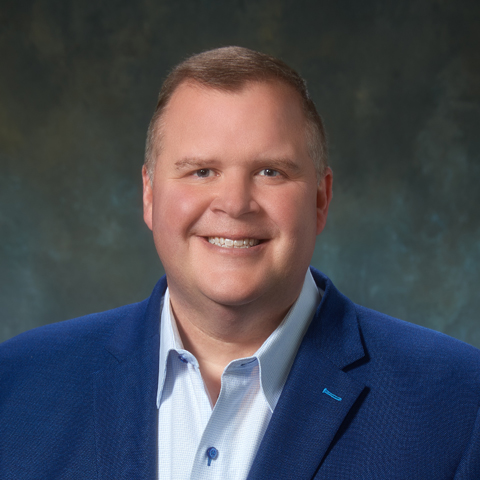
Michael Stull, MBA
Employers Health | Chief Sales Officer
Since 2004, Mike Stull has been a contributor to Employers Health’s steady growth. As chief sales officer, Mike works to expand Employers Health’s client base of self-insured plan sponsors across the United States.
Read More