
Mike and Madison discuss TrumpRx’s expansion to include more than 600 generic drugs, Optum Rx’s latest pharmacy transparency announcement and what potential Federal Trade Commission action against PBMs could mean for plan sponsors.
Register for upcoming Employers Health webinars, including sessions from the 2026 Annual Benefits Forum, or watch on demand at https://www.employershealthco.com/resource-center/events/
Sign up for our monthly newsletter here.
Find additional helpful benefits strategies and resources at https://www.employershealthco.com/resource-center/articles/
Read the Full Transcript
Mike Stull (0:10)
Hi everyone, it’s Madison, it’s Mike, it’s Healthcare Headlines. Welcome back. It’s been since the Annual Benefits Forum that we’ve recorded one of these, and I know your email’s been blown up from our legions of loyal podcast listeners asking, when is the next one?
Madison Connor (0:28)
The people are fired up.
Mike Stull (0:30)
Gotta give the people what they want, as one of our colleagues says. So where do you want to start today? I think, you let me know if you’re okay with this, I think we should start with the big headline of the week, which is Trump Rx.
Madison Connor (0:45)
Yes, one of the many headlines this week. I think the Trump Rx massive expansion, have to start off there. So as of Monday, the White House announced that more than 600 generic medications were added to the Trump Rx platform, mostly through Mark Cuban Cost Plus Drugs, Amazon, and obviously GoodRx, the existing partner.
559 of those generic medications come from Mark Cuban, and they’re now split into two different categories. So brand drugs have presidential deals, and generic drugs have standard prices.
Mike Stull (1:21)
Sounds fancy. I don’t know that anyone would have guessed that they would see Mark Cuban and Donald Trump standing side by side in the White House to promote this.
Madison Connor (1:31)
Nope. Not on the bingo card.
Mike Stull (1:33)
Some say it’s huge. But one of the true criticisms of Trump Rx has been that it was mostly brand drugs that already had generics available, and this obviously changes that.
Madison Connor (1:48)
Absolutely. And Mark Cuban was a fan of Trump Rx from the beginning and said that the only way that it could be made better is if he were available on the platform. So I think this is a good time to mention, just as we think about Trump Rx, this website is not buying and purchasing drugs directly.
It’s facilitating access to the direct-to-consumer websites, Mark Cuban Cost Plus Pharmacy, as well as some other online pharmacies, and providing those coupons through GoodRx.
Mike Stull (2:18)
Last point on Trump Rx. Any thoughts on how this ties into the FTC settlement that we saw with Express Scripts and I’m sure we’ll see here soon with CVS and someday with Optum?
Madison Connor (2:31)
Maybe. Yes. So I think this provision is somewhat flying under the radar just because there’s so much uncertainty here.
But part of the settlement with ESI is that ESI would work to provide covered access to the Trump Rx platform, but that is contingent on some legislative changes being made to the calculation of Medicaid best price. So under the Medicaid best price rule, Medicaid has to be offered the lowest price amongst the purchasers in the marketplace. So a statutory change would be needed to be made to that calculation, as it has in the past for VA claims and public hospitals.
I think moving on from Trump Rx, OptumRx had a press release this week announcing the industry’s first transparent pharmacy care model. Do we think this is the first?
Mike Stull (3:20)
I think there are a number, particularly in the mid-market, PBMs that would have something to say about that proclamation.
Madison Connor (3:31)
Nonetheless, this is a change for OptumRx. So what’s in that announcement?
Mike Stull (3:35)
Yeah, it’s well, it’s certainly a change and I think a step in the right direction. And some of the things are, you know, things that Optum has been doing over the years along with their competitors. But the first, you know, I boil it down to five points.
So the first point is reimbursement in the retail network. So trying to get the reimbursement to retail pharmacies to be more aligned with the actual cost of the drug, something that’s been going on for a few years now. But we’ll continue to see that and that’ll help Optum with complying with state legislative requirements on minimum reimbursements as well.
The second piece is no spread pricing. So again, that will flow right into some of the state legislative requirements out there. The third piece is eliminating or at least reducing the number of unneeded prior authorizations.
So both UnitedHealthcare and OptumRx have made this a priority. And I think overall, they’re looking to get rid of about 25% of prior authorizations that, you know, have close to 100% approval. They just become administrative and they’re not really doing much. And 10% of those would fall into the pharmacy space, according to OptumRx.
Fourth area are digital tools. So OptumRx is going to be putting out some new digital tools to help consumers find the lowest drug prices.
And that’s consistent with efforts that have been made in the industry to get consumers linked up with where the cheapest drug, similar to TrumpRx, same goal. And then the last piece is a full disclosure of OptumRx fees and using flat fees instead of a percentage of the list price.
Madison Connor (5:41)
Now, Mike, I can’t help but notice while Optum has not announced a settlement with the FTC, there are a lot of pieces in its new plan that would closely mirror the announced settlements.
Mike Stull (5:53)
Yeah, well, we saw this with Express Scripts. Express Scripts announced it’s what it calls its signature model now, but it was the rebate less model, had a big press release in the fall. And then the FTC settlement, CVS has been talking about true costs for quite a while now.
We expect that when that FTC settlement is made public to see a lot of those elements in it, I’m guessing this is going to follow the same pattern. Optum has announced what it plans to do. And my guess is when the FTC settlement is made public with Optum or when it’s actually agreed to, then we’ll see some of the same elements in there.
Madison Connor (6:33)
Place your bets now, Mike.
Mike Stull (6:34)
That’s right.
Madison Connor (6:35)
How might this look for plan sponsors?
Mike Stull (6:37)
I’d expect it to take shape in really a variety of different ways. So first and foremost is more pass-through arrangements. So historically, you’ve had the option to do traditional or pass-through.
I think we’ll see more pass-through going forward as the standard. The second piece has to do with how does the retail reimbursement look? Do we move away from AWP discounts and move more towards a cost-plus type of format?
So is NADAC the answer there? And I think there’s some things that need to happen with NADAC. Get more pharmacies participating in it, and it could be a really strong benchmark to be able to do that. I know some of the states are using NADAC as a benchmark.
From a rebate perspective, we expect Optum to also introduce a GPI-14 model, similar to what CVS has introduced. And then the last piece is higher administrative fees, more administrative fees.
So historically, some of the things that plan sponsors have gotten for free, even though it was paid for by the spread and the margin that the PBMs were taking, you’ll see either separate fees for those things, or they’ll be baked into an overall PMPM fee. But a lot of plan sponsors hate to feel like they’re being nickel-and-dimed. I think as you eliminate spread, require 100% pass-through, there’s going to be more fees for these types of things.
Madison Connor (8:23)
This is obviously still a relatively recent announcement, a couple days old, but from your first impression, how does this differ from CVS’s true cost model or the drug-level rebate model?
Mike Stull (8:33)
Yeah, the true cost model is actual dollars and cents, net prices, after discount, after rebate that the claims are reconciled to. And so I haven’t necessarily seen or heard that out of Optum in terms of what it’s looking to do. Optum did state that it will disclose its fees from its GPO, its rebate GPO.
And while I think all of the large PBMs will be required to do that as part of the Consolidated Appropriations Act, Optum certainly is getting a head start with it. And then on the drug-level side, drug-level rebate side of things, I think the concepts are similar. There are some differences in how they’re underwriting it, but certainly some similarities between the two.
Madison Connor (9:32)
And do you think that the pass-through requirements will apply to mail and specialty pharmacies as well?
Mike Stull (9:37)
With true cost, it does apply to specialty and mail order. Those get unit cost guarantees, but there are very heavy dispensing fees on those. So I’ve not heard yet from OptumRx in terms of how the transparency and pass-through and those types of things will apply to Optum home delivery and Optum specialty.
Madison Connor (10:02)
So bottom line it for me, do you think that these changes will mean lower prices and less spend for employers?
Mike Stull (10:09)
Not by the changes themselves. It’s one of my favorite sayings now that you’re not paying less, you’re just paying differently. And the PBMs have admitted themselves on their earnings calls that they don’t expect the margins to be very different from these new models versus the historical models.
But certainly the changes will provide more information for plan sponsors. And if you go back and listen to some of the old PBM 101 webinars that we’ve done, I’ve said that the value of pass-through is really the information. And then the ability to lower costs is what can you do with that information?
So I think this will provide some additional insights and additional opportunities for employers to do more aggressive potentially management of certain drugs and understand the cost benefit of doing those things. And those are typically under the old model, under an aggregated average rebate guarantee. Those are things that the PBMs historically have shied away from.
Madison Connor (11:27)
Shall we move on?
Mike Stull (11:28)
I think so. So we’ve talked a lot about federal developments like the Consolidated Appropriations Act and the FTC settlements impacting the industry. I know we talked about March Madness back at the benefits forum and that being in relation to all of the state legislation going on, give the audience an update.
Where are we on state activity? What’s currently pending?
Madison Connor (11:59)
It turns out the March Madness was not so mad.
Mike Stull (12:03)
Well, that’s good.
Madison Connor (12:04)
So yes, there are currently bills pending in Virginia and Tennessee. So pass the legislature and awaiting a governor’s signature. The bill in Virginia is a minimum reimbursement bill plus a dispensing fee that’s tied to the state Medicaid rate, which is currently $10.65. The governor has until Friday to act on this bill, and there’s a real chance that this could be vetoed here. So we’re seeing a hesitation when it comes to some of these dispensing fee bills because of the impact that it would have on participants and plans. I like to mention that a couple of weeks ago, we saw the governor of Oklahoma veto a minimum dispensing fee bill, and that state has passed just about every bill in the book.
Mike Stull (12:44)
Right. That’s crazy.
Madison Connor (12:45)
Right. And then, of course, Tennessee. So this is the bill that bans PBMs from owning or taking any ownership in a pharmacy.
So all PBM owned pharmacies in the state would have their licensure revoked upon the bill’s effective date. So the governor said that he will likely sign this bill soon.
Mike Stull (13:04)
Well, we know that Arkansas wrote the playbook as it relates to these kind of bills and the Arkansas bill landed the state in a lawsuit. Give a give us an update. Where is that lawsuit at?
Madison Connor (13:17)
Sure did. Yes. So there has been an injunction.
So that law will not be enforced. It’s placed on hold until the case is completely completes. So the district court found that the law likely violates the Commerce Clause of the Constitution by discriminating against out-of-state providers.
And the PBMs have indicated that if Tennessee were to pass and this Tennessee bill were to become law, likely going to file a similar lawsuit immediately.
Mike Stull (13:47)
So wrapping this episode up, we’ve seen a lot of activity at the federal level. You mentioned that the state activity wasn’t so mad. So are we seeing a little bit of a cooling down in the states, especially in light of everything that’s going on at the federal level?
Madison Connor (14:07)
I’ve been wondering this a lot lately myself, because you do see while the volume of legislation is certainly what we’ve seen over the last few years, the bills that are actually making significant progress or momentum or passing is less. And while I’d like to credit that to states realizing that the federal government is acting and therefore not feeling the need to take matters into their own hands, I think we still do see certain states that are going to continue to be first actors here in terms of pushing new legislation that will impact the industry. So too soon to tell, but we’ll continue to see.
We’ll check back in next time.
Mike Stull (14:45)
All right. Well, speaking of next time, we’re waiting for the FTC settlement with CVS, as I said earlier, to become public.
Madison Connor (14:55)
I’m done making predictions.
Mike Stull (14:56)
Right. We’ve said for three weeks that it’s any day now. Madison and I sit there with our Google, our Google up, and we’re constantly refreshing to see if anything has dropped.
But as soon as it does, we will call an emergency recording for another Healthcare Headline. So hopefully that’ll be soon. But whenever it is, we’ll see you then.
In this podcast
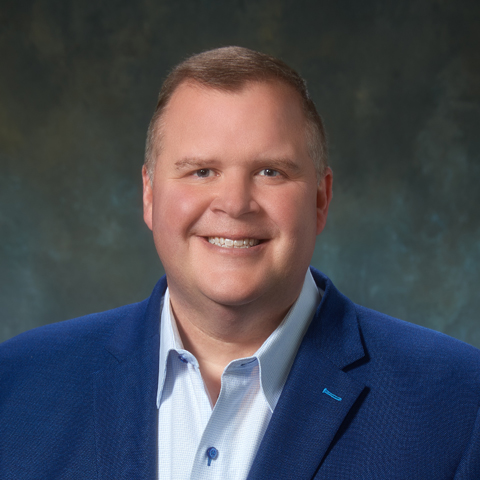
Michael Stull, MBA
Employers Health | Chief Sales Officer
Since 2004, Mike Stull has been a contributor to Employers Health’s steady growth. As chief sales officer, Mike works to expand Employers Health’s client base of self-insured plan sponsors across the United States.
Read More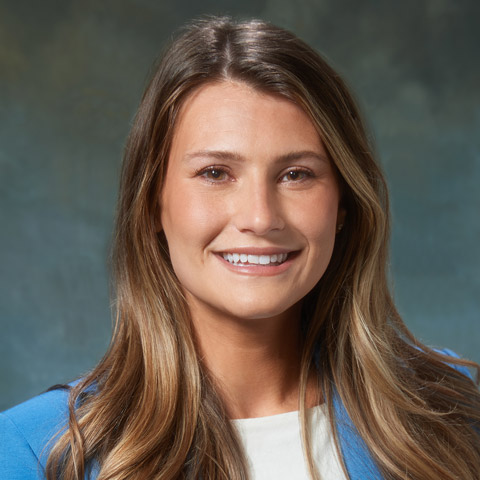
Madison Connor, J.D., CEBS
Employers Health | Senior Vice President, Regulatory Compliance and External Affairs
Madison is responsible for monitoring state and federal legislative and regulatory developments that may impact employer sponsored health plans.
Read More