
Drawing from Employers Health’s book of business, Jack Sullivan and Hannah Whitesel sit down with host Mike Stull to examine today’s key drivers of pharmacy spend, including GLP-1s, biosimilars and autoimmune conditions.
Watch or listen to Benefits Bites and Health Care Headlines.
Register for upcoming Employers Health webinars or watch on demand at https://www.employershealthco.com/resource-center/events/
Sign up for our monthly newsletter here.
Find additional helpful benefits strategies and resources at https://www.employershealthco.com/resource-center/articles/
Read the Full Transcript
Mike Stull (0:09)
Hi everyone, and thanks for joining us on this episode of HR Benecast. This is your host, Mike Stull. As always, you can find more Employers Health resources by checking out the links in the episode description.
It’s hard to believe that we’re already nearing summer despite some of the crazy weather we’ve been having here in Ohio. But being over a quarter into 2026, we felt it was a great time for a book of business update to discuss trends we’re seeing and what they mean for plan sponsors. Joining me today are my colleagues, Jack Sullivan and Hannah Whitesel.
Jack heads the Employers Health analytics team, serving as senior director of actuarial and data analytics. And Hannah is one of our directors of clinical solutions.
Jack, it’s great to have you back on the podcast. And for Hannah, it’s great to have you here for your debut. Why don’t you two kick us off by telling the audience a little bit about yourself. And Jack, we’ll start with you.
Jack Sullivan (1:12)
Thanks, Mike. Great to be back on the pod. As you mentioned, I’ve been with Employers Health seven years now and graduated from Ohio State.
So, I think the last time I was on, I made some predictions about going to Michigan and some predictions on pharmacy, which for the most part came true. And so hoping to do something similar today.
Mike Stull (1:33)
Yes. Good thing we’re past basketball season, right?
Jack Sullivan (1:36)
Right.
Mike Stull (1:37)
Hannah?
Hannah Whitesel (1:40)
Yes. Thank you for having us on today, Mike.
As you mentioned, my name is Hannah Whitesel and I’m a licensed pharmacist and director of clinical solutions on the Employers Health clinical team. I’ve been with the company for a little over 6 years now, and I’m currently based out of the Columbus, Ohio office, out of the same office with Jack, actually. So looking forward to the conversation today.
Mike Stull (2:01)
Excellent. Well, let’s start, Hannah, with you and talk to us a little bit about how the clinical team uses data to create custom clinical strategies. And then also tell us a little bit about what some of the new strategies are for this year.
Hannah Whitesel (2:19)
Of course. Yeah. The data is a huge part of the process that we go through to identify good targets for strategies and also bring them into fruition.
So requires a lot of collaboration with our own internal analytics team, Jack included, as well as the CVS clinical team. So analytics helps us slice and dice the data, identifying eligible targets that make sense from both the clinical and a cost avoidance perspective, and especially get them giving the perspective on how it interacts with our contractual terms as well. Of course, the ultimate goal of these strategies is to drive savings through increased utilization of lower cost alternatives when clinically appropriate.
And the analytics team allows us to identify and react to trends faster than our PBM standard offerings. So many times our goal is to give an opportunity for clients to implement a strategy even before the utilization hits their plan, therefore putting those guardrails in place prior to any member disruption potential. And as far as a new strategy for this year that I wanted to highlight is our CGM or Continuous Glucose Monitor prior authorization.
Now, most of our PBM partners have standard utilization management approaches. However, we wanted to come up with a custom one just to better align with the direction that the ADA or American Diabetes Association guidelines have been progressing over the past few years. So essentially, our prior authorization is ensuring a check for diagnosis, so diabetes, limiting the potential for off-label utilization, while also maintaining access open to all diabetic populations where some of the historical PAs were a little more stringent as far as requiring an injectable being used, such as insulin, for example.
So this is really just to enhance access under the pharmacy benefit, better positioning members to manage their blood sugars more effectively, and avoid those long-term complications of the disease. So, analytics is absolutely a huge part and really excited to bring some of those strategies forward this year.
Mike Stull (4:33)
Excellent. The last time when Jack was on, we discussed our book of business trends on the podcast was in September. And at that time, some of the biggest pharmacy trends and contributors to spend we were seeing were related to surprise, surprise, GLP-1s and autoimmune conditions.
So I thought we would spend time, since we have clinical and analytics on the podcast today, to talk about both of those and dig a little deeper. So we’ll start with GLP-1s for weight loss. We’ve done a lot of presentations where we split out both the spend and the plan trend by clients that cover and don’t cover weight loss.
So Hannah, let’s remind the audience what our book of business breakouts look like for those that cover and don’t cover. And also mention of those that do cover, what percentage have clinical management in place?
Hannah Whitesel (5:32)
Yeah, absolutely. So just to get a baseline as far as our book of business coverage is concerned, so currently around 60 percent of our clients are now excluding in contrast to the 50-50 split that we saw just a few years ago. Out of those who do cover, the overwhelming majority of them provide coverage with some sort of prior authorization, whether it’s something that is more standardly offered by the PBMs or something more custom through the Employers Health clinical team.
And its really most clients that are making the move to exclude are doing so just due to the sheer cost of the class. And I’ll actually, I’ll kick it over to Jack just to go over what those PMPMs look like as far as within our book as clients who cover compared to clients who don’t. So Jack, if you want to give the numbers and then I’ll give some context that I believe plays into art of what we’re seeing.
Jack Sullivan (6:30)
So we looked at 2025 PMPM with rebates. So we’re looking at a net trend. Clients who don’t cover weight loss saw a 6 percent increase in PMPM with rebates versus clients that do cover weight loss had a 12 percent trend.
So significantly higher. In 2025 we saw for those clients that do cover weight loss, we saw those weight loss drugs be about $30 PMPM. If you’re going to incorporate rebates, that’s going to change for each specific client and what kind of rebate guarantees they have.
But if you’re going to incorporate rebates, we’re still seeing covering weight loss with rebates is about a $20 PMPM decision. So it’s an expensive decision that plan sponsors are having to make. And we’re seeing that certainly affect the trend.
Hannah Whitesel (7:25)
Thank you, Jack. And I’ll add this one more item. I think a contributing factor to, in addition to just the financial burden of covering anti-obesity for plan sponsors, the fact that there are now more widely known direct-to-consumer options that members technically still have accessible to them, even if their employer does not cover these products.
So I think that’s eased some employers’ concerns with excluding as members still have avenues to access the FDA-approved products and not just through compounded options. So that’s been something that we’ve been talking to employers a lot about and providing more information just to make sure that their population is informed.
Mike Stull (8:09)
One of the big things that I’ve noticed on the slides as we’ve been out presenting in the first quarter is that the percentage of our clients that are actually covering weight loss medications hasn’t necessarily changed too much. It’s hovered right around that 40 percent mark. What has changed dramatically are the portion of clients that cover weight loss that do so with no PA in place.
So looking back a few years, it was upwards of 15 percent of our clients were covering without any type of prior authorization or clinical management, and that is down substantially to I think it’s right around two percent or less now. So it’s really been interesting to see as the costs of these medications have hit plans how they’ve quickly moved to put some sort of clinical management in place. One of the other interesting things that’s happening right now is that Novo Nordisk announced that it’s decreasing the list price of its GLP-1 medications by 35 to 50 percent for 2027.
Eli Lilly has launched its new Oral GLP-1, which has the brand name of Foundayo at this lower list price. So, Jack, talk to us about what impact this will have on client financials for those that cover weight loss, and how might this impact trend reporting as we look into 2027?
Jack Sullivan (9:54)
Yeah, thanks Mike. These GLP-1 drugs were large rebate drivers, and so we’re going to see a pretty significant impact in terms of rebates with these lower list prices. It’s going to impact both clients that cover weight loss and those that don’t cover weight loss, because we have those anti-diabetics also receiving a lower list price.
So for those that cover weight loss, on average we’re going to see about 22 percent of total rebates decreasing, and for those that don’t cover weight loss, on average we’re seeing eight percent of total rebates decreasing. And again, those rebates are going to decrease on the back end, but you’re going to see that savings on the front end with the lower list prices.
Mike Stull (10:46)
Yeah, I think that’s important to point out, is that from a cash flow perspective, this can be a good thing for both plan sponsors and patients, particularly patients that are in a coinsurance or a high-deductible plan. Seeing lower list prices on the front end will mean lower cash out of their pockets, but it also means a decrease in rebates on the back end. So as employers figure out what they’re going to do with rebate dollars moving into 2027, I know a lot of our clients offset premium contributions with rebates, and so this will certainly play into that financial modeling that happens for plans behind the scenes.
Hannah, when you think about, I mentioned that it can be a good thing for patients, but anything else to add in terms of how these lower prices impact patient access and from a patient cost perspective?
Hannah Whitesel (10:56)
Yeah, absolutely. So from the patient perspective, it will really be most impactful for members that have to pay a coinsurance for GLP-1 products as it stands today, or a percent of the total cost of drug at the point of dispensing as far as their out-of-pocket is concerned. So these out-of-pocket contributions for members paying coinsurances will be reduced, and generally speaking, when we see a reduction in the costs paid at the point of sale, it tends to have positive benefits on adherence as far as lowering the cost to get the prescription.
You’ll see improved adherence in the long term. So I’m really excited just based on how effective these products are, not only to treat diabetes, but also to manage obesity as well. So, I’m hopeful that these cost decreases will have a positive benefit on member adherence in the long term.
And also, I wanted to look into my crystal ball from a plan sponsor perspective as well, just based on some of the conversations that we’ve had on this topic. So coverage decisions make either covering or not covering into obesity, and the clinical programs or utilization management to manage these therapeutic classes. I’m hoping that after these price decreases, we’ll have a smaller rebate decrement or impact on the back end.
So therefore, it’s a loosening of some of the financial constraints that have limited more robust clinical management opportunities in the past, especially when it comes to anti-obesity. So looking forward to maybe having more conversations around the enhanced prior authorization options and maybe allow them to become more financially viable as these big rebate decrements are no longer applying.
Mike Stull (13:49)
That’s an awesome point. And just to put a point on it, so large rebates means if you try to clinically manage a class beyond the FDA approved label, you typically have some type of impact on rebates. Large rebates mean the potential for large rebate impacts when you do implement those clinical management programs.
And so a lowering of the list prices, a lowering of the rebates means the potential for lower impacts when you do put in clinical management criteria. So that is good. One other point that I’ll just make before we move on is that Novo Nordisk has announced at the time of recording, Novo Nordisk had announced that Ozempic and Wegovy and Rybelsus would see these list price changes for 2027.
Eli Lilly has not made any announcement on Mounjaro or Zepbound. And Eli Lilly has launched Foundayo, the new oral GLP-1 at the lower list price. So we are still waiting to see what Eli Lilly decides to do with its list prices for Mounjaro, which is the number one drug in our book of business, and for Zepbound.
Okay, enough about GLP-1s. Let’s move over to the autoimmune class. Hannah, let’s start with you on this one and remind everyone, what types of conditions we’re referring to in the autoimmune class and what some of the drugs are that are most commonly used to treat those conditions that employers and listeners would recognize in their top drug spend?
Hannah Whitesel (15:49)
Of course. Thanks for the question, Mike. So as far as the conditions are concerned, overall, these are generally chronic diseases that need to be managed over a long period of time, and they’re characterized by exacerbations and remissions.
So for a short period or for a period of time, the symptoms might improve. For a period of time, the symptoms might worsen. So, it’s just keeping symptoms managed as best as possible is the therapeutic goal for these disease states, and it includes skin conditions like psoriasis and atopic dermatitis, also known as eczema, as well as arthritis conditions such as psoriatic arthritis and rheumatoid arthritis, and to round things out, inflammatory bowel disorders, so including ulcerative colitis and Crohn’s disease.
And even though all of these conditions present very differently from a physical sense, the underlying mechanism causing the disease state is this unchecked autoimmunity where the body’s own immune system is attacking itself. So therefore, we see a lot of biologics, so specialty products used to lower that immune response to help manage those symptoms. And these classes represent actually six of the top 10 specialty therapeutic classes by gross cost in Q1 of 2026 data, and this is very consistent with placements in the top 10s for many years going into this.
From a cost perspective, these disease states that I mentioned make up $42 PMPM out of 101 total specialty PMPM. on average within our book of business. So autoimmune conditions are absolutely playing a major role as far as spend and trend is concerned and is expected to continue to play that major role over time. And preventive treatments that are used to manage moderate and severe presentations of these conditions, so essentially driving that specialty utilization, they’re generally higher cost biologics and make up the majority of specialty spend, of course, including products like Skyrizi, Dupixent, Tremfya, Stelara, and Enbrel.
Someone once told me with wise words, if it is a commercial, it is a trend because these are the products that you frequently see advertised on TV are frequently what’s driving costs on the back end for planned sponsors. Now, and just to give some context as far as what’s driving these trends outside of just that direct-to-consumer marketing is really driven by guidelines encouraging earlier biologic intervention to manage disease states early before they progress to those more severe presentations. It’s easier to get ahead of it rather than trying to backtrack, especially within those inflammatory bowel disease states.
Mike Stull (18:46)
And this is also where we saw recent activity on biosimilars. You didn’t mention necessarily Humira on our top drug list because we moved to a biosimilar. Stelara, for those on our CVS program, we just launched a Stelara biosimilar strategy on April 1st.
Any early peaks at the results of that strategy?
Hannah Whitesel (19:14)
Yes, absolutely. Just two and a half weeks post-go live and it has been very successful outcomes within these first few weeks of performance. The vast majority of biosimilar claims replacing Stelara are for the lower-cost biosimilar out of the two preferred.
So Yesintek is the primary biosimilar being utilized, which was not necessarily expected. It wasn’t required to step through the lower-cost biosimilar first. So, it was a happy outcome to see that many of these specialty pharmacies are reaching for that one.
And in addition to that, our expectations to see over a 90% transition rate from the Stelara originator product to biosimilars has been realized so far. We’ve only seen about 2.7% of previous Stelara utilizers transition to another branded product. And these quote-unquote leakage statistics are very, very comparable to what we witnessed for Humira’s transition.
So everything is meeting expectations so far. And the utilization of messaging to prescribers before this change went into effect, we actually saw a lot of these transitions happen prior to the 4.1 go live date. So I’ve been very pleased with the outcomes of this strategy and look forward to continuing to monitor the total savings resulting from it within the rest of the quarter.
Mike Stull (20:44)
That’s great. Jack, Hannah mentioned that $42 out of 101 total on the specialty side. What else are the numbers telling us about this class and how has biosimilars impacted it?
What can you tell us?
Jack Sullivan (21:04)
Yeah, I just want to add on to some of the things Hannah mentioned. I know we talked about the Yesintek biosimilar, which has a 90% WAC drop. The other biosimilars also have an 80% WAC drop.
So still significant upfront savings there. And we’ve seen some of the Stelara biosimilars come through and what the decrease in rebates is on those drugs. And the drop in rebates is much less than the difference in costs.
And so, we’re seeing a lot of savings with utilization moving to the Stelara biosimilars. Our estimated average savings is $1.30 a p.m. p.m. So, it’s going to be something we continue to monitor and verify that the rebate decrease is less or makes sense compared to what the cost savings is going to be as we continue to see utilization move over to those biosimilars.
Mike Stull (22:06)
Anything on Skyrizi? So Hannah mentioned about 2.7% of Stelara utilizers moving to another branded biologic. We know from looking at our data, typically they’re moving to a drug like Skyrizi for certain classes.
So, what are you seeing on those neurobiologics like Skyrizi?
Hannah Whitesel (22:36)
Yes. So of course, Skyrizi, it’s at the top of many plan sponsors’ total gross costs on the specialty side. It’s absolutely something that we’ve seen growing in prevalence and utilization.
So as a clinical team, we are exploring the potential of coming up with a strategy, essentially trying to utilize biosimilars when possible and encouraging biosimilar first utilization prior to getting on to Skyrizi. So this is absolutely something that’s on our radar, something that we are working out the operational nuances on the back end and hopefully have an update that we’re ready to share with the greater population sometime soon. But more to come.
Mike Stull (23:21)
Well, we’ll certainly look forward to hearing from the clinical team on those strategies here in the future. Okay, Jack, as we look at this year’s data so far, from your perspective, what stands out the most? Any trends that feel especially important for plan sponsors to focus on?
Jack Sullivan (23:42)
Yeah, last time I was on the podcast, we talked a little bit about specialty drug lists and some of the drug classes that are being treated especially and some that are moving away from that. One of our PBM partners moved HIV out of the specialty drug class to start this year. For most PBMs, this had already been moved out of specialty and the reason being is it’s a low-cost drug that continues to gain utilization and the specialty rebate guarantee is too high compared to the cost of the drug and what they’re actually receiving in rebates.
So I think this is an important trend to be aware of when you’re evaluating contracts and I think four big classes that I think are worth mentioning are HIV, which I just mentioned, Dupixent, asthma, and infertility are all four drug classes that have gained utilization, are low-cost, sometimes considered specialty drugs, and for lack of a better analogy, they’re the kind of Costco hot dogs of the pharmacy world. If we all went to Costco and just got the Costco hot dogs, they would not make money.
I don’t know about you guys, I’m going to also go there for their other deals on their other products, but unfortunately the PBMs don’t want to lose money on these products anymore. They’re not willing to sell us the Costco hot dog. Fortunately for us, I’m going to make a prediction that a Costco hot dog and a soda will still be $1.50 next year. So that’s my bold prediction.
Mike Stull (25:27)
That’s a good one. I am sure that I’ve not heard it. That’s a good one, Jack.
I’ve not heard it compared to the Costco hot dog. But that’s a good prediction too, because anytime they try to raise the price on that, man, they have a lot of consumer backlash. All right.
Any areas where plan sponsors may need to rethink their current approach based on what the data are showing us?
Jack Sullivan (25:56)
Yeah, I think a common theme of what we’ve talked about so far is moving to lower-cost products. We’re seeing price drops and we’re seeing utilization move to biosimilars that are coming in at a lower cost. And we’re seeing savings when that happens.
We’re seeing that the drop in rebates are not as significant as the drop to the lower-cost product. I think as an actuary, I feel obligated to mention the time value of Money Piece to that as well. And then I think it’s good for competition.
So for obvious reasons, when you’re moving to a biosimilar, you’re going to have more manufacturers and we’re creating a competitive marketplace there. And then also for the WAC drops, it becomes more difficult for manufacturers to maybe get on a formulary positioning by offering a higher cost and higher rebates. So I think that it makes that more difficult going forward.
So, I think having these manufacturers compete at a lower cost upfront is good for the industry.
Mike Stull (27:06)
Yeah, I definitely concur that it’s good for competition. It’s interesting how many competing forces are going on out in the marketplace today. And you mentioned the political pressure to lower list prices, particularly on diabetes products.
We’re seeing it on the weight loss products. We’re seeing it on these products where a biosimilar is becoming available as part of the FTC settlements. We’re seeing PBMs agree that if a biosimilar or another branded product has both a high-WAC version and a low-WAC version, that they’ll prefer the low-WAC version on their formularies.
Conversely, we have the removal of the AMP cap. Yes, it has encouraged products like insulins to lower their list price right out of the gate because of the amount of inflation penalties that they would have to pay to the Medicaid program. But at the same time, it also encourages new drugs maybe to start their prices a little higher so that they don’t have to inflate the price over the life cycle of the drug like they historically have.
So it’s an interesting push-pull scenario that’s out there in the marketplace. We’ll continue to watch it. And you also brought up a great point about rebate credits, a whole other podcast on rebate credits and what we’re seeing there.
But certainly, the contract definition plays a big part in that and then monitoring to make sure that more rebate credit isn’t being taken than the list price drops on the front end. Okay, time to bottom line it. If each of you could leave plan sponsors with a key takeaway, what would it be?
Jack Sullivan (29:07)
I would advise plan sponsors to not be scared of lower rebates. I think for a long time, rebates have increased year over year. And we have been in a repetitive cycle where drug costs keep going up and rebates keep going up.
And I think these changes that are going on in the marketplace give us a good opportunity to get away from that. And I think that should be something that should be embraced.
Mike Stull (29:33)
Yeah, I just would add that making sure that you have the data analytics power behind you to make sure that you are paying less on the front end. At the end of the day, we’re trying to get to lower drug spend. And whether that means lower upfront prices or lower net prices with a rebate, we just want to make sure that we’re getting to the lowest PMPM that we can for plans and the lowest out-of-pocket costs that we can for patients.
Hannah, anything from your side?
Hannah Whitesel (30:09)
Yes, so really just emphasizing that as that transition takes place, our ability to clinically managed historically heavily rebated classes will improve over time. And as we experience the shift from the lower list, this shift to a lower list price, lower rebate model, I view it from a clinical perspective as short-term pain for long-term gains as we have less restrictions when considering clinical management.
Mike Stull (30:41)
I too am excited about the opportunity to do some more clinical management opportunities. And again, it’ll be up to plans how aggressive they want to be. That’s something that won’t change as part of this is that plans will ultimately decide how aggressive they want to be, how much disruption they’re willing to tolerate for their planned participants.
All right, well, thank you both for taking time to join us today. Don’t forget to subscribe to HR Benecast and be notified when new episodes are released. And thank you for taking the time to listen and for your continued support, participation, and interest in Employers Health.
Be well, and we’ll see you soon.
In this podcast
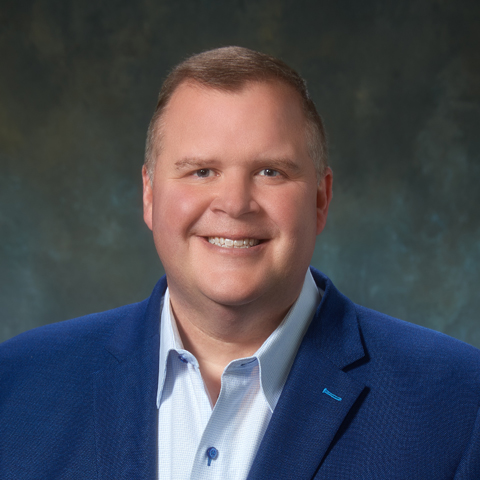
Michael Stull, MBA
Employers Health | Chief Sales Officer
Since 2004, Mike Stull has been a contributor to Employers Health’s steady growth. As chief sales officer, Mike works to expand Employers Health’s client base of self-insured plan sponsors across the United States.
Read More
Hannah Whitesel, PharmD, MBA
Employers Health | Director, Clinical Solutions
As a director of clinical solutions, Hannah works closely with Employers Health’s vice president of clinical solutions to serve as a resource to benefit professionals throughout the country.
Read More
Jack Sullivan, ASA, CEBS
Employers Health | Senior Director, Actuarial and Data Analytics
Jack Sullivan is a senior director, actuarial and data analytics at Employers Health.
Read More