
Host Mike Stull sits down with this year’s Excellence in Benefits Award winner, Doreen Hull, to discuss her impactful work in employee benefits. After more than a decade as Midwest Public Risk’s benefits services director, Hull reflects on the importance of risk pools, evolving benefits strategies and what’s ahead in pharmacy care.
Watch or listen to Benefits Bites and Health Care Headlines.
Register for upcoming Employers Health webinars or watch on demand at https://www.employershealthco.com/resource-center/events/
Sign up for our monthly newsletter here.
Find additional helpful benefits strategies and resources at https://www.employershealthco.com/resource-center/articles/
Read the Full Transcript
Mike Stull (0:09)
Hi, everyone, and thanks for joining us on this episode of HR Benecast. This is your host, Mike Stull. As always, you can find more Employers Health resources by checking out the links in the episode description, including a link to upcoming and on-demand recorded webinar sessions from our Annual Benefits Forum.
Speaking of the Annual Benefits Forum, during the forum, we present one exceptional benefits professional with our Excellence in Benefits Award. This award is given to a leader in the employee benefits industry in recognition of his or her meaningful impact on the industry. I am joined today by this year’s winner, Doreen Hull of Midwest Public Risk.
Doreen has been the Benefits Services Director at MPR for over a decade. She is a true champion for MPR’s employees and is truly deserving of this award. Our team was so excited to bring Doreen to Columbus, Ohio, and surprise her with this honor.
It is always a surprise for the recipient, so we do a lot of work behind the scenes with the award recipient’s colleagues to film videos and make sure that we get the person there and get her in the room. And hopefully that was a welcome surprise this year. So with that, welcome, Doreen.
To get us started, tell us a little bit about yourself.
Doreen Hull (1:41)
Thank you. Hello. It was a welcome surprise.
I was flattered and honored to receive the award, and it really made my trip even that much more joyful. So wonderful.
Mike Stull (1:54)
It’s good to go. It’s nice to go home with some hardware.
Doreen Hull (1:57)
It is. Yes, it is. I was able to, fortunately, thank you for shipping it to me.
Since it was a travel, I was afraid of breaking it. And when I received it, this beautiful piece of artwork, I have displayed it proudly in my office. So thank you so much.
Mike Stull (2:12)
Excellent.
Doreen Hull (2:14)
I have had a long benefits career at a variety of places, you know, small TPAs, large healthcare industries. And my most recent move, obviously, was over to NPR, where it’s a little bit different and we’re able to see a little bit more of a beginning to end. So I’ve really enjoyed that and I’ve been able to participate in a lot of places and a lot of things to give me, I think, a bigger perspective.
So I think that’s what has brought me where I’m at and helped me with some of my successes.
Mike Stull (2:46)
Now, you mentioned NPR is a little bit different and we know it is a unique organization. Can you tell our listeners about the important work that it does for public entities in Missouri and Kansas?
Doreen Hull (3:02)
I would love to. NPR is a pool exclusively for our local government entities in Kansas and Missouri. And many of these entities are small and the options are limited for the employee benefits.
So by creating this pool, we are bringing an opportunity for entities of all sizes together to create a couple of things. First of all, better buying power. And in addition to stabilizing those annual increases so they have better budgeting, we’re able to offer services that they would not have access to on their own.
We’ve also created, you know, a safe space for our members to share their challenges and find ways to overcome the different barriers and the health care needs for our employees to bring in the better access services to those employees that run our local communities, you know, giving back to them.
Mike Stull (3:55)
Yeah, I know over 20 years for me personally in this space, I’ve always been really interested in the public risk pools and what a service they do for smaller municipalities. And you hit it on the head. They don’t really have other good options.
And, you know, we want our local emergency responders, we want our local officials and local employees to have the health care benefits and the health care services that they need. So it is very important work. And I wish they would do it for the private sector as well.
It would help out a lot of private small businesses to be able to operate in this type of environment as well. Let’s talk about what initially led you to employee benefits and what has fueled your passion for this space over time.
Doreen Hull (4:59)
So my career has been long. I took my first job at a small TPA and I really wasn’t sure of my total career, my total path. But while I was at that small TPA, I was able to learn all different aspects of benefits, eligibility claims, customer service, even stop loss.
So when it came time for my next role, I really needed to be more specific in my job search. And I decided customer service was the piece that I enjoyed the most. I got the most satisfaction out of.
So when I went to find that next role, I was looking for something that would help, that would give me the opportunity to help someone understand how to find care, understand how a plan works, make the best decision for them. And when I would leave someone and they said, hey, I understand that now, that was the best sense of satisfaction for me. So over time, my opportunities led me to different roles where I could ask, you know, why are we doing this way and how do we make it better for that end user?
So after all these years, moving over to MPR has really allowed me to focus on the why and the how. Since we’re a small workforce, I’m able to see and hear that end user, their perspective on how it works, what’s not working for them, and then also be able to create a difference as the decision maker. Also, I get to see both ends and it’s really impactful and it’s really important to be able to see that difference at the end of the day.
Mike Stull (6:28)
Yeah, helping people with a topic as important as health care and a topic that they don’t necessarily understand very well, I can see why that is an area that I think we’re all passionate about. You talked about this role. You’ve been in it for over 10 years now.
Every year, I would imagine, presents a unique challenge. And certainly just in this past year, the benefits landscape has changed dramatically. How have you seen your role evolve over the last decade?
Doreen Hull (7:12)
There have been so many changes from just having an insurance plan in place for something you see once a year and make a decision about the price. I think it’s involved to offering a solution for all their health care needs. So creating a conversation with the employees to know their own health, prioritize their health, and then be actively engaged instead of just, this is something that I click a box, I have to do it once a year.
So we are spending more time throughout the year coming back to those employees, bringing back those extra resources, reminding them that there is more to just their health insurance than that once-a-year decision, really becoming engaged and active in that. And I think what you talked about, too, there’s just so much more out there that we have to continually remind people of what those choices are and make it be a big part of their lives. They have so many other things that they’re focused on.
This is our job as benefits, and they’re worried about making sure they have coverage for the police, making sure they’re available to perform the services they have with the tax dollars they’re collecting, that we have to make their money go further, we have to give them more for the same price and sometimes the same services.
Mike Stull (8:31)
I remember a time when you would go through the course of a year and you’d say, oh, this is a busy time, and this is a down time. I don’t feel like we have any of the down time anymore.
Doreen Hull (8:42)
I would agree. I would agree. As soon as open enrollment is over, we jump right into the next year.
What’s the next thing? What are we going to do? We have some good partners in place like Employers Health to help us be ready for that next thing.
Mike Stull (8:57)
Well, good. When you reflect on your work, you’ve mentioned a lot of important things that you do, but are there specific accomplishments or initiatives that you’ve implemented at MPR that you’re most proud of?
Doreen Hull (9:13)
There are a couple of things. It’s been a great place to be. At MPR, we’re working with our members and our employees to make the best employee benefits plans available.
We’re always questioning our partners, the way we do things, and then taking that feedback and deciding what is it that employees need. That may be another service. That may be a different benefit.
It may be another partner. It may be the process for how they access that information or the tools that they use to help them understand what they have, make it easier to use, find those answers. We’ve also discovered that all of our employees have a different need for what goes on in their own life and their own health care needs.
A big piece that we did was we moved to an online platform about six years ago. Each year, we looked at that platform and tried to raise that bar. We do some simple things like adding in reporting so we can see who’s actually enrolled that year and do some targeting communications.
We send out multiple reminder messages. Hey, you’ve got this many more days to enroll. Then we also focus on meeting those employees where they are working, the time of the day, the format that they need, whether it’s digital, paper, in-person, and then just making ourselves available when they need us.
The we that I keep referring to, that is actually my proudest accomplishment. We have a team, and it’s not just the EB team. At MPR, we have a team that relishes in the improvements and the mindset of what else can we do?
What can we do next? That mindset that we cannot rest with what we’ve already done, our team has set that bar high each year, and each year, we try to raise it back up for the benefit of those employees in the communities that we serve. Leading a team that wants to come together to raise that bar.
We recognize that we are creating more work each year, like you mentioned, not ever having that downtime, but we’ve created a value system that demands it, and our members expect it each year. They’re always asking us what’s next, what’s new. I think that all those pieces in part, they’re all great.
They make a huge difference in the place that we work, the value that the employees get, but if the team behind it doesn’t believe it, it’s not going to make a difference. It’s not just me; it’s everybody here working together and raising that bar each year. If it was easy, none of us would be here.
People could just get their health insurance and do their things. That’s something we say a lot of the benefits team. It’s not, so we have to keep working at it.
Mike Stull (11:57)
That’s awesome. To be able to do important work and to be able to do it with a team that you enjoy doing it with and that you all grow together, that’s what it’s all about. Let’s be a little reflective here in terms of advice you’d give to others who are looking to make a meaningful impact in their organizations, on their populations, within their benefits teams.
Doreen Hull (12:24)
Absolutely. Sometimes it’s easier just to fall back on what you already know. I believe we have to stay in a learning mode.
What we’ve learned in the past is important. All those experiences and knowledges created the person you are today. However, with the changing industry, we need to continue to learn and keep us one step ahead.
We need to make sure that we see the benefits from as many points of view as possible for everybody that’s using it and then be flexible. Sometimes we think this is a great idea, but it’s not. You have to be able to say, well, we tried that, it didn’t fly, it wasn’t received as we thought.
Then you need to be flexible and remember those benefits are not a one-size-fits-all. It does take more time, but you have to look at all the possibilities for your employees to make sure that you’re creating the value that they need. Just keep looking and keep staying curious, as your speaker said at the last conference, to know what the next is that you can do for your employees.
Mike Stull (13:30)
Yeah, the curiosity of the speaker at the Annual Benefits Forum was very good. It’s interesting, that was a word I had asked some friends and family members who were in C-suite positions at the time, and I asked them, what’s a couple words that would describe the traits that are really important for your job? And this was probably 15, 16 years ago.
And that was one of the words that kept coming up, curious. And it wasn’t necessarily something that, I mean, I’ve always been a curious person, but I never thought of it as one of the traits that really can help you in your position. And so, it certainly, it emboldened me, I guess, to embrace my curious side and look into more information and always be exploring what else do I need to know?
What else can help me? What else can help the people around me? And what can help us achieve more?
Doreen Hull (14:39)
I would agree, got to stay curious.
Mike Stull (14:42)
Yeah, absolutely. So, you mentioned staying ahead of what’s coming. So, as we think about what’s ahead, are there trends or changes that you’re most excited to learn more about or explore for your population?
And I guess conversely, if there’s something that you are more nervous about in terms of things that are out there, be interested in that as well.
Doreen Hull (15:12)
Yeah, I think something that I’m always nervous about every year is the pharmacy. And that’s why we’re participating with Employers Health to help us with that. I’m always hopeful that our specialty pharmacy, which is life-changing for our employees, will continue to evolve to be more affordable.
We can make sure we still cover those things, that those employees are able to take advantage of that, but still, again, affordable for them and affordable for the plan. So, that’s a hopeful. Hopefully, you can help us with that, Mike.
And then, other things that I’m excited about, not as much nervous, is there’s been an evolution, I think, in the telemedicine market to add programs that help employees with those basic needs, just their general health and nutrition. And that’s where a lot of it starts. I’d like to see that trend of focusing on the whole person become so prevalent in our industry that it’s just the new norm.
It’s what everybody does. And that our employees participate fully with that. So, I think that telemedicine services becoming this available, being able to provide those at no cost, you know, removing barriers, would be that shift to allow all of our employees to have easier access to live a healthier life.
You know, at the end of the day, we’re managing illness and we’re managing finances for this benefits program. And we can’t necessarily control the cost of change, but we can definitely control the health of each of us to see if we either find these situations sooner or have a better health to start with when we’re faced with a challenging medical condition. So, hopefully just, you know, better nutrition all the way around is going to not keep us from getting any of these diseases but make us just stronger and better to start with, feel better all the way around, live healthier lives.
Mike Stull (17:07)
Absolutely.
Doreen Hull (17:09)
Focus on what they need to focus on, not just their insurance bills.
Mike Stull (17:13)
That’s right. Well, I really appreciate you taking time for us today. I really enjoyed this conversation and hopefully I think our listeners will agree that we made a good choice this year in terms of the Excellence in Benefits Award.
So, thank you, Doreen, for taking time with us today.
Doreen Hull (17:38)
Thank you. I don’t think I can even put into words how excited and honored I was at your event. I love coming to your conference, it’s so good.
And I remember last year listening to the announcement for the person who won, and I thought, oh my gosh, that’s so nice that these people said such nice things about her. It’s got to be so rewarding. And then this year when he announced my name, I was so caught off guard.
I was like, wow, that’s my name. And then, you know, again, that extra effort that you did to come out and meet with my coworkers and it just, it really meant a lot. And I actually shared that video with my daughter, and she got a little teary-eyed and she goes, mom, this is so nice.
Mike Stull (18:24)
It is.
Doreen Hull (18:26)
She said, I love to hear people say nice things about my mom. And I said, you know, me too. It really means a lot.
So, I do appreciate it. I have it proudly displayed in my office and share with anyone who is willing to listen.
Mike Stull (18:39)
Well, we appreciate you as well, Doreen. So, thank you.
Doreen Hull (18:43)
Thank you.
Mike Stull (18:44)
So, you can be on the lookout. We’ll have Doreen featured in an upcoming fall edition of EH Connect Magazine with a Q&A there. And don’t forget to subscribe to HR Benecast to be notified when new episodes are released.
Thank you for taking the time to listen and for your continued support, participation, and interest in Employers Health. Be well, and we’ll see you soon.
In this podcast
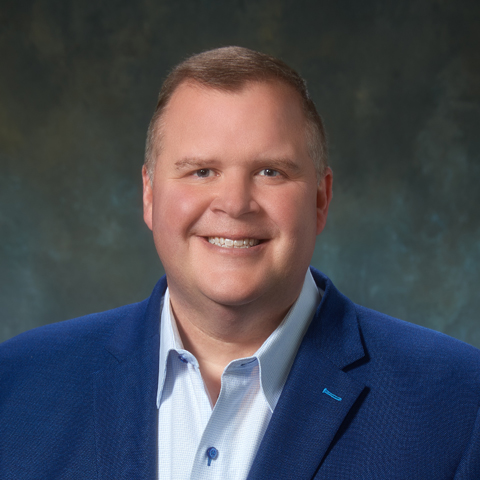
Michael Stull, MBA
Employers Health | Chief Sales Officer
Since 2004, Mike Stull has been a contributor to Employers Health’s steady growth. As chief sales officer, Mike works to expand Employers Health’s client base of self-insured plan sponsors across the United States.
Read More