
Host Mike Stull is joined by MedImpact’s Aprit Patel and Zach Johnson to discuss how this independent PBM is reshaping the landscape. They delve into MedImpact’s history, unique approach to drug pricing and new GLP-1 and biosimilar offerings available for MedImpact clients.
Register for upcoming Employers Health webinars or watch on demand at https://www.employershealthco.com/resource-center/events/
Sign up for our monthly newsletter here.
Find additional helpful benefits strategies and resources at https://www.employershealthco.com/resource-center/articles/
Read the Full Transcript
Mike Stull (0:09)
Hi everyone, and thanks for joining us on this episode of HR Benecast. This is your host, Mike Stull. Stay up to date on all things Employers Health by checking out the links in the episode description.
There you’ll find helpful resources, upcoming webinars, and our monthly newsletter. If you like this podcast, be sure to check out our new podcast series, Benefits Bites and Healthcare Headlines. Employers Health’s Madison Connor and I break down hot topics like pharmacy tariffs and fiduciary responsibilities in quick 15-minute episodes to keep you up to speed on all things benefits.
On today’s episode, I’m joined by MedImpact’s Senior Vice President of Trade Relations and Supply Chain, Arpit Patel, and Executive Vice President, Zach Johnson. So welcome, gentlemen, to the podcast to get us started. Tell the audience a little bit about yourselves and your roles at MedImpact.
Arpit Patel (1:05)
Yeah, great to be on, Mike. So as you mentioned, I lead Supply Chain and Trade Relations at MedImpact. So what that really means is I work with manufacturers to determine the most cost-effective solution we can have for our employers as well as our patients.
Our focus is predominantly driven on access without compromising affordability, and we try to focus on novel solutions that help kind of achieve those goals.
Zach Johnson (1:28)
Perfect. And I’m Zach Johnson. I’m Executive Vice President at MedImpact.
I lead all things go-to-market and operations, so kind of helming the ship here and looking forward to having the conversation, Mike. Thanks for having us.
Mike Stull (1:39)
Excellent. So let’s start by setting the stage, tell the audience about MedImpact, its history. Obviously, the two of you are part of recent leadership changes.
And then where does MedImpact fit into this current PBM landscape?
Zach Johnson (1:58)
Yeah, absolutely. So I’ll take that one. So MedImpact’s been in business over 35 years.
It was started in the late 80s by a gentleman named Fred Howe. And you know, he’s still 100% owner today, which is surprising given the size and scale of the company and just the nature of how things are working in today’s environment. But really, the company was started as a chain of small pharmacies that he had owned out in California and, you know, kind of saw inefficiencies and how claims were paid and built one of the first claims processing systems to help workflow in the pharmacy to pay claims, right?
And so you kind of think about technology and being at the core of everything we do today in healthcare, and Fred was an early adopter of that back in the early pharmacy stage. So that added on to become, you know, one of the early PBMs focused heavily in the government space, particularly out in California and the Medicaid space, and really built up quite a business from there, you know, really focusing on the government markets and going after some health plan and health system business, built quite a niche and really became a large player in the PBM space. And I think, you know, you referenced a number of new leaders like myself and Arpit coming into the fold.
I would say MedImpact quietly stayed, you know, kind of building and growing without a lot of visibility happening over the last five, 10 years, where any given day at this point in time, we’re fourth, fifth largest PBM in the country, which is, you know, kind of often not known by the broader community, right? We’ve done a number of acquisitions over time building out what I like to call kind of pharmacy adjacencies, really focused on how do we support what we are, which is a PBM, and bringing in acquisitions that are either technology enabled or teams or processes that we can deploy into our PBM that help make us a better fit for our clients as we go forward. One of those acquisitions, which is where Arpit came through, was an Elixir acquisition coming out of the Rite Aid bankruptcy, you know, almost two years ago.
And you know, as a leadership team, we sat around kind of thinking about what are the areas that we can build upon. And that small group kind of employer space focused area was an area that was not a strong suit for MedImpact. And so we think that the Elixir transaction was a huge win for us being able to bring in not only a new platform, but a number of new leaders, and particularly a number of clients and really services in that employer space, which is, you know, obviously how we’re sitting here talking with you guys today, but really just kind of rounded out that overall MedImpact go to market approach in terms of now being what I would call a leading independent PBM focused on the full suite of kind of lines of business, and really doing it in a different way.
And so I think you’re seeing, you know, some investments that Fred and the team have made into the leadership into the acquisitions of taking us to the next level. So when you think about where PBM is going, a lot of the legislative things that are happening, you know, around transparency, around being able to put, you know, kind of spread pricing behind us and doing things that are aligned incentives with our clients. I think we’re in a very good position to do that.
So being that fourth, fifth largest PBM gives us a size and scale on the buying power, which I’m sure Arpit will talk about as we go into this, but also, you know, enables us to do things a little differently by being independent, right? And so I think that’s where we really want to put our stake in the ground is saying we’re here to play to compete against the big three in any line of business, but do so in a way that aligns incentives with our clients and brings in those utilization programs, brings in supply chain ideas that help unlock value for our clients and ultimately, you know, help in the cause of lowering overall drug spending.
So we’re here on a mission and we’re excited to be partnered with you guys to kind of help unlock this value for our mutual clients.
Mike Stull (5:40)
Yeah, good stuff. A lot of excitement around what’s possible. Arpit, we talked a little bit about procurement and certainly a lot, lot, lot going on in the industry as it relates to drug pricing and how do employers procure the pharmacy benefit and big announcement as we’re recording this big announcement last week, at least from a marketing perspective by some of our competitors in the marketplace.
But, you know, what do you think, you know, with all the talk about pharmacy pricing, what do you think the key thing plan sponsors should know about the world of negotiating drug prices?
Arpit Patel (6:31)
Yeah, that’s a really great question. I think, you know, a couple of things to keep in mind, you know, Zach hit on it, right? Scale does truly matter.
It’s no different than any other economics that are out there. Your ability to have more buying power allows you to purchase products at a lower cost. So that’s not going to go away.
That’s table stakes. And, you know, as Zach mentioned, you know, with a fourth to fifth largest PBM, depending on the day of the week, that allows us the opportunity to do that. The second part, I think, is a little bit more interesting, right?
It’s all about the difference between how you define transparency versus clarity. And one of our objectives is to kind of talk through sort of if you really want to get transparent, you really need to have a good understanding of the overall supply chain. It’s not a linear process.
You have a manufacturer, you have a wholesaler, you have a PBM, you have a pharmacy, you have a payer, and then finally you have the member at the end, right? And as you go through that complex maze, it can lead to a lot of confusion in terms of what is the actual price of the drug. So one of the things that I think MedImpact separates itself from is that we basically have a function within that entire supply chain.
So we own a wholesaler now. We just recently stood that up as of June of this year. We obviously have a specialty pharmacy.
We have the PBM, and then obviously we serve as payers. And the unique part is we don’t lock you into any of this, right? You can pick and choose where you want to enter that supply chain.
And what that allows you to do is sort of see the pricing in a more transparent way in terms of, OK, we have the buying power, we’re willing to pass that down in order to have employers and payers that just want to use this for particular solutions of the whole thing, get the best value possible. So I think the biggest thing I would kind of point out to sort of any employer is that, you know, challenge your PBM and see what kind of sourcing opportunities that they have. Are they really looking at the lowest cost channel kind of across the board?
And that’s what we strive to do, whether it be sort of, you know, looking at international sourcing versus other aspects. We try to optimize the opportunity as best as we can for the payers.
Mike Stull (8:28)
One of the one of the big topics, not only in the pharmacy space, but heck, they did a whole South Park special on it, is the GLP-1s for weight loss. So I call them a cultural phenomenon as well. MedImpact has a new opportunity for clients.
What can you share about that?
Arpit Patel (8:50)
Yeah, we’re really excited about this. You know, quickly, like when you think of GLP-1s, right? Like I kind of bucket them into like three categories.
There’s the what they originally were intended to do, right, which is help type 2 diabetes. And no one can argue the clinical effectiveness of those products. They’re novel and they’re first line.
Then you have weight loss management and then you have expanded indication. So from a weight loss management perspective, what we really like about our product and our solution is that it really gives predictability and affordability to payers and patients. So what that means is that we apply a fixed cost total of $600.
The member cost share would be $200. The employer cost would be $400. And the payer or sorry, the member can take advantage of the patient assistance coupon that’s out there from a manufacturer standpoint.
So their cost share is actually $0. So the member pays zero at the end of the day when they apply the coupon. The payer pays $400.
That’s a fixed cost. That will be what they pay regardless of where it’s dispensed, whether it be any retail pharmacy or mail order pharmacy will honor that price and will lock it in for the life of the contract. So if a client renews with us for three years, we’re going to lock that price in so that they don’t have the concern around predictability going forward.
I know the obvious concern is sort of prices increase and sort of what that challenge is from a year over year perspective. We wanted to ensure the fact that this provides clinical appropriateness. In order for these drugs to be meaningfully different, in order for the outcomes to be achieved, you need to be on them.
You can’t be getting on and off this type of clinical intervention and hope to achieve the same results as if you want it consistently. And that’s what we really wanted to do was put together a program that allowed members and payers to be able to have that predictability. The final aspect I’ll add is that we add in our award winning MedEmpower Fuel app as part of the price.
So there is no cost for this. And so the reason this is important is because we realized that for some patients, there’s probably an off ramp from these drugs that probably had more to do with lifestyle management. And this allows you to kind of get there without the added concern of, okay, signing up for a different service or paying anything additional.
That’s all included in the price that we put out there.
Zach Johnson (11:07)
And I think Arpit just kind of, I don’t know if you want to hit on this a little bit, but I think one of the big things that plans are going through is, right, do I cover this or do I not cover it? Right. And so you kind of see, you see this question mark as we’re doing implementations is, do I cover weight loss?
Do I, you know, take this a step further? You’ve got the cash programs that are out there that are at $500, you know, a month and it’s a cash pay. And so you’ve got creative programs that are taking advantage of that cash pay that may or may not be how we should be in managing benefits.
So I think our piece that you could probably hit on is why we did that, that $400 amount, you know, how that plays in, but also that conversation for members around our plans around, you know, should I be covering this? And if so, you know, what does that look like? Because I think that’s the differentiator here is that we’re competing on, we’re competing on that cash price, but also putting it in that fixed, you know, kind of ongoing monthly expense that plans know exactly what they’re getting in for.
Arpit Patel (11:57)
Yeah. And so a lot of things don’t wrap there. First, it’s not the same product that you get on the cash price as you get on a funded benefit.
It’s a vial and a syringe versus the injector pen. Now, people can argue in terms of sort of the real true clinical difference, but we know that to be the case, that the easier it is to administer, the more compliant you’re going to be and the more effective it’s going to be. The second part is really around that cost share from a member perspective.
There’s enough studies out there that show anything over $100 is just not sustainable. The fact is that you’re just not going to be on that product for long if you’re paying $499 from a cash pay perspective, or even if you’re paying $300, it’s just not effective. We wanted that cost to come down to zero.
And we wanted to do is create a sort of a funding mechanism where, you know, manufacturers are contributing greater portion of that cost share. And that’s where that coupon comes in. From a payer perspective, the reality is that you shouldn’t have to pay more than the cash price.
In fact, you should be paying less than the cash price. And that’s why we said on the $400. If you really are involved in investing in as a benefit to your members, you shouldn’t have to pay more than the cash price.
It should be significantly less. And at $400, we feel like that’s a very competitive price point. And the fact is that we’ll honor that price for the life of the contract.
You don’t have to worry about inflation. You don’t have to worry about rebates going down. That’s sort of the risk that MedImpact will take.
And hopefully through our scale and purchasing power, we’ll be able to, you know, improve on that price over the years.
Mike Stull (13:20)
When I think administratively, it’s just a whole lot more simple, right? For both patients and for planned sponsors.
Arpit Patel (13:28)
Yeah. And honestly, the other aspect is sort of access, right? Like we routinely hear pharmacies just not willing to dispense it because it’s just a lost leader for them.
And what this allows us to do is that we keep them whole. We provide the purchasing price directly to the pharmacy. And the payer doesn’t need to be concerned about that.
Their price is still $400. That doesn’t change. And so that really gives them an opportunity to be able to be confident that if they provide this solution to their employees, they won’t have access issues either.
Mike Stull (14:00)
Excellent. Let’s switch topics to another market dynamic that’s getting a lot of attention, and that’s biosimilar adoption, obviously a big priority for clients. We know that the big three PBMs white label biosimilars through various entities.
MedImpact is taking a different approach. So tell us about what makes this approach unique and how it’ll benefit both employers and patients.
Arpit Patel (14:31)
Yeah, so I’ll kick this off and Jack, Zach, just jump in here. What we wanted to do was try to accomplish a few things. One, we wanted the lowest cost product out in the market.
And just recognizing that there are so many biosimilar manufacturers, we wanted to make sure we picked a partner that aligned on a few things. One, it’s got to be clinically effective product. There can’t be any concerns with dosage or interchangeability.
You have to have those checked off to begin with. The second aspect is we wanted to establish manufacturer. We wanted a manufacturer that has a proven history in terms of manufacturing biologics and consistency within the supply chain process.
The last thing we wanted to do was put together a manufacturer that hasn’t had that reputation to be able to provide products out in the marketplace and all of a sudden you run into a shortage. The third aspect, and this is the real differentiator, I think, is that we wanted to work with a manufacturer that allowed us to sell this product to any pharmacy in the country that wants to purchase it from us. So we’re not locking it into our own specialty pharmacy.
We are making this product available at any specialty pharmacy that wants to purchase directly from our wholesale entity that, as I mentioned earlier, we just stood up as in June. And this will be the first in a few lines of products as that biosimilar wave is upon us. I know it’s been probably like a decade since everyone’s been like, when is the biosimilars going to get here?
Well, they’re here now. And what we wanted to do was sort of unlock that value and provide it to employers and patients without them, again, having to compromise on access because they’re locked into a particular pharmacy. And we’ve had a lot of success in terms of having a few of our health system and hospital system clients that purchase directly from a wholesale entity.
And that’s a key differentiator for us because we feel the pharmacy is an important aspect in the patient journey, especially in the case of specialty drugs. And the fact that, you know, they’re not competitive enough to get the purchasing power puts them at a disadvantage. We wanted to provide that opportunity for these specialty pharmacies to be able to provide that integrated care that they’re so used to providing to their members.
And this allows us to do that.
Zach Johnson (16:27)
Yeah. And I think the other piece is on price, right? So the other big focus for us is, you know, a lot of our larger competitors are out there creating these either white label or private label entities because rebates are going away, right?
When I move over away from the biosimilar or I move over to the biosimilar, I lose rebate opportunity, which is obviously a margin play for the PBM. So, you know, as we were kind of building this program out, it was a conversation internally of do we want to use this as a as a margin grab, or do we want to use this as an ability to lower costs for our clients? And ultimately, we said, you know what, our play all along from an overall MedImpact thesis is let’s get value back in the hands of the clients.
Let’s take lower profitability and have longer standing relationships. And so I think that’s another key component of this of this program is we’re taking the pricing that we’re able to get and pushing that back down into our employers. And so I think you’ll find our pricing on our biosimilars is much more competitive than what you’ll see in the market for other leading manufacturer products that are out there.
Mike Stull (17:21)
And I think that’s a benefit of being independently owned, too, is you can make decisions like this that think about the long-term play as opposed to quarter by quarter.
Zach Johnson (17:31)
That’s exactly right.
Mike Stull (17:33)
So the last piece that we wanted to touch on today, we saw on LinkedIn, a new PMPM pricing guarantee that MedImpact is offering clients. And I think it underscores, again, the changes that we’re seeing in the market around what clients value from your seats. What are you thinking about in terms of meeting client requirements in the future?
What do pricing guarantees look like? Do we have things like overall rebate guarantees in the future? What kind of technology is needed?
What’s the network look like in two, three, five years? And we talked a little bit about direct to consumer medication. So that’s just a lot of different topics wrapped up into this this last question.
But tell us a little bit about the one price PMPM guarantee. And then, you know, what are you thinking about as we move forward?
Zach Johnson (18:41)
Yeah, absolutely. And I think this is one of those topics that we could go forever on. Right.
So I think it’s always an interesting one to talk about where the market’s heading. You know, I would say one price for us is really kind of our first foray into taking risk. And so you kind of see you see folks out there that are making announcements around transparency.
You know, some of our larger competitors, again, are pivoting business models potentially to account for where the both the legislative need, but just generally the market is headed. Right. And so if you if you’ve heard me speak previously, you know, I’ve been a big fan of aligning incentives with our clients’ bottom lines for a long time.
I think, you know, if I if I go forward into where are we going, I think that’s the way we move forward as an industry of really, you know, driving towards the right thing here is is, you know, kind of aligning those incentives and taking full risk on PBM. Like, I think that’s the that’s where the future lies. So, for us, one price really starts that kind of dip your toe in the water.
I would say it’s not the it’s not going to be our last our last foray here. It’s going to be just kind of the early staging. And really what it’s about is as a PBM, you know, typically when we go out and we’re responding to RFPs, I’ve got to provide discounts.
I’ve got to provide rebates. And I go through the spreadsheet process of responding to that RFP and the consultants left to do the math on are my discounts and rebates better than my competitors. Right.
And what that process typically leaves out is what’s happening behind the scenes on all of our utilization management programs, on the biosimilar adoption that that ARPIT talked about earlier, the GLP-1 management, all these different clinical components or UN programs that are coming into play that that ultimately deliver kind of a net cost approach, even formulary strategy. Right. Like I can drive a formulary that that puts a really big rebate number on the spreadsheet but ultimately cost my clients more money.
And so one price starts to kind of normalize that where we say, hey, you know, in order to get spreadsheet credit from the consultant community, I have to be willing to put guarantees around it. Right. So I’m going to say I’m going to provide you these discounts, these rebates.
But in addition, I’m going to save you X dollars percent, you know, whatever the case may be, or put a PMPM rate on the overall net pricing that’s going to be realized by my client and back it up with with a guarantee tying our admin fees at risk for it. Is this going to be the future of pharmacy by no chance? Right.
But does it put us in a step in the right direction? Yeah, absolutely. And I think, you know, kind of the part that excites me is really more the latter portion of your question, which is, you know, what kind of technology do we need to unlock this?
What does it look like from a DTC perspective? What does the network look like? All those pieces, you know, we think about managing spend overall.
It’s making smart, informed decisions both by the consumer and the provider and being able to push that back into our clients and members’ hands to provide a better, a better ultimate net cost approach for our clients. And so we’re kind of pushing that direction now. Arpit and I have tons of conversations around this around, you know, where is the market going?
What do we need to be doing to be pivoting? I think ultimately, for us, it’s full risk. Like that’s where we have to go.
You know, and you’ll hear our leadership team talk about it. It’s kind of managed care all over again, right? Back if you’ve been in this business long enough, you remember shoebox claims and paper claims where, you know, we’re going in and manually tracking down and allowing customers to go wherever they want, and we’ll figure out on the backside.
The beauty is now we have all this technology to do something very different, right, in terms of how we manage that shoebox claim, quote unquote. And so what we ultimately need to do is have the technology to enable a member and a provider to understand the best drug to fill, but also the best place to get that drug filled and allow consumer choice and education to help drive to that low net cost outcome. And so that’s what we’re investing behind is member and provider tools to help set us up for being in a position to take full risk.
There’s a lot of work that’s going to come in on the front end with underwriting and analytics, and I’m sure Arpit will want to jump in here and talk about some of that stuff. But it’s, you know, being able to be predictive and being able to understand where spend is going to come from, take all that underwriting and put it in a place that we can deploy it into a full risk category. Like that’s where we’re excited about being independent and being able to put something different in the market that others are not able to do.
Arpit Patel (22:40)
Yeah, I couldn’t agree more. I think if you kind of look at some of the like the headwinds out there, right, first one is sort of this move towards a cost-plus model. The reality is that that’s likely going to increase costs.
You know, you can argue about sort of the merits of the guarantee-based model that existed today, but they were incentivized to basically have an aggregate dollar amount that was lower than individually priced. But with the move towards transparency and a lot of legislation out there, you’re going to see more of this cost-plus model. So how do you counteract that?
Got to go full risk. You got to try to find the novel solutions at the drug level and try to find the optimal sourcing for that product kind of across the gambit. The second aspect you kind of mentioned is on the technology side.
And I think one of the things that MedImpact is heavily invested in right now, and it’s kind of tied to sort of MedEmpower Fuel is sort of a member navigation approach in terms of where do you find the most cost-effective option so that it’s not confusing. Right now, you have a plethora of choices. You have a direct to consumer.
You have the cash price through cash card programs that are out there. You have your funded benefit. With high deductive health plans, most people don’t want to take advantage of that.
And so they’re always looking for alternative options. And we have to package that in as part of the overall sort of solution when it comes to getting to a PMPM. The last point I’ll make is sort of on the analytics front.
You know, and I hate to throw it out there, but our official intelligence, right, like it’s here and it’s going to be helpful in terms of taking a look at member eligibility data. And pharmacy doesn’t typically take advantage of it as much as they should. But having the right demographic information allows us to get way more predictive in terms of where we see disease states prevalence.
We also get way more predictability in terms of drug spend. And the sharper we can get on that and look at expanded indications through the FDA and other aspects, we’ll just get more and more better at being able to fine tune our risk-based approach. So those are all the things that I think we’re going to be in the forefront doing here in the next year or so.
Mike Stull (24:36)
Excellent. Well, certainly the future presents a challenge, but also an opportunity. And as Zach said, I think we could have spent another couple of hours on this topic in particular.
But I appreciate you, you gentlemen, your gentlemen’s thoughts on that particular topic in a concise way. So thank you for being with us today. Really appreciate the conversation.
Zach Johnson (25:06)
Yeah, no, thank you, Mike. Appreciate you having us.
Arpit Patel (25:08)
I appreciate it. Thank you for having us.
Mike Stull (25:10)
So don’t forget to subscribe to HR Benecast to be notified when new episodes are released. Thank you for taking the time to listen and for your continued support, participation and interest in Employers Health.
Be well and we’ll see you soon.
In this podcast
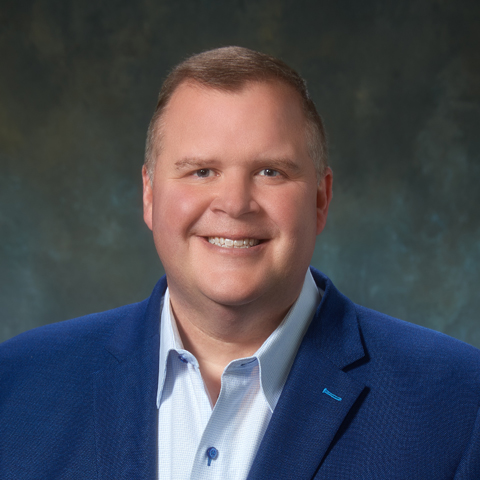
Michael Stull, MBA
Employers Health | Chief Sales Officer
Since 2004, Mike Stull has been a contributor to Employers Health’s steady growth. As chief sales officer, Mike works to expand Employers Health’s client base of self-insured plan sponsors across the United States.
Read More
Arpit Patel, PharmD
MedImpact | Senior Vice President of Trade Relations & Supply Chain
Arpit Patel currently serves as senior vice president of trade relations and supply chain at MedImpact Healthcare Systems.
Read More
Zach Johnson, MBA
MedImpact | Executive Vice President
As MedImpact’s executive vice president, Zach Johnson leads the company’s initiatives and investments in new health solutions, connected care technologies and clinical innovations.
Read More