When glucagon-like peptide-1s (GLP-1s) were launched over 20 years ago, utilization and news coverage were scarce. Today, this class of medications has grown to include some of the best-selling drugs in the country.1 Since 2005, there have been a total of nine GLP-1s approved for the treatment of Type 2 diabetes (T2D), comprised of six different active ingredients. As recommendations for GLP-1 use in diabetes expand and more drugs enter the pipeline, plan sponsors need to carefully assess coverage options.
Updated guidelines and expanded mechanisms of action are leading to an uptick in utilization
Before 2022, the American Diabetes Association (ADA) guidelines recommended GLP-1 therapy as a second-line treatment option for T2D. GLP-1s were specifically recommended for patients with atherosclerotic cardiovascular disease (ASCVD), chronic kidney disease (CKD) and weight management needs if metformin alone was not enough to achieve treatment goals. This recommendation often coincided with other classes of diabetic drugs, including sodium-glucose lowering transport 2 inhibitors (SGLT2i) such as Jardiance and Farxiga. Starting in 2022, guidelines shifted to focus more on the individual patient’s additional comorbidities and management needs, ultimately opening the door to earlier use of GLP-1s in therapy.
Now, GLP-1s are recommended as first-line therapy for almost all cases of glucose-lowering or comorbidity needs. This has shifted utilization patterns to favor GLP-1s not only for current utilizers but also for those newly diagnosed with T2D. Book of business (BoB) data from one pharmacy benefit manager (PBM) showed that 34.7% of all diabetic utilizers used a diabetic GLP-1 in 2022 versus 52.4% in 2026. We expect this trend to continue as guidelines recommend GLP-1s for additional comorbidities.
There are currently six products across four different active ingredients in the market, including both injectable and oral options. Newly identified mechanisms of action have contributed to improved product efficacy. Mounjaro is the most recently approved diabetic GLP-1 with a novel dual mechanism of action by targeting both GLP-1 and glucose-dependent insulinotropic polypeptide (GIP) receptors. A head-to-head trial of Mounjaro and Ozempic, the top two diabetic GLP-1s in the market, demonstrated that Mounjaro provided greater A1C and weight reduction compared to Ozempic’s second-highest dose — driving increased utilization of Mounjaro over Ozempic.
Other notable marketplace updates include the rebrand of Rybelsus tablets. Since its approval in 2019, Rybelsus has been the first and only oral GLP-1 option available for T2D. Rybelsus was originally approved with 3 mg, 7 mg and 14 mg strengths. In 2024, a new Rybelsus formulation with additional strengths was approved. In May 2026, Novo announced that the new formulation of Rybelsus would officially be rebranded as Ozempic, with the intent to switch more patients over to Ozempic tablets while slowly phasing out the old formulation of Rybelsus.
GLP-1s consistently top Employers Health book of business trend
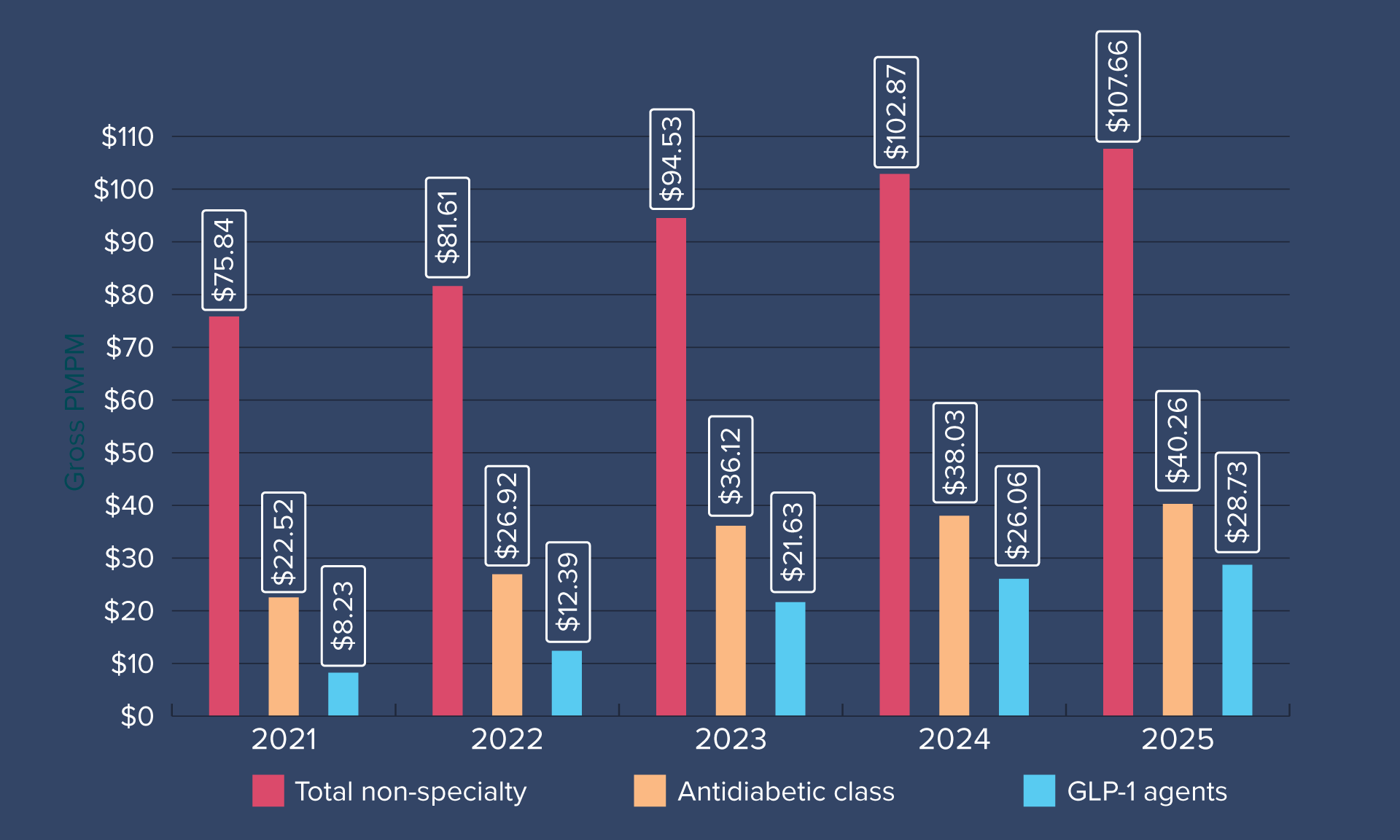
Over the past few years, antidiabetic drugs have consistently been in the top therapeutic class by total gross cost across our BoB. Diabetic GLP-1 trend has outpaced recent increases in both non-specialty trend and the diabetic class altogether Figure 1. Diabetic GLP-1s went from representing 37% of all antidiabetic gross cost per member per month (PMPM) in 2021 to 71% in 2025. Similarly, diabetic GLP-1s went from representing 11% of total non-specialty PMPM to 27% over the same timeframe. This trend is attributed to cost and increased utilization due to expanding treatment guidelines.
The average cost of a diabetic GLP-1 is around $1,200 per month before rebates. Between the high cost and utilization of these products, plan sponsors are experiencing significant financial burden. However, they may find relief soon due to upcoming list price reductions. Novo announced that starting January 2027, the price of Ozempic would be cut to $675 per one-month prescription, approximately a 50% reduction from current pricing. While there are still questions about what this means for rebate potential, plan sponsors are hoping that a lower upfront cost will reduce spend on this high-cost class.
Direct-to-consumer programs can be a pathway to coverage for some
Plan sponsors may start to reconsider coverage decisions due to underestimated pharmacy benefit trends and greater concerns of economic instability. Those who limit or exclude coverage of diabetic GLP-1s have an option for their members who still desire access to these medications. Direct-to-consumer (DTC) programs allow patients to bypass insurance and pay cash, often at a discounted price. While this can be a great option for some, plan sponsors must carefully weigh the pros and cons when considering sourcing products from a DTC platform.
DTC pricing may be unaffordable for some members — leading to a lack of adherence, potentially increasing a member’s risk of experiencing complications and ultimately increasing costs for plan sponsors. Not only should the financial benefit of excluding coverage be considered when making decisions, but also the impact on members’ long-term health and benefit experiences and satisfaction.
Employers Health and CVS Caremark exclusive management strategies
As guidelines evolve and indications expand, plan sponsors are seeking additional opportunities to manage the diabetic GLP-1 class. Employers Health has identified target areas within this drug class to provide plan sponsors under the CVS Caremark arrangement with stronger management opportunities.
One is a cumulative fill and quantity limit that aims to address duplicate therapy, early fills and medication stockpiling of GLP-1s. A 2024 study demonstrated that out of 5,713 cases reported to United States poison control centers associated with GLP-1 use, 997 (17.5%) were due to incorrect dosing and 115 (2%) were due to intentional misuse or abuse.2 The goal of the cumulative fill strategy limits how much and how often a member could fill a GLP-1, ensuring that plan sponsors are not bearing the burden of costs associated with inappropriate use.
Another strategy addresses concurrent use of GLP-1s and dipeptidyl peptidase-4 inhibitors (DPP-4), including products such as Januvia and Tradjenta. Recent ADA guidelines have recommended that these two classes of products should not be used together due to overlapping mechanisms of action, which could increase the risk of adverse reactions. On average, our BoB saw 1 in 5 members concurrently utilizing both classes of medication. While this strategy will address unnecessary costs by preventing inappropriate use of these medications, the focus is also to encourage medication safety so that members can achieve more favorable outcomes.
New products in the pipeline will likely cause higher utilization
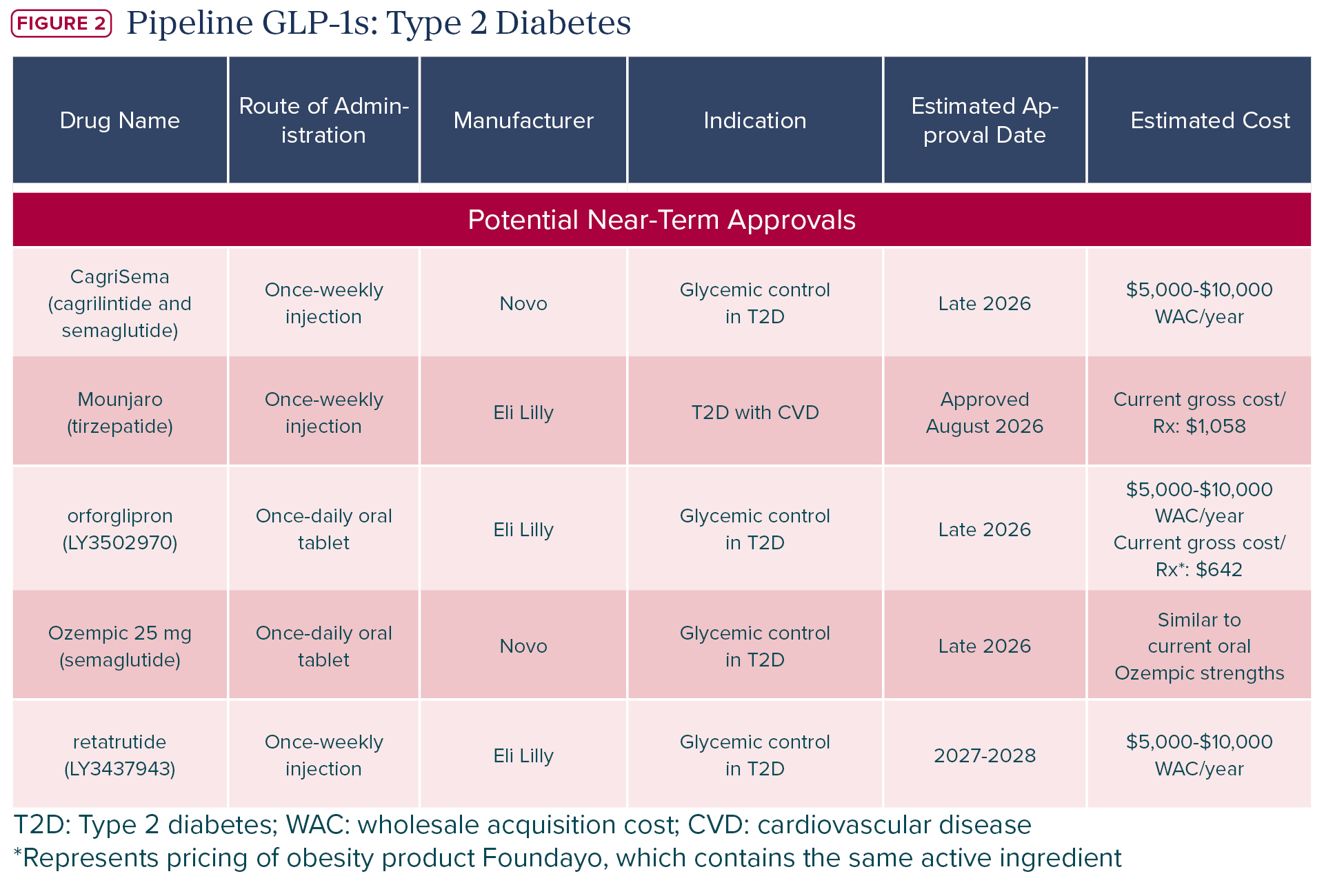
The diabetic GLP-1 market is already booming, and the pipeline will continue to evolve. As manufacturers compete for dominance in the market, especially with oral tablets, we expect to see multiple new products over the next three years. Figure 2 showcases five GLP-1s used to treat T2D that will become available in the upcoming years.
Diabetic GLP-1s have proven their clinical benefits in the areas of T2D, ASCVD, CKD and weight management. As the market continues to change with price reductions, updates to currently approved drugs and novel drugs entering the pipeline for approval, employers continue to look for additional management opportunities. The clinical team at Employers Health is dedicated to evaluating and developing new strategies to help employers navigate coverage of this booming class and welcomes the opportunity to address any additional questions at [email protected].