
Ryan Siemers, founder of Aegis Risk, returns to HR Benecast to discuss the latest trends in medical stop loss insurance and what they mean for employers navigating today’s self-funded health plan landscape. In this episode, Ryan breaks down current stop loss market cycles, the high-cost claim drivers impacting employer health plans and the legislative and regulatory developments influencing stop loss coverage.
Access Aegis Risk’s Medical Stop Loss Premium Survey here.
Watch or listen to Benefits Bites and Health Care Headlines.
Register for upcoming Employers Health webinars or watch on demand at https://www.employershealthco.com/resource-center/events/
Sign up for our monthly newsletter here.
Find additional helpful benefits strategies and resources at https://www.employershealthco.com/resource-center/articles/
Read the Full Transcript
Mike Stull (0:09)
Hi, everyone, and thanks for joining us on this episode of HR Benecast. This is your host, Mike Stull. As always, you can find more Employers Health resources by checking out the links in the episode description.
Today, I’m joined by someone who is no stranger to Employers Health, and if you keep up to date with our resources and events, chances are you’ve heard from him. Ryan Siemers, founder and principal at Aegis Risk, has been featured on HR Benecast before, and will be speaking at our 2026 Annual Benefits Forum later this month to discuss the latest in stop loss. If you enjoy today’s conversation and want to hear more from Ryan, I encourage you to attend the Employers Health Annual Benefits Forum, March 24th and 25th in Columbus, Ohio.
Ryan is a nationally recognized expert on self-funding and catastrophic claimant risk management. He holds a Certified Employee Benefits Specialist designation through the International Society of Employee Benefits Specialists, and authors the annual Aegis Risk Medical Stop Loss Premium Survey. So if you’re involved with the CEBS, I know you’re probably familiar with the Medical Stop Loss Premium Survey.
So with that, welcome back, Ryan, to get us started, remind the audience a little bit about yourself.
Ryan Siemers (1:33)
Certainly. Yeah. And thank you.
Thank you, Mike. It’s great to be back and doing another podcast. Yeah.
As you introduced, with Aegis Risk, we’re a specialty broker and consultant focused on medical stop loss. We either work direct with a plan sponsor on that aspect of their self-funded health plan, or frequently work alongside another consultant, broker, or advisor, who in many cases when we look to hear from it, they admit that, hey, stop loss is a different coverage, different approach. We don’t quite have the expertise there.
Can we plug you in and leverage your firm’s expertise, as well as the data in the survey, as you referenced. This upcoming year will be the 20th year of the premium survey. It is very much a crowdsourced effort.
We get plan sponsors to respond. We also get other brokers and consultants to provide premium data points. We don’t ask for their group names.
Altogether, it’s been over a billion dollars in annual premium, and I think approaching 1.2 million covered employees. It’s a sizable field, and obviously plan sponsors, policyholders, but even some of the large carriers are big fans of the survey, because it is uniquely the one metric of what was negotiated and placed in the marketplace on stop loss premium. As we’ll get into, we just went over a pretty significant cycle this past January 1, 2026.
We’re eager to get the survey going to see, okay, there’s a lot of pain felt, how large was it in the premium increases we saw there. But again, it’s our focus, it’s our niche, and it keeps us occupied.
Mike Stull (3:29)
Yeah, 20 years, that is pretty incredible. One of the pieces I did want to make sure for employers listening, if they want to participate in this survey, where do they go to get information, and when does it typically come out?
Ryan Siemers (3:47)
Sure. The simplest way to explain is to go to our website, aegisrisk.com. You can hit our contact or our survey tabs in there, and basically request a copy of the survey.
That then gets you into the notification of the stop loss survey when it opens, which is generally late spring, as we put it. This year, that might be somewhere around June 1, late May, June 1, and then collection is usually done. What we do, we try to release it in and around August as the January 1 stop loss renewal cycle for most who are on a January 1 anniversary are starting to initiate that overall process.
Mike Stull (4:31)
All right, excellent. You talked about a lot of changes for January 1. We know that the stop loss market can change year over year.
What’s the headline for 2026 and moving forward?
Ryan Siemers (4:45)
Yeah, I’d say the headline is perhaps a bit of like, ouch, that hurt on our last renewal, are we going to get stung some more? I think the market still is trying to figure out, okay, yes, what do we need? In short, as many saw with their stop loss renewals, we quickly went from what one could argue was a soft market, which is used in reinsurance and stop loss, where pricing could get pretty competitive.
You had some entrants in the market in recent years who were keeping premiums competitive, but the claims weren’t listening to any of that. Those are many. That can be a separate long conversation in its own right, but largely the pricing that many carriers had out there, this was revealed in 2024, wasn’t standing up to the premiums they were getting in.
They had already negotiated a lot of their 2025 renewals at that time. This is like the fourth quarter of 2024, and so the 2026 cycle was a, hey, we’re behind in the first place, we’ve already got higher medical trends, and with stop loss, you have this unique dynamic. Well, not unique, you have the same thing with fixed dollar copays on pharmacy.
You have leveraged trend. If your stop loss deductible doesn’t change and medical inflation is 5% to 7%, that’s going to be, in many cases, a 12% to 15% stop loss renewal increase to keep up. So the claims are not showing any instinct of easing up, and we’ll talk about some of those more significant drivers, particularly those that are, say, over a million dollars and more are catching a lot of the eyeballs at stop loss carriers, but as a plant sponsor, there’s ways.
How can we combat that or anticipate it could as much be the approach; they need to be aware of? Anticipate it now as opposed to finding out in September, October, November of this year when you’ve got one week to make your decision.
Mike Stull (6:55)
Interesting. I know I serve on a dental insurance board, and the loss ratios that the fully insured book of business has have been up. I know listening to the big insurers, their loss ratios have been up.
Certainly on the pharmacy side, we see increased costs, but most of that has to do with just more utilization of smaller size claims. So the claims you mentioned, over a million dollars, what kind of categories do those typically fall in that are driving the most concern for reinsurers? And I guess we can look at that both from a today perspective and then thinking forward, are there specific areas that reinsurers are concerned about as we think about the next couple of years?
Ryan Siemers (7:54)
There’s several drivers behind it, and for many of these, they’ve been present for the last several years as well, but a few aspects of which are creating more, this is common, this has arrived. First of all, long, complex, inpatient stays are out there. Comorbidities, sepsis can be incredibly expensive and a lengthy inpatient stay, where that can rather quickly become well over a million dollars, and we’ve seen some in excess of 3 million on some of the groups that we cover, which start out as a routine inpatient admission and illness, a surgery, and then it goes further.
So that still remains very much a concern out there. Oncology and cancer claimants are increasingly of concern. And CAR T therapies are seemingly being deployed effectively, which is an attribute to it, but was catching up with one of our carrier reps just the other day, and he made the comment that in their own analysis, they’ve noticed that in years past, CAR T perhaps seemed to be the fifth option that an oncologist may have, or a patient may have pursued, and now it seems to be almost the first in their record. So again, we’ve been anticipating, we knew about therapies such as that for quite some time, but they’re gaining traction now, but do come with a significant claim expense with it. Still, when you look at some of the larger ones that can, which, you know, we’ll use a million as a metric, and a million is not that rare anymore.
But congenital anomalies are still a significant driver. You can still have, you know, newborns with heart defects and a series of surgeries and complications which can fall out of that. And, you know, we’ve got this so many minutes into this without, you know, clearly, I don’t think I said it earlier, gene therapy.
They’ve been out for, you know, four or five years, but the take of them in therapy has been slow. Could be clinician, you know, hesitancy, patient hesitancy, obviously the financial impact of them. But, you know, we’ve got treatments out there, hemogenics now for hemophilia B, which can be three million plus, might start to catch.
And again, that’s for a treatment to replace a longstanding, costly claimant condition having hemophilia and getting factor, where those are oftentimes several hundred thousand, if not over a million dollars a year. So we, you know, we still see a strensic as a as a pharmaceutical that can be quite costly if deployed for the condition HPT, which I can best rattle off the acronym as I can the actual condition that it covers. But that’s a therapy that can be one point six, one point seven million dollars a year.
But, you know, there there’s there’s threats out there. But I’m going to go first back to just the costly inpatient stays. You know, there there’s nothing dynamic or new about them.
They occur. And, you know, it does cause us to sometimes wonder if such patients and I’ve heard reference to this are a a key attribute for inpatient facilities, you know, own revenue and business objectives. And, you know, it’s it’s the self-funded plan sponsors that are carrying the costs of many of those.
So they’re an outcome of our of our program and situations and critical care needed in a setting such as that. But they remain a significant driver.
Mike Stull (11:58)
One of the things we’ve been paying a lot of attention to is health care legislation. And certainly the states are very focused on it. The federal government is focused on it from a variety of different perspectives.
Are there any specific areas you’ve heard that we should watch for in terms of having an impact on the reinsurance market? And conversely, I know I just heard on a podcast this week, Secretary Kennedy was talking about reforming prior authorizations. There’s a lot of a lot of chatter around prior authorizations as it relates to AI.
Do do reinsurers care about efforts to reform, loosen, eliminate in some cases prior authorization use?
Ryan Siemers (12:55)
Yeah, very, very good question. I can’t say I’ve heard that as an upfront concerner of theirs at the moment. I think there is perhaps still a, you know, let’s wait and see till it’s approaching what actually might be legislation that gets passed, which we all know has been a terrible in Washington in recent recent years on that level.
You know, I think there’s there’s hope, you know, a lot of the a lot of the common conversation about health care to the general public about, you know, ACA marketplace subsidies. And then that, of course, we realize don’t have any impact on the self-funded plans, you know, cost drivers. So transparency rules and regulations, you know, with providers could be a future path.
But I think that’s seen as a tunnel that’s still quite ahead. You know, you do bring up states, which stop loss is an insurance product which is regulated at the state level. And so, you know, there is on the broader market concern, perhaps more with the carriers, you know, they’ll depend on carriers or maybe minimum deductibles for stop loss.
Now, in all honesty, those minimum deductibles could be, you know, twenty-five thousand dollars. But for many of your larger stop loss carriers, they don’t come anywhere near quoting a twenty-five thousand dollars specific stop loss deductible. That’s almost a fully insured plan.
You know, for many of them, it might be seventy-five or one hundred thousand at if that that’s the smallest deductible. But, you know, there’s a lot of focus there is there is the smaller midsize group, the groups traditionally trying to go from fully insured to self-funding and trying to be able to get into self-funding more, more adequately and flexibly. There’s some focus there to hopefully, you know, improve that.
But, you know, I think for many plan sponsors, I don’t think you want your stop loss carrier to be writing a whole lot of policies at a thirty-thousand-dollar deductible because that’s a different risk category than the truly catastrophic. So I think right now there’s a lot more focus on, you know, what are the claim drivers, and we’ll keep an eye on on policy impacts. But nothing is currently fearing them at the moment, I think.
Mike Stull (15:17)
Do they do they care at all about, like, biosimilars? So thinking about, you know, Humira going from the biggest drug in the world to biosimilars that are 80 percent less expensive and Stelara one for fear.
Ryan Siemers (15:34)
That’s a good sidebar. Yes, I think there and, you know, with the stop loss in some ways, too. And I’m kind of adding my own belief or position on this.
But they are in a hey, we got to take what comes our way approach. They’re not the plan administrator. They’re not the network.
They’re not the care manager. They want to over underwrite and cover populations which have all of those components adequately positioned. So they’re, you know, they’re looking to have a quality administrator, a proven network on the plan, care and case management.
And, you know, a pharmaceutical, a PBM that that’s adequately or care management programs that’s integrating that. So they are going to be encouraging that. But in some cases, it’s it is almost a hey, we support that.
But, you know, we’re not in a position to affect those abilities and support those. So that kind of adds some some some background to that. But the biosimilar is a great example there.
Definitely. And that’s, you know, that’s a hope that that’s something that can be leveraged for the covered populations and, you know, minimize or moderate the underlying catastrophic claim expense.
Mike Stull (16:53)
We talked before we started recording a little bit about just how much stop loss is being placed out in the marketplace. It used to be that larger employers didn’t buy stop loss with the increasing prevalence of these large claims. Are we seeing that creep up in terms of the size of employers and plan sponsors that are purchasing some form of stop loss insurance?
Ryan Siemers (17:21)
We’d say yes, and, you know, it could be. At a million-dollar deductible, for instance, you know, there are there are groups that have a two million dollar stop loss deductible where they’ve just realized, hey, we may have twenty-eight thousand covered employees on our self-funded plan, but we’re aware of some of these outlying claimants, you know, a three. I say a three million claimant is the new one-million-dollar claimant.
A group of that size can pretty dependably probably have a three million or two every year. Now, they may be sizable to hit that, but there are claims which are ten million plus which exist out there. We saw ten years ago we saw a nine point five-million-dollar claimant on one of our one of our groups.
And I think that’s where particularly if there is a risk management, a finance element and nature of the business and margin of the business, you realize, look, we cannot have, you know, uncovered liability of such size within our active self-funded health plan. You know, there’s no, there’s no really generally speaking, no reserving, no accounting rules. It’s an it’s a current expense to the business in some ways.
But if there’s that amount of volatility, we are seeing where someone steps in, if it may not be out of benefits in HR that says, oh, that’s that’s a liability. We button those up throughout the business. Let’s get a hedge in their language there.
But to that, but more realistically, I mean, it if you’re five thousand employees and less and do not have stop loss, you really are need to be aware of and be ready to explain to those same individuals finance and that, you know, how did we have a call on our banking to fund a five million dollar inpatient bill last week without that type of coverage in place to help and budget? That’s what stop loss is. It’s a budgeting tool.
It’s an it’s an allocation of the uncertainty of that sporadic expense across all periods.
Mike Stull (19:20)
You mentioned the deductibles that some of those larger employers may take out. Generally speaking across the market, any general trends you’ve seen over the past few years related to deductibles, attachment points that plans are putting in place?
Ryan Siemers (19:38)
Yeah, that’s another good question. My first answer is, honestly, no, I would say it’s remained pretty consistent. And when one looks at our survey, the unique aspect of it, there isn’t an average stop loss premium.
I mean, yeah, you could say that, but it’s not reflecting the fact that it varies by the deductible size. I mean, for a matter of fact, per our survey, an annual monthly premium for one-hundred-thousand-dollar deductible stop loss deductible per employee is almost twice what it is at two hundred thousand dollars. So, you know, you have quite a bit of that downward slope and all that look looking at that.
But, you know, you have more group self-funding. So when you look at the market, you know, quote unquote smaller groups, which traditionally would remain fully insured, that might be self-funding initially and getting in at like one hundred thousand, one hundred twenty-five thousand, you know, or adding out to those. But but on the ongoing trend, the one thing that’s key as we’re talking about, how can we prepare for the current environment?
I would say, generally speaking, most groups do not like the change of their stop loss deductible renewal. They want to keep things where they’re at. But again, it’s particularly in the employer’s health population.
An audience, it’s just like you had a fixed dollar copay still on name brand drugs. You know, the full cost of that care is borne by the plan. And meanwhile, it’s a ten-dollar copay to the employee.
Same thing if your deductible doesn’t change. So you have that leverage trend, and groups don’t like to change their deductible. And with this pricing and I think back to that one thing describing the current environment, I would say, too, there’s there’s more discipline now at underwriters and what they’re pricing and what they’re putting out on proposals.
It was a little, I don’t want to say loose, but like I said, soft before. And so they’re going to be tight. They’re going to be stricter.
They’re not going to give in to that leverage trend. Oh, that really doesn’t exist. That’s still hear that a lot.
People know it’s pretty direct math, but they still say that that’s that doesn’t exist. And so groups need to be ready to, as we put it, index your deductible, take the underlying trend on your medical plan and increase your deductible. If it’s two hundred thousand and you have a seven percent trend on your medical plan, increase it to two fifteen.
And that will largely do it on your next renewal. And that will that will eat a lot of the rate increase needed. And so we do think more directly, again, to your question and a strategy is all groups need to look at, you know, maybe it’s time if we haven’t to index our deductible.
There is a cost benefit to that, that, you know, still that that’s incurring fifteen thousand dollars more in that example per claimant potentially that hits your stop loss. But that’s a variable expense, not a fixed expense that you have with stop loss period.
Mike Stull (22:30)
Sounds like reviewing deductibles and figuring out, you know, what what kind of policy you want for the upcoming year is is one thing that employers can do to prepare for renewal. But are there other things that employers can be doing right now in preparation for an upcoming renewal?
Ryan Siemers (22:53)
Yeah, there is. There always is. And, you know, I think getting back to the very start where we said, you know, there’s a little there’s more focus on stop loss and it has, you know, the price, the potential increase they had on their last renewal.
If you haven’t yet, take time and get to know your stop loss policy. I would say most still don’t. It’s its own unique animal.
But you can see how, again, it covers the plan, how the administrator is, you know, needs to report the claims and the eligibility provisions. And so if you have that renewal coming up, you know, take time to to learn your policy if you haven’t yet, because that will maybe get you a better sense and maybe realize, you know, are there are there are there aspects of the coverage I wish we had better, you know, to look at how is your experience running and how many claimants have you had today? How many claimants did you have last year?
If you didn’t get that from a broker or consultant, you know, what has been the return on your your claim reimbursements versus premium? And how frequently were you hit? And again, I think this is, you know, I almost argue, hey, don’t necessarily ask your broker or consultant to do this.
It’s it’s you’ve got the reporting there. You’ve got the copy of the policy. You know, take some time to get to know how this coverage works.
And in some ways to, you know, a good, a good, helpful guide at times or thumbnail is to say, hey, you know, a coverage deductible level that you maybe have three to four claimants a year on at the most, it’s not something you want. Eight to ten stop loss claimants. You’re overinsuring if you have that going on, you know, three to four is a fair number to be at.
And, you know, armed with that and look at what those deductibles. I’ll give a plug for our survey. If you’re at a two-hundred-thousand-dollar deductible and you want to say, well, what’s the difference if we went to two hundred and fifty thousand?
You can leverage our survey and see what that that delta is, at least on the marketplace. Use the factor of it to get a sense of what that impact might be. And, you know, I think that then arms you to be ready for that conversation with any advisor or if it’s through your TPA or your health plan that you get your stop loss and, you know, come at it a little more armed.
And I would say finally to see what the current claims you have that are significant. I think a lot of groups don’t realize that, oh, you’ve had that hemophilia there for two, three years now. It’s an it’s a 14-year-old dependent.
As we say to that, that a claimant like that, an employee tied to that. I’ve said before that that that is probably one of the most committed employees you’re going to have until that claimant hits that dependent hits age 26, because that is that is so important to them, obviously, to know that a condition like that and others are covered. But, you know, that’s going to be something that’s going to be a focus of an underwriter.
But know that don’t find that out when you look at your proposals. You get back at renewal time. Take some time to learn that now so you can get a better sense of where your coverage is.
And then obviously, you know, if it’s three months, you pretty much need to be ready. You need to be marketing at that point in time. Don’t go out too early either.
Six months is way too early to go out and get stop loss proposals. It is an actively underwritten risk. You know, something at, you know, three to four months out is going to be better time because the underwriter is going to like the fact that they’ve got relatively recent claims reporting that they can act on.
Mike Stull (26:19)
We talked about the annual benefits forum. So another shameless plug for for that. You’re joining us in Columbus.
Any sneak peeks at what you plan to cover and what attendees can expect to hear from your session?
Ryan Siemers (26:40)
Yeah, definitely. I would say it kind of touched on some of those, you know, alluding to just there of a hey, take a look at this and, you know, we’ll have a graph up that shows that survey information, which can say here’s an example. And if you look at the difference in premium at these two different deductible levels, you know, this can be, you know, a fixed cost premium reduction of X.
But, you know, we can also model out, look, you know, your claim reimbursements. Why? And where is the correct level to cross over on that?
You know, we’ll talk to you about we’ll hit on some of those high claimants drivers. We’ve got some good references. We don’t track claims as well as the several of the larger stop loss underwriters do, and a variety of them have their own reports.
So we can we can share some of those actual numbers on the the impact of high claimants. And I think, too, it’s a. And I hope for it is, you know, took it too carried away and talking is have some time for questions.
You know, the audience at the Employers Health forum is a, you know, a sharp crowd. A lot of plant sponsors, a lot of other advisors and vendors in the marketplace who are curious to find out many representatives of the pharmaceutical. So some good questions, because I as much look forward to that to kind of get a sense of the pulse of, you know, what’s out there in the marketplace and what our what our plan sponsors themselves concerned about.
So I will admit it’s a two-way street in that world. But hopefully everyone, as we said, to leaves being having more awareness of what they need to anticipate on their stop loss coverage, on their next renewal and keep it from becoming too much of a. You know, a focus or an expense beyond where it really needs to be.
Mike Stull (28:33)
So if you’re listening out there and you’re coming to join us in Columbus, start you have three weeks, this is your three weeks notice. So start thinking of your question for Ryan. All right.
The final takeaway question. So if you could give plan sponsors an action item after listening to this episode, besides thinking of a good question to ask, what would it be?
Ryan Siemers (28:58)
Yeah, boy, and I feel like I already used it by saying, read your policy. And, you know, I’ll I’ll I’ll still I’ll still go with that, actually, because I think many would behoove them to pull it out, read it. And get familiar with the dynamic of the coverage, and it just gives you a better sense.
And, you know, some of the provisions actually didn’t jump into that here. That’s something we would at the presentation. But, you know, in short, it’s got some key coverage areas like planned marrying.
Make sure you have planned marrying. I’ll just leave it at that. That’s why you don’t have a conflict with your plan document.
Look at your policy. Make sure it has planned marrying in it. And continue that on your future contracts as well.
Mike Stull (29:49)
Excellent, and I’ll just add one, which is go out to Aegis Risk’s website and get signed up for the survey, because I know the information.
Ryan Siemers (29:59)
I like that.
Mike Stull (30:00)
Yeah, the information is always something I look forward to seeing. Ryan, thank you for taking time to join us today.
We look forward to having you with us in the room here in a few weeks, and you know, we get so focused on pharmacy, and we know that stop loss is another big issue that clients deal with in the holistic management of their plans, but not something that we pay attention to every day, and so I’m always intrigued by the information. I have a whole page full of notes and bullets that I was writing down, so thank you for sharing your expertise with us. Also, don’t forget to subscribe to HR Benecast to be notified when new episodes are released, and thank you for taking the time to listen and for your continued support, participation, and interest in Employers Health.
Be well, and we’ll see you soon.
In this podcast
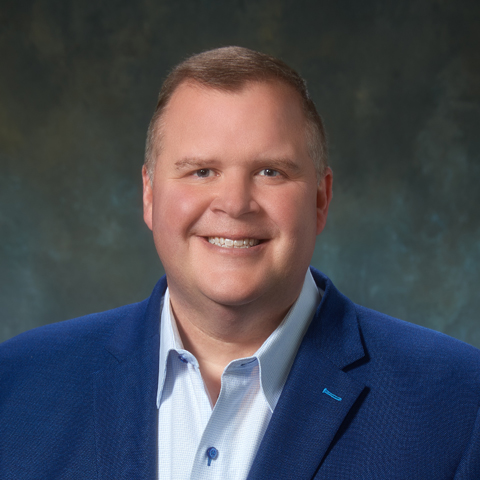
Michael Stull, MBA
Employers Health | Chief Sales Officer
Since 2004, Mike Stull has been a contributor to Employers Health’s steady growth. As chief sales officer, Mike works to expand Employers Health’s client base of self-insured plan sponsors across the United States.
Read More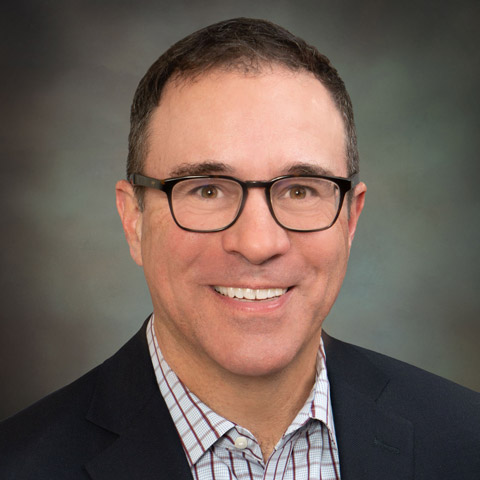
Ryan Siemers, MBA, CEBS
Aegis Risk | Principal
Ryan Siemers is a principal at Aegis Risk LLC, a consulting firm and brokerage focused on medical stop loss and the financial management of catastrophic medical claimants.
Read More