
In this episode of HR Benecast, host Mike Stull welcomes back Kevin Wenceslao, director of clinical solutions at Employers Health, to discuss how a clinical-first approach strengthens pharmacy plan performance. Kevin explains how the Employers Health clinical team works with clients and PBMs to deliver meaningful clinical insights and strategies.
Watch or listen to Benefits Bites and Health Care Headlines.
Register for upcoming Employers Health webinars or watch on demand at https://www.employershealthco.com/resource-center/events/
Sign up for our monthly newsletter here.
Find additional helpful benefits strategies and resources at https://www.employershealthco.com/resource-center/articles/
Read the Full Transcript
Mike Stull (0:09)
Hi, everyone, and thanks for joining us on this episode of HR Benecast. This is your host, Mike Stull. As always, you can find more Employers Health resources by checking out the links in the episode description.
Today, I’m joined by my colleague Kevin Wenceslao for his second appearance on HR Benecast. If you enjoyed today’s episode, you can check out my previous conversation with Kevin in the episode description. With that, welcome, Kevin.
It’s great to have you back on the podcast. You know, the first one must have gone right if you get asked back. So welcome to the second-timers club.
To get things started, give the audience a little refresher about who you are and your role here at Employers Health.
Kevin Wenceslao (0:55)
Thank you, Mike. Kevin Wenceslao, Director of Clinical Solutions. I am one of the pharmacists in our ever-growing team.
I completed my pharmacy school at The Ohio State University, and I’ve combined that with a master’s in business administration with Youngstown State. So really trying to combine that clinical insight with some of the approaches that make sense financially. And from our organization’s role, you know, we’re trying to be that pharmacy expert for you all, and employing the pharmacists on our team helps us really combine some of those concepts together.
So thank you for having me back. I’m glad I didn’t mess up the first time. Hoping to provide some more insight on what we do and why it makes a difference.
Mike Stull (1:44)
So you mentioned being a penguin, you mentioned being a buckeye, but you left out maybe the one near and dear to your heart.
Kevin Wenceslao (1:52)
That’s true. That list is getting longer. So I did also do my undergraduate at Iowa State University.
That’s where my passion will lie when it comes to sports, even though our coaches are being stolen by other teams within the country. But I am a proud cyclone.
Mike Stull (2:09)
Excellent. All right, let’s get started. Broadly, from a broad perspective, walk us through the Employers Health clinical team’s mission and how it plays into the broader organization and team.
Kevin Wenceslao (2:24)
Yeah, our team sat down and really tried to focus on what we are trying to deliver. And we came up with our own shared mission statement, which states we are dedicated to providing clinical expertise and proactive strategies to our clients and their partners. We do this by leveraging evidence-based insights, building meaningful relationships, and prioritizing integrity.
We advocate for positive outcomes for our colleagues, clients, and plan participants. And you’ll see that in the way we come up with different types of clinical programs. We look at all the vendors within the space and try to come up with recommendations that make sense and really incorporate the member experience, as well as account for what the clients will deliver to their members.
So you’ll see that through our strategies, the way we meet with people, the way we recommend things. We try to keep that in the forefront whenever we’re having those discussions.
Mike Stull (3:26)
And I think there’s a lot of organizations out there, whether they are group purchasing organizations or PBMs, that always talk about clinical first and being clinically driven. Talk to us a little bit about how employers’ health truly is clinically driven.
Kevin Wenceslao (3:44)
So one of the biggest examples would be within the pharmacy space, one of the biggest cost levers that we have is utilization management. So easy to just ask and demand prior authorizations, quantity limits, but our team takes that extra step to model what we want to see in that criteria. Using the information about certain drugs, what we know about its safety, its efficacy, we take that time to look at clinical evidence, develop criteria, and propose that instead of just simply asking.
And I think that does make a difference because it really drives home that we’re thinking of the member experience first and not just doing things because it might save money. It gets a little bit more challenging once we get to that stage, but our team really does put a lot of focus on monitoring the pipeline and understanding what each of these drugs do in a very crowded space.
Mike Stull (4:45)
I think the other thing that the team does a really nice job of is considering, you know, the fact that you got to change doctors’ minds. And so any type of clinical intervention, are we going to be able to get, you know, if doctors need to approve a change in the prescription, will they? And then the second piece is we can deny all we want.
If it gets to a medical necessity review and an independent review organization outside of the plan, what will that IRO say? So, it really is a very holistic approach to thinking about what’s the best way to clinically manage these different classes.
Kevin Wenceslao (5:32)
Yeah, certainly driving that behavior change at all levels is really important.
Mike Stull (5:58)
Absolutely. Let’s talk about the clinical team working alongside the PBM. How does that work?
Kevin Wenceslao (5:46)
Yeah, a lot of our PBMs have pharmacists on their team as well or other clinicians. We strive to have regular meetings with them where we can monitor the pipeline in terms of both drugs that are coming out as well as programs that are being developed under the PBM and really providing them honest feedback on how these programs might perform and what changes we might want to see. You know, having these regular standing calls with them, we get the insight of all of our different PBM partners, and we can challenge them with different concepts and ideas and really push them towards a direction that our clinical team believes in as well.
Mike Stull (6:23)
Yeah, I think one of the interesting things that we’ve been able to accomplish, and I know you’ll talk a little bit about a specific example that we’re in the process of rolling out here in a few minutes, but we know that our PBM partners have a lot of different types of clients and they’re trying to execute at scale. And one of the things that I think we’ve done a nice job of is understanding that while we have, you know, now $6 billion in pharmacy spend under our collective, that, you know, the PBMs are typically much, much larger. And so there may be things that we can do for our collective clients that the PBM wouldn’t necessarily be able to do at scale across all of its diverse clients.
So I think that’s a piece that we’ve really latched onto and embraced as we’ve continued to grow.
Kevin Wenceslao (7:27)
Yeah, and that’s a great point. Some of these programs that we drive towards, we see our PBM partners eventually adopt at that larger scale level. So we really do see ourselves as drivers of change that we want to see within this industry.
Mike Stull (7:41)
Yeah, we were talking yesterday, looking at a slide that we’ve used in different presentations, and it talks about some of the custom clinical edits that we’ve developed over the years. And, you know, there are a number of those that our clients have access to two to three years before the PBM is able to incorporate it into their overall formulary strategy. And so for clients that are, you know, set it and forget it, they’re losing out on two to three years of potential savings.
And typically, it’s not, you know, if you look at the individual edit on an individual basis, there’s not, you know, this huge percentage savings. But when you add them all up and then think about the number of years that you get to those savings before the PBM actually makes a move, then it starts to become, you know, real impactful. So let’s talk about other areas where Clinical Insight has the biggest impact on pharmacy plan performance.
Kevin Wenceslao (8:49)
Yeah, and I can really think about this from a past, present, future perspective. You know, in the past and ongoing, we’ve really had a lot of programs around dermatologicals. It’s a space where there’s a lot of room for manufacturers to play games, have direct consumer advertising, changing simple things like a gel to anointment or combining two drugs, and then up charging it, even though there is no difference in clinical safety and efficacy.
And that’s hard to parse out, you know, from even a member or client perspective, you just hear a new drug, it’s, you know, it’s got this active ingredient in it. So you’ll see a lot of our programs are dealing with that dermatological or skin condition side of things and really attacking some of those products that don’t add extra value to a formulary and driving them towards something that’s lower cost, but also just as safe and just as effective. More recently, we’ve been dealing with obviously GLP-1s, obesity and diabetes space, and trying to look at ways to be innovative within this area and listen to some of the feedback but still keep the members in mind with some of our criteria.
So you’ve seen things like adjusting body mass index or BMI requirements, or looking even at the weight loss of the products itself and trying to find ways to show that this drug is effective, so they should still be on it, or what else can they convert to? I think in the future, and what’s top of mind right now is going to be the biosimilar space. We really want to advocate for biosimilar use, and it goes back to what you said, Mike.
How do we get prescribers to buy in? How do we get members to feel comfortable with switching? And how do we facilitate that in a way that also drives PBMs to continue promoting biosimilars in some form or fashion?
So as you may know, Stelara is probably our biggest target right now as we see more of those biosimilars available, trying to have them step through these products, knowing that they’re interchangeable, knowing that they share the same indications, and how do we reach out to providers to start those patients on those drugs first to avoid some of the disruption that you see when they’re using the original product and then being forced to switch later on?
How do we just do it right from the start?
Mike Stull (11:15)
So a lot of different areas to tackle as it relates to drug mix and utilization management. Talk to us a little bit about why clinical expertise is something employers should see as essential, not just a bonus, when choosing a benefits partner.
Kevin Wenceslao (11:36)
The drug space is complex. You see that FDA approval list every year, and there’s a lot of questions on what are all these drugs and why do we need 35 options for something like diabetes? Why can’t we just drive to the lowest cost option and maybe HIV?
So being able to understand why coverage is necessary, but then how to intentionally design the formulary or management to drive towards the best options is something that’s difficult. For us, we live and breathe pharmacy. Our team is always looking at those trials, things that are not fun to read, but essential to understand what each of these drugs do.
And that helps you manage your plan in a way that your members feel like they’re being taken care of still, and you’re not just closing coverage just to cut costs. How do you find a way to design that coverage where you’re providing the value that you promised to bring, but you’re doing it in a mindful and a smart shopping mentality and trying to drive both PBMs and pharmaceuticals to really home in on their drugs and what they actually can provide from a value perspective.
Mike Stull (12:53)
Yeah, we talked about the fact that there’s a lot of nuance in the clinical space and understanding, you know, being able to read the studies, being able to look at, okay, is this drug actually better than its competitors and how much better and is it worth it? So you mentioned about biosimilars. There’s obviously some new biosimilars out in the marketplace.
Not only are we trying to move individual patients from the originator product to the biosimilar, but we’re also trying to stop leakage to other biologic products in the class. And, you know, when you think about Crohn’s disease and RA and plaque psoriasis and some of the others, that’s a big issue. And I think clients are going to start seeing that or they’ve already started seeing it in their top drug spend.
So understanding, you know, maybe in one class, this alternative biologic is more effective and maybe in this other one, it doesn’t make as much sense based on the cost difference. So there’s so much nuance at play here.
Kevin Wenceslao (14:14)
And that’s a great point, Mike. You know, we think historically, I feel like we think in one lane. Here’s the brand, there’s a generic.
And now we’re talking about here’s the biologic and here’s the one biosimilar that’s interchangeable. Our team is starting to look at things not from just that drug, but we know that all of these specialty drugs treat Crohn’s disease, ulcerative colitis, psoriasis. How do we promote biosimilar safely in front of some of those other products that are not just direct counterparts?
Does that make sense clinically? I know you had asked me a question just the other day. What does it mean when they say Skyrizi is better than a Humira or Rinvoq?
Sometimes you’ll just hear them throw out terms like they have improved PASI score, like all these clinical terms. But what does it actually look like for the patient? Is it skin clearance?
Is it symptom relief? What actually makes it better? I think that’s where our team really helps translate some of that clinical jargon to how does this actually drive demand for a certain product?
If we switch them over, will that really affect the disease state’s progression? Those are things that our team is helping provide a little bit better insight as best as we can and then creating a strategy that adheres to what the clinical effect is, but if there are options that are available that are not out there today, drive towards some of those solutions.
Mike Stull (15:42)
So I think we’ve danced around this question for the entire episode, but talk a little bit about, from your perspective, what truly sets Employers Health’s clinical approach apart from similar organizations?
Kevin Wenceslao (15:59)
So our team tries our best to evaluate all the vendors in this space, and I think you’ve seen in the last couple of years, beyond just a PBM, there are a lot of other companies trying to offer comprehensive solutions and provide holistic care for their members. And our team is trying our best to look at these vendors, understand what they really do, and ensure that they’re actually doing something different that drives outcomes. Now, on top of that, within the PBM space, when we develop our programs, we try our best to avoid fees for our programs.
We allow the plan sponsor to pick and choose what program fits best from their plan philosophy standpoint, what their drug spend looks like, and how much patient impact there might be. So I think that’s a big thing for our team, that we’re able to develop these things and allow plan sponsors to choose, and our role is to provide them the insight that they need to make the right choice that fits them best.
Mike Stull (17:04)
Yeah, I know when I look at the marketplace, we see other collectives that don’t have any clinical team members, and that always boggles my mind. We have others that have gobs of clinical pharmacists on their team. I don’t know if gobs is the correct grouping term for a group of pharmacists, but we’ll go with it.
But we see a lot of clinical pharmacists on teams, and they simply white label PBM programs charged for them, and that’s it. So I think there is a clear difference here. We also work with the consultants at a lot of the consulting houses that we have shared clients with, making sure that our team’s approach and the consultant’s approach are in line before we even get out to recommend it to a client.
So a lot of work going on behind the scenes as well as in front of clients from our clinical team. And from a drug cost perspective, everyone’s talking about how do you manage the per member per month cost, and we have the pricing piece down. We have great contract, great discounts, great rebates, but the second part of it is utilization.
So drug mix, just the sheer number of utilizers, the sheer number of medications being utilized all play into it. And so it is a non-negotiable that focusing on utilization management and the clinical management piece, it has to be part of the equation. All right.
Well, Kevin, appreciate you coming back and taking time to join us today and talking a little bit about what the clinical team, what purpose and what role the clinical team plays with our clients.
Kevin Wenceslao (19:18)
Yeah, thank you for having me. And if there’s any questions out there, you guys can always reach out to me and my team, and we’re happy to dive into the details as always.
Mike Stull (19:29)
Excellent. All right. Don’t forget to subscribe to HR Benecast to be notified when new episodes are released. Thank you for taking the time to listen and for your continued support, participation, and interest in Employers Health. Be well, and we’ll see you soon.
In this podcast
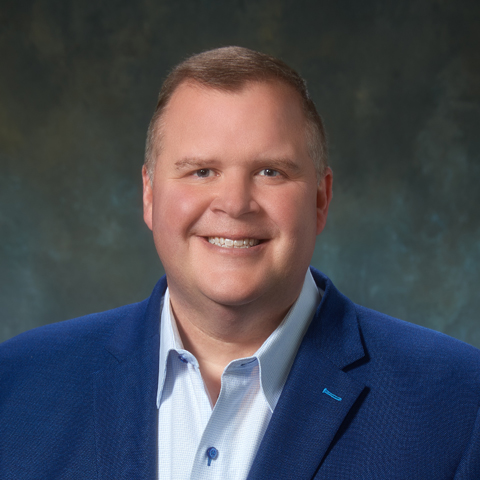
Michael Stull, MBA
Employers Health | Chief Sales Officer
Since 2004, Mike Stull has been a contributor to Employers Health’s steady growth. As chief sales officer, Mike works to expand Employers Health’s client base of self-insured plan sponsors across the United States.
Read More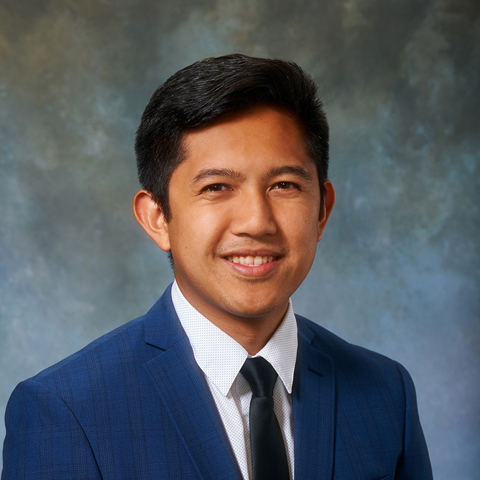
Kevin Wenceslao, PharmD, MBA
Employers Health | Director, Clinical Solutions
Kevin works closely with the vice president of clinical solutions to serve as a clinical resource for our members’ benefit professionals on topics of new drugs, plan design recommendations and overall trends.
Read More